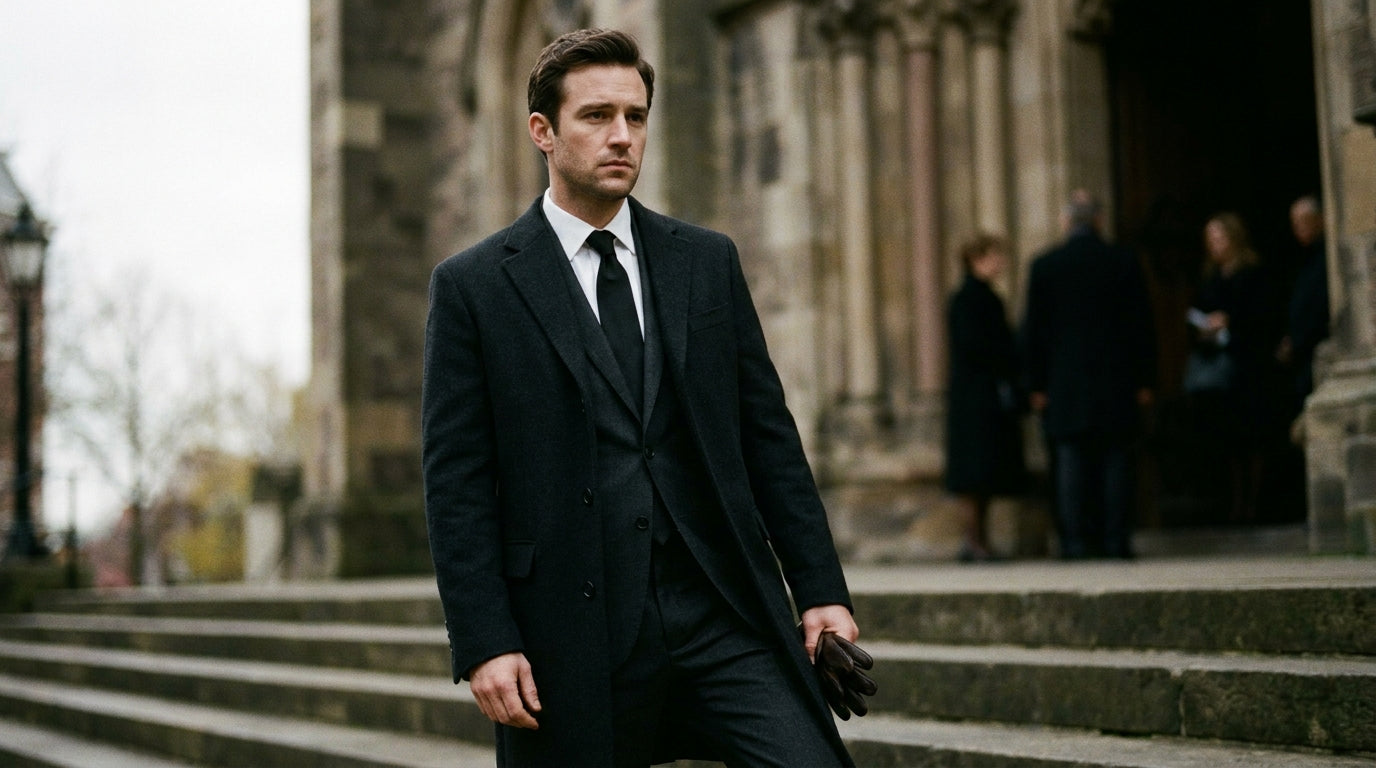


What to Wear to Court: Men's Guide
Men should wear a navy or charcoal suit with a white or light blue shirt to court. In general, conservative attire wins, so skip flashy ties, bold patterns, and anything that draws attention to your outfit rather than your case. If you have no suit, business casual is the fallback.
Court attire follows one rule: conservative wins. Whether you're facing a criminal hearing, a custody dispute, or a traffic ticket in 2026, a navy or charcoal suit with a white or light blue shirt signals respect for the legal process before you say a word. Skip the flashy ties, bold patterns, and anything that draws attention to your outfit rather than your case.
Why What You Wear to Court Actually Matters
Judges form impressions within seconds. Court clerks, opposing counsel, jury members - everyone's watching.
The psychology runs deeper than simple first impressions. Some research in cognitive psychology has explored whether formal clothing may influence abstract thinking and attention to detail. When you dress professionally for court, you're not just looking the part. Your brain shifts into a more focused, analytical mode. The same suit that signals respect to the judge primes your own mind for the seriousness of legal proceedings. This concept, sometimes called "enclothed cognition," proposes that what we wear may influence our own cognitive performance and mindset.
Beyond cognitive benefits, appropriate court attire serves as social armor. Walking into a courtroom underdressed immediately puts you at a disadvantage - you're fighting an uphill battle before opening your mouth.
Shop Men’s Slim Fit Suits
Still deciding? The full Men’s Slim Fit Suits range is on our site, in the sizes we stock.
Shop the collection →Free shipping over $299 · Arrives in 2–5 business days · 15-day returns
How to Dress for Court as a Man: A Quick Rundown
Start with the safest answer: a navy or charcoal suit, a white or light blue shirt, a muted tie, and polished leather shoes. That combination works for almost any hearing a man will ever attend, and no judge has ever penalized someone for looking too respectful. On color, stick with navy or charcoal over everything else - they read trustworthy and serious without drawing the eye.
If your appearance is lower-stakes - traffic court, small claims, a routine status hearing - you can go business casual instead of a full suit. Dress slacks with a tucked-in button-down and a blazer clear the bar comfortably. Even for a casual approach, keep it collared, keep it ironed, and keep it plain. A polo with dress pants is the absolute floor; jeans, sneakers, shorts, and graphic tees never belong in a courtroom, no matter how minor the matter feels.
Whatever the type of hearing, the rules are the same: cover up, tone it down, and look like you took the day seriously. Aim one notch dressier than you think you need. If you own a suit, wear it - you can always loosen the tie in the hallway, but you can't upgrade jeans once you're standing in front of the bench.
Best Color to Wear to Court
If you take one thing from this guide, make it this: navy or charcoal, every time. Navy reads trustworthy and approachable - useful when a jury is deciding whether to believe you. Charcoal leans slightly more serious and authoritative. Both work in any courtroom, for any type of hearing.
Avoid black. It photographs harsh and can read funereal or, worse, like you're trying too hard to look like the lawyers. Steer clear of brown and lighter greys too - they lean casual. And obvious ones: no bright colors, no bold checks, nothing that makes you the most-noticed person in the room. The goal is quiet credibility, not a wardrobe the judge remembers.
The Safe Choice: Navy or Charcoal Suit
Navy and charcoal dominate courtroom fashion for good reason. These colors photograph well under harsh fluorescent lighting, pair with virtually any shirt and tie combination, and never risk appearing too casual or too formal. The VIO collection specializes in exactly these shades - their navy worsted wool reads sophisticated without screaming "investment banker."

Shop now →
Fit matters more than price tag. A modestly priced suit that's properly tailored beats an expensive suit hanging off your shoulders. The jacket should hug your shoulders without pulling, sleeves should reveal about half an inch of shirt cuff, and trouser hems should barely touch your shoes with minimal break. Single-breasted jackets remain the courtroom standard - save the double-breasted styles for weddings and galas.
White or pale blue shirts only. No patterns, no contrast collars, no French cuffs unless you're arguing before the Supreme Court. Classic dress shirts with standard barrel cuffs keep the focus where it belongs.
Ties should whisper, not shout. Solid navy, burgundy, or subtle stripes in muted tones. Width should match your lapels - about 3 to 3.5 inches for most modern suits.
No Suit? Business Casual Court Attire
Traffic court, small claims, certain family court proceedings - not every appearance demands full formal wear.
Start with dress slacks in charcoal, navy, or khaki. Flat-front styles in wool or high-quality cotton blends work best. Pair with a long-sleeved button-down shirt (white, light blue, or subtle patterns like micro-checks). Add a sport coat or blazer if you have one - even without matching pants, this elevates the entire look. The Bordeaux plaid piece from VIOSSI walks that perfect line between professional and approachable.

Shop now →
Leather dress shoes mandatory. Black or brown oxfords, clean and polished. Those comfortable rubber-soled hybrids might work at the office, but they scream "I didn't take this seriously" in court.
Belt matches shoes. Always.
What Judges Notice (and What They Don't Like)
Based on anecdotal accounts from legal professionals, certain patterns emerge. Wrinkled clothing ranks as the top offense - it suggests disorganization and disrespect. Anecdotally, judges have noted that visibly wrinkled or casual clothing can negatively color their perception of a party's seriousness. Fair? Maybe not. Reality? Absolutely.
Excessive jewelry catches negative attention fast. Wedding band, simple watch, maybe cufflinks if you're wearing a suit. Everything else stays home. No earrings for men, regardless of your personal style. Court remains one of society's most conservative venues.
Visible logos or slogans guarantee side-eye from the bench. That includes designer labels, sports teams, and especially anything political or controversial.
Grooming matters as much as clothing. Fresh haircut within the week, beard trimmed or clean-shaven, fingernails clean and short. Legal observers have noted that unkempt grooming can negatively affect how defendants are perceived by juries, fair or not. Details like these shouldn't matter in an ideal world, but courtrooms operate in reality, not ideals.
Strong cologne or perfume irritates judges stuck in closed courtrooms all day. One spray maximum, or skip it entirely.
Sunglasses stay in the car. Baseball caps too. Seems obvious until you see someone try it.
Shop the Look: Court-Ready Outfit
Building a complete court-appropriate wardrobe doesn't require breaking the bank. These pieces from VIOSSI offer professional polish without the luxury price tag.
Remember that courtroom attire serves a purpose beyond aesthetics. You're demonstrating respect for the legal system, the judge, and the gravity of whatever brought you there. The right outfit won't win your case, but the wrong one might lose it.
Dress one level above what you think necessary. When in doubt, err on the side of formality.
Shop the Look


Shop Men’s Slim Fit Suits
That is the shortlist. Every piece above lives in Men’s Slim Fit Suits, with sizes and prices in one place.
Shop the collection →Free shipping over $299 · Arrives in 2–5 business days · 15-day returns
Frequently Asked Questions
Do you need to wear a suit to court?
It depends on the hearing. For serious matters (criminal cases, custody hearings), a suit is strongly recommended. For traffic court or minor civil matters, business casual is acceptable.
What color suit should you wear to court?
Navy or charcoal. Avoid black (it can look too severe) and definitely avoid anything flashy. You want to look professional and trustworthy.
Can I wear casual clothes to a minor court hearing?
For a low-stakes hearing you can dress down to business casual - dress slacks, a collared button-down, and clean leather shoes. But avoid truly casual pieces like jeans, sneakers, shorts, or graphic tees, even for a routine appearance. Collared, ironed, and plain is the minimum.
Related Guides
For how these rules keep shifting season to season, GQ's style desk tracks the same ground.