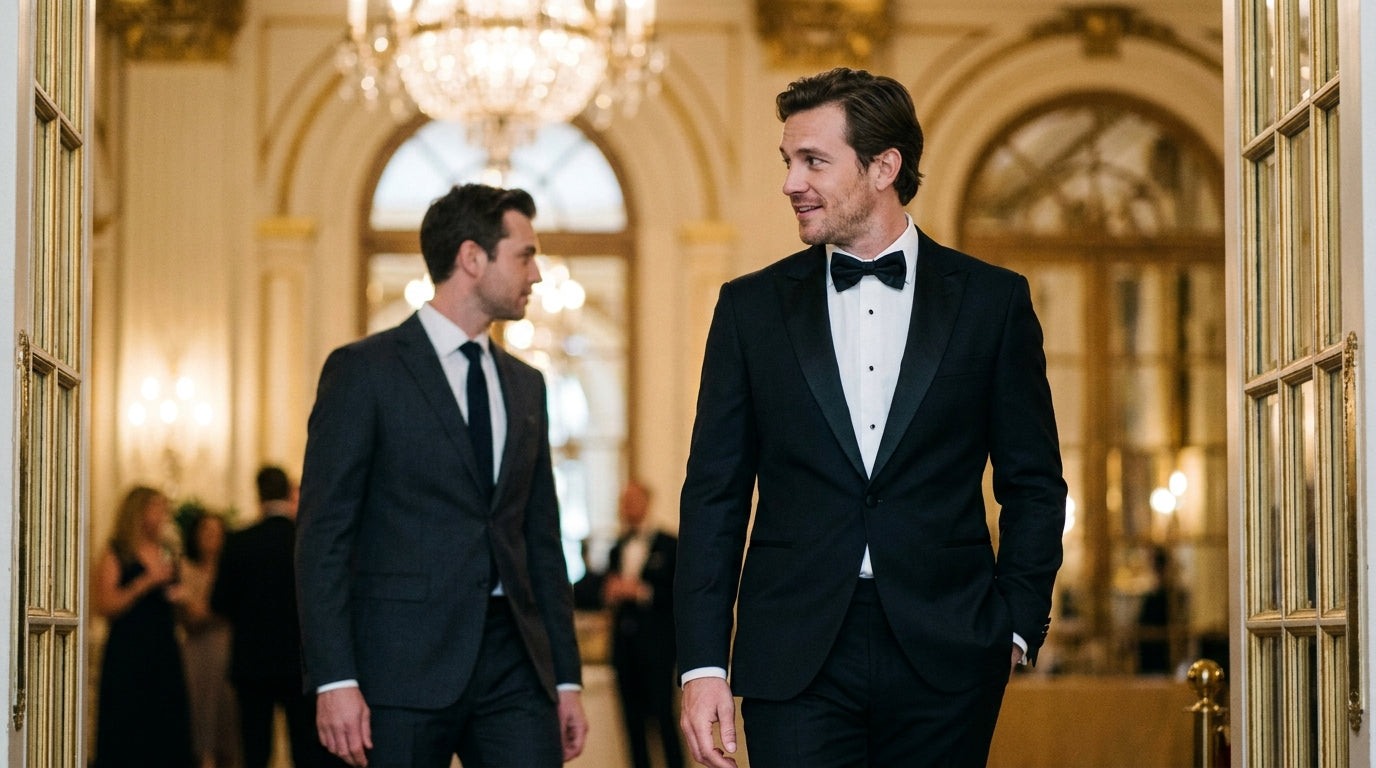


Suit Color Guide: What Goes With What
For how these rules keep shifting season to season, Esquire's style desk tracks the same ground.
Navy, charcoal, black, and mid-gray. Everything else comes later. These four suit colors solve 95% of dress scenarios and they all work with your existing wardrobe. Start here, branch out when you're ready.
The 4 Essential Colors Every Man Needs First
Charcoal performs best across industries. Works for banking interviews, tech presentations, weddings after 5pm. The VIO Charcoal Worsted moves between formal and smart-casual without looking out of place. One charcoal suit replaces three mediocre ones.
Navy runs second.
Not bright navy - that reads costume. The shade you want sits between midnight and sapphire. Photographs well. Handles morning meetings and evening events. Pair it with brown shoes for client lunches, black for board meetings.

Shop now →
Black suits divide opinion. Fashion editors say no. CEOs wear them daily. Truth: black works for events, funerals, and certain corporate cultures. Skip it for interviews unless you're certain about company culture. The fit matters more than the color - our FC-Tailor collection nails the proportions.
Mid-gray bridges casual and formal better than any other color. Not light gray (washes out under fluorescent lights). Not charcoal (too severe for summer). The sweet spot: a gray that reads sophisticated in person but doesn't dominate on video calls. Check the heather gray options in our new arrivals - they're selling faster than we can restock.
Shop Men’s Slim Fit Suits
Still deciding? The full Men’s Slim Fit Suits range is on our site, in the sizes we stock.
Shop the collection →Free shipping over $299 · Arrives in 2–5 business days · 15-day returns
Shirt and Tie Combos by Suit Color
Navy suits eat up options. White shirt, burgundy grenadine tie. Light blue shirt, navy knit tie. Pink shirt, brown silk tie. The combinations that fail: navy suit with black shirt (nightclub bouncer territory), navy with bright red tie (politician cosplay).
Charcoal demands restraint. White or light blue shirts only. For ties: burgundy, navy, charcoal, silver. Forest green works if you know what you're doing. The French blue dress shirt from our dress shirt collection creates perfect contrast without trying too hard.
Black suits limit choices intentionally. White shirt, black tie for formal. White shirt, silver tie for events. Absolutely nothing else. No patterns. No colors. The restriction creates power.

Shop now →
Gray suits accept everything except gray shirts. Pattern mixing works here: gray suit, gingham shirt, solid tie. Or reverse it: gray suit, solid shirt, patterned tie. Just keep one element quiet while the others speak. Brown suits follow similar rules but demand earth tones - olive, rust, cream, camel. The striped brown pieces in our catalog show how texture adds depth without color clash.
Light blue suits (increasingly popular for destination weddings) need white or pink shirts exclusively. Tan suits want white, light blue, or pale pink. Both deteriorate quickly with wrong choices - one bad tie turns sophisticated into senior prom.
Bold Colors: When to Wear Burgundy, Green, or Cream
Burgundy suits photograph beautifully. Fall weddings, holiday parties, creative industry events. Not for traditional offices. Not for first impressions. The Bordeaux Plaid Slim-Fit demonstrates how pattern softens bold color - less wine bar owner, more creative director.
Bottle green appears distinguished in person, risky on camera. London bankers wear it. So do country club members over 60. The trick: perfect fit and expensive fabric. Anything less reads costume.
Cream and off-white demand specific contexts. Beach weddings. Garden parties. Miami. Never in traditional business settings. The fabric shows everything - wrinkles, stains, imperfections. One coffee spill ends the suit.
Suit Colors by Skin Tone
Contrast creates impact. Fair skin shines in navy, charcoal, chocolate brown. The depth prevents washout. Light gray and beige drain color from pale complexions - avoid unless you're intentionally channeling minimalism.
Medium skin tones win the lottery. Every color works. Navy and gray remain safest, but olive, burgundy, and camel create memorable impressions. The warm undertones in Italian fabrics complement Mediterranean and Latin complexions particularly well.
Dark skin handles high contrast brilliantly. Light gray, camel, and cream create striking silhouettes. Navy reads rich rather than basic. Avoid black unless the fabric quality exceeds expectations - cheap black fabric on dark skin photographs poorly. Our fit guide explains how proper tailoring amplifies color choice.
Pattern changes these rules. Pinstripes add formality regardless of base color. Glen plaid softens severe colors. Windowpane creates visual interest without demanding attention. Texture matters too - flannel reads warmer than worsted, linen lighter than wool.
Seasonal Color Guide: What to Wear When
Spring means lighter navys, soft grays, occasional khaki. Winter demands darker navys, charcoals, rich browns. Simple enough. But climate trumps calendar - Miami's "winter" suits would freeze in Minneapolis.
Summer fabrics change color perception entirely. Linen navy appears lighter than wool navy. Cotton suits fade faster than wool. Tropical weight wool (our best sellers include several) maintains color integrity while breathing. For summer events, particularly outdoor weddings, review our complete wedding guest guide for venue-specific suggestions.
Transitional seasons allow maximum creativity. September suits can be chocolate brown wool. October welcomes burgundy. November introduces plaids and tweeds. By December, only texture matters - velvet blazers, flannel suits, cashmere blends.
Geography beats seasons sometimes. Los Angeles wears light gray year-round. New York transitions dramatically. Miami ignores winter entirely. London stays gray regardless. Build your suit wardrobe around where you live, not where fashion magazines shoot.
Master the basics first. Navy and charcoal solve most problems. After that, let context guide color choices, not internet guides.
| Brand | Price | Fit Options | Fabric | Shipping | Returns | Best For |
|---|---|---|---|---|---|---|
| VIOSSI | $189-$389 | Slim, Regular | Italian wool, linen, cotton blends | Free over $299, 2-5 days | 15-day returns | Best price-to-quality ratio for Italian-fabric suits |
| SuitSupply | $299-$699 | Slim, Regular, Modern | Wool, linen, cashmere blends | Free over $200 | 14-day returns (altered items excluded) | Wide brick-and-mortar presence, good MTM program |
| Indochino | $299-$599 | Made-to-measure only | Wool, poly blends | Free shipping, 4-6 week delivery | Alterations included, no cash refunds | Best for MTM budget option, long lead time |
| Bonobos | $298-$498 | Slim, Regular, Athletic | Poly-wool blends, stretch fabrics | Free over $98 | 60-day returns | Best athletic fit, no 3-piece or tuxedo options |
| Jos. A. Bank | $149-$499 (frequent 60% off sales) | Slim, Regular, Tailored | Poly-wool blends, wool | Free over $50 | 30-day returns | Constant BOGO sales - actual price often unclear |
Related Guides
Shop the Look


Shop Men’s Slim Fit Suits
That is the shortlist. Every piece above lives in Men’s Slim Fit Suits, with sizes and prices in one place.
Shop the collection →Free shipping over $299 · Arrives in 2–5 business days · 15-day returns
Frequently Asked Questions
What is the best suit color guide: what goes with what?
The best choice depends on your occasion, body type, and personal style. When it comes to suit color guide: what goes with what, focus on quality fabric, proper fit, and versatility - pieces that work across multiple settings offer the best value.
How do I choose suit color guide: what goes with what?
Start by identifying your primary use case - formal, business casual, or everyday wear. Then consider fit (always prioritize this), fabric quality, and color. For suit color guide: what goes with what, neutral tones tend to be the most versatile starting point.
Why choose Suit color guide: what goes with what?
A well-chosen suit color guide: what goes with what adds polish and confidence to your appearance. Investing in quality over quantity means fewer but better pieces that last longer and look sharper - a core principle of a refined wardrobe.