
Fall Wedding Guest Outfits for Men
Men's fall wedding attire comes down to three decisions: color, weight, and layering. As of August 2026, the four colors doing the most work are charcoal, deep navy, forest green, and warm brown. Avoid light grey, which reads spring, and skip burgundy unless the wedding is very dressed up. Add a vest or overcoat for layering.
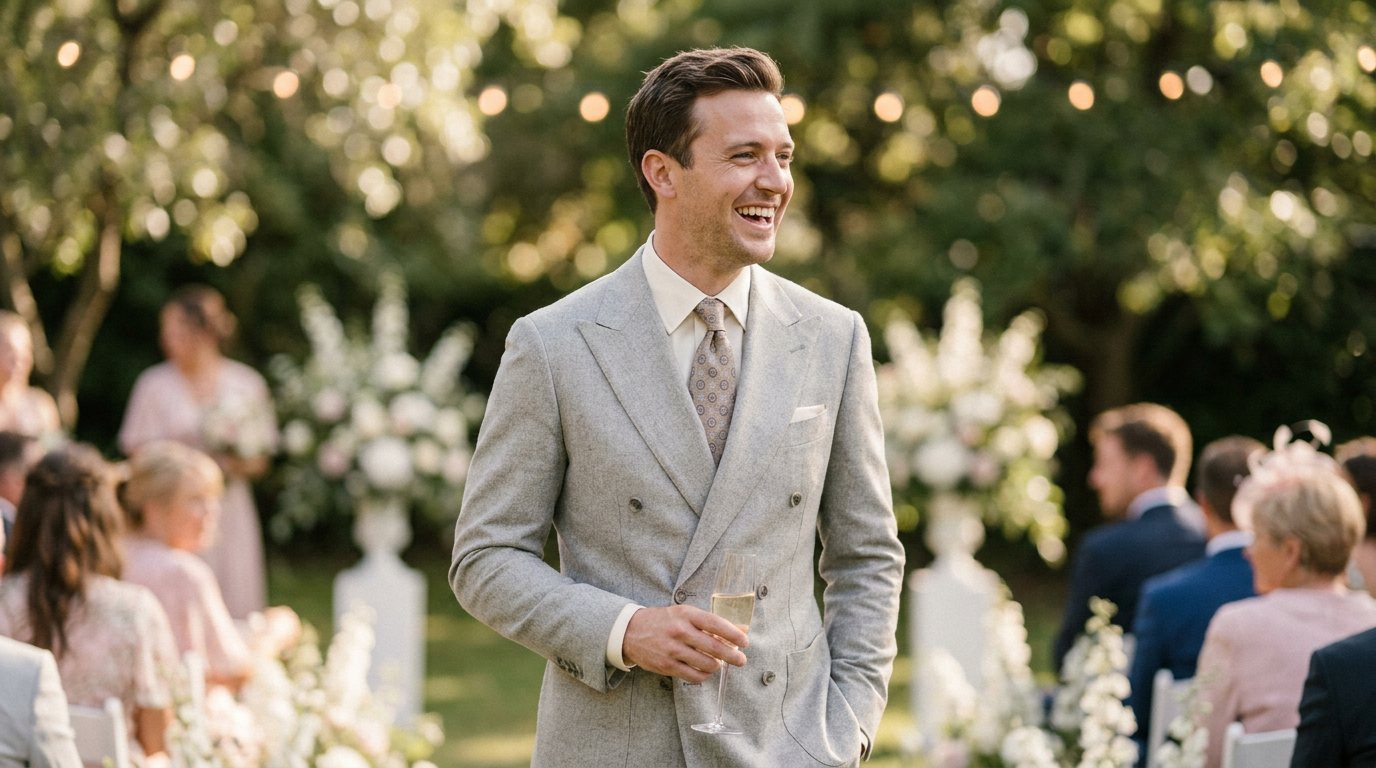
Fall wedding guest outfits for men come down to three decisions: color, weight, and layering. Get those right and the rest follows. The season gives you more to work with than summer does — richer tones, heavier fabrics, actual occasion for a waistcoat — so use it.
Best Suit Colors for Fall Weddings
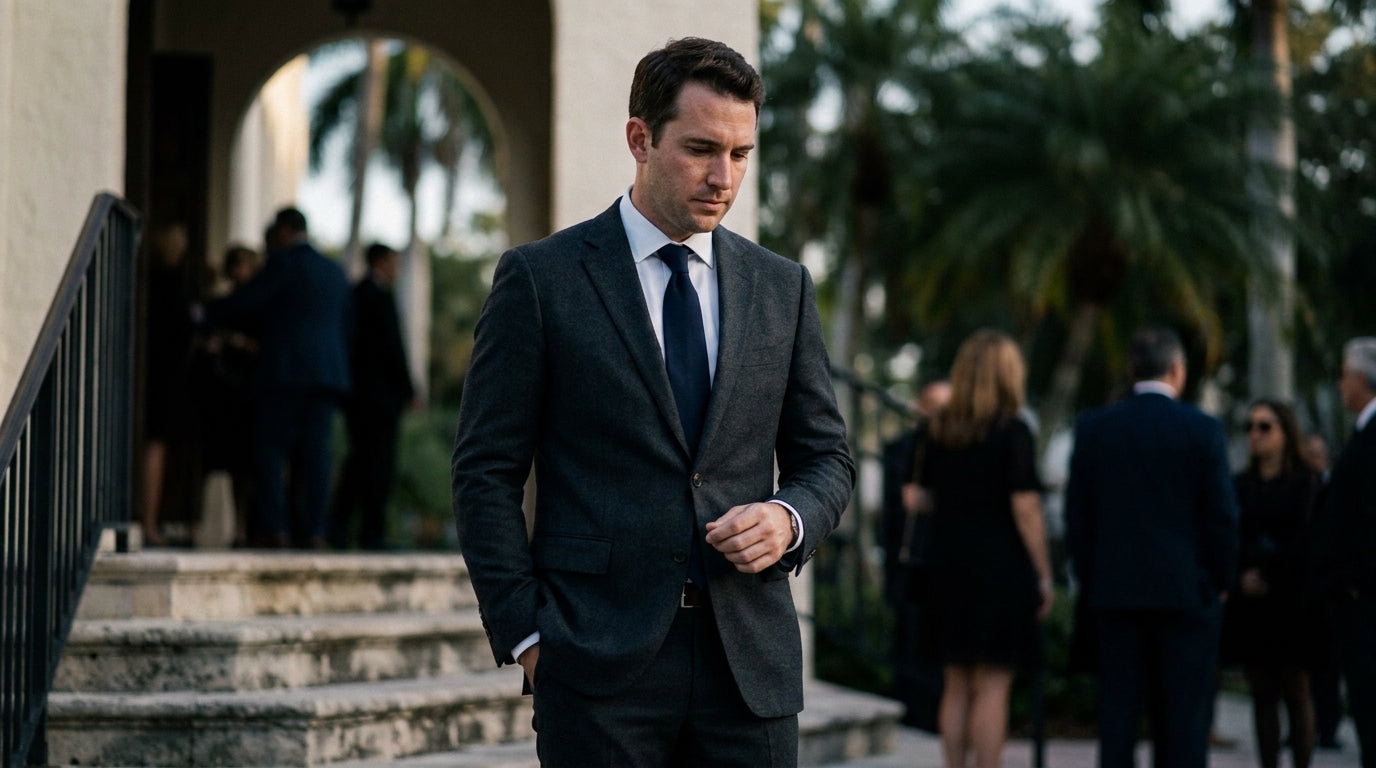
Charcoal, deep navy, forest green, and warm brown are the four colors doing the most work at autumn weddings right now. Not burgundy — unless the wedding is very dressed up and you're confident in your ability to wear it without looking like you're attending a Dickens festival. And not light grey, which reads spring regardless of the date on the invitation.

Shop now →
Brown deserves more credit than it gets. A mid-brown or tobacco-toned suit in a wool blend, worn with a white dress shirt and tan leather Oxfords, is one of the cleaner looks a wedding guest can put together in October or November. The Brown Striped Slim-Fit Suit 3-Piece does exactly this — the chalk stripe keeps it from reading as too casual while the warm base tone places it firmly in the season. Three-piece suits are worth the attention at weddings specifically because the waistcoat covers the dress shirt-to-trouser gap that opens up when you remove your jacket for dinner.
Navy is not giving up its position at the top of the rankings. It works across every level of formality, pairs with almost every dress shirt color, and photographs well. If you want our full breakdown of which suit tones match what, the VIOSSI Suit Color Guide goes into the specifics. What it won't tell you is that double-breasted navy specifically reads more formal than single-breasted, which matters when the dress code is black tie optional or cocktail attire.
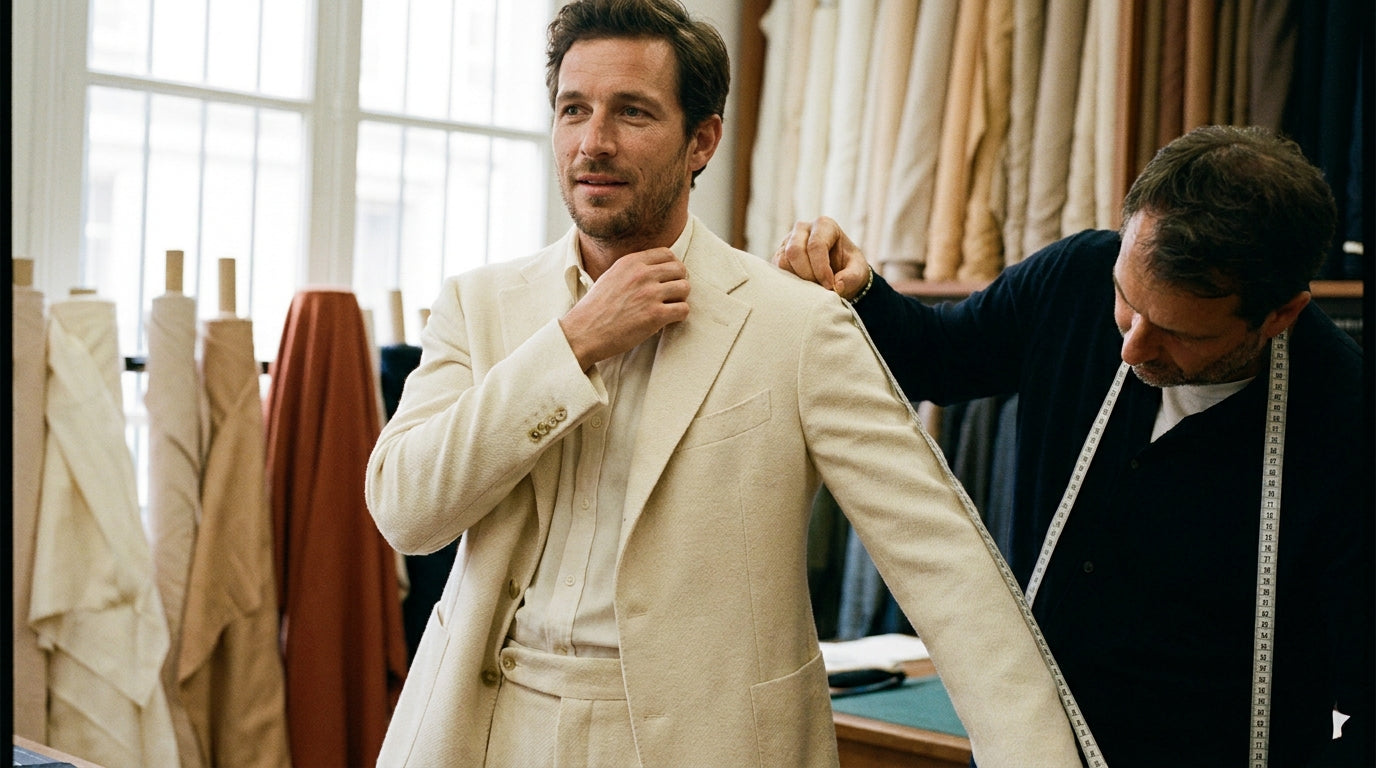
One genuinely useful note on fall suit fabric: look for a mid-weight wool or wool-blend in the 280–320gsm range. Light enough to wear inside a heated venue, substantial enough to survive the walk from the car in October wind. A linen suit looks wrong. A heavy flannel will have you removing your jacket before the first course.
Shop Men’s Slim Fit Suits
Still deciding? The full Men’s Slim Fit Suits range is on our site, in the sizes we stock.
Shop the collection →Free shipping over $299 · Arrives in 2–5 business days · 15-day returns
Layering: When to Add a Vest or Overcoat

Shop now →
A waistcoat is worth adding when the venue is traditional — a country estate, a church, a historic hall — or when the dress code specifically says formal. It completes the silhouette when you're moving through a venue without your jacket on, and it keeps you from looking like a man who's slowly disintegrating as the evening progresses. Match the fabric exactly to your suit trousers. Mismatched vests from different suits look like a styling accident, not a deliberate choice.
The overcoat question is different. You need one, but it's a transition piece — worn from the car to the door, checked at the venue. Invest in a mid-length wool overcoat in camel, charcoal, or dark navy. It should not compete with the suit underneath. Something clean-lined from the Men's Coats collection works here: structured shoulders, no padding excess, falls to just above the knee.
Don't layer a sweater under a suit jacket at a formal wedding. This advice gets offered constantly as a "casual autumn option" and it is almost always wrong. The shoulder seam of a suit jacket is built for a shirt. A sweater underneath displaces everything upward and ruins the drape across the back.
Outdoor vs Indoor: What Changes
The dress code doesn't change based on whether the ceremony is inside or outside. What changes is your practical planning. An outdoor fall ceremony in the Northeast or Pacific Northwest in October is not a hypothetical — it is actively cold and potentially wet. Wear the overcoat. Bring it. Don't leave it in the car to avoid the coat check.
Footwear becomes a real consideration outdoors. Suede cap-toes in tan or brown look excellent with an autumn suit and will be destroyed by damp grass. Leather Oxfords — dark brown, polished, with a rubber-blend sole — are the right call for outdoor ceremonies. Check what the venue looks like before you commit to anything thin-soled. This is specific to fall and winter weddings and the number of men who ignore it and spend the reception avoiding the garden is not small. Browse the VIOSSI footwear range if you need to sort this out before the event.
For indoor venues — ballrooms, restaurants, private clubs — the temperature is usually controlled and your only concern is the dress code and the hour. Evening indoor weddings at cocktail attire or above: suit jacket stays on through the ceremony and first portion of the reception. Full stop.
For men asking about casual fall wedding attire or a wedding guest outfit without a full suit, the answer depends entirely on what the invitation says. "Smart casual" does allow for a well-fitted blazer over tailored dress pants, no tie. That is not the same as chinos and a button-down. Our guide on what suit to wear to a wedding covers dress code specifics if you need help decoding the invitation wording.
Shop the Look: 3 Fall Wedding Outfits
Three distinct directions for fall wedding guest attire, each built for a different type of event.
Shop the Look


Look 1 — Countryside or barn wedding, smart casual to cocktail: The Brown Striped Slim-Fit 3-Piece with a white poplin dress shirt, no tie, brown leather Oxfords, and a camel wool overcoat left at the door. This is the outfit for a wedding where the venue photographs well and the couple has good taste.
Look 2 — City venue, cocktail attire: The Navy Double Breasted 2-Piece with a light blue dress shirt, a dark navy knit tie, and dark brown Derby shoes. Double-breasted peak lapels with a 6x2 button stance read formal without requiring a waistcoat. Keep the jacket buttoned throughout the ceremony.
Look 3 — Evening or black tie optional: The Black Double Breasted 2-Piece with a white spread-collar dress shirt, black silk pocket square folded flat, and black Oxford shoes with a high shine. This works at formal evening fall weddings where a tuxedo is possible but you'd rather not commit. A black double-breasted suit worn correctly is formal enough for most black tie optional events. (If the invitation says black tie rather than optional, wear an actual tuxedo.)
Accessories for Autumn Weddings
Tie or no tie is a dress code question, not a personal preference question. Cocktail attire means a tie. Smart casual means it's optional. Formal means yes, always, and it should be silk or a fine wool knit. A tie in burgundy, deep teal, rust, or burnt orange reads correctly against autumn suit colors without trying too hard to match the season.
Pocket squares are non-negotiable at any event above smart casual. Fold it flat or with a single point — at a wedding as a guest, you are not trying to be the most interesting person in the room. A white linen square flat-folded works with every suit in every color. You cannot say the same for the TV fold in a printed silk, which requires the rest of the outfit to support it.
Watch: a dress watch with a leather strap, dark brown or black depending on your shoes. If you wear a smartwatch to a formal wedding in 2026, at least put it in theater mode. The notifications during the ceremony are not acceptable and neither is the rubber strap.
Cufflinks at formal events. French-cuff dress shirts with barrel-cuff suits are a mismatch that sounds fine in theory and looks slightly off in photographs. Wear the shirt style that matches the occasion and the suit you've chosen. Barrel cuffs for cocktail, French cuffs for formal — this is the practical version of the rule.
Shoes tie the whole thing together in a way that's immediately visible in every group photograph taken at the reception. Dark brown or tan leather Oxfords for brown and navy suits. Black Oxfords for black and charcoal. The VIOSSI footwear collection has both covered. Men who wear the right suit with the wrong shoes are more common than they should be, and the mismatch registers even to people who couldn't explain why.
For reference on how publications like GQ and Esquire approach menswear for formal occasions, their style desks are worth a look — but the difference is they're advising a general reader. You're dressing for one specific event with a specific dress code, which makes the decision narrower and easier than their general coverage suggests.
Get the suit right and the accessories become easier decisions. Most men do it the other way around, which is why they end up with a pocket square that doesn't match anything and shoes that were an afterthought.
Related Guides
Shop Men’s Slim Fit Suits
That is the shortlist. Every piece above lives in Men’s Slim Fit Suits, with sizes and prices in one place.
Shop the collection →Free shipping over $299 · Arrives in 2–5 business days · 15-day returns