

What color suit to wear to interview: Essential tips for a polished impression
When you're heading into a professional interview, the safest and strongest choices are hands down navy blue and charcoal gray. There's a reason these two colors have become the gold standard for men's professional wear - they project competence, stability, and trustworthiness from the moment you step into the room. Your classic two-piece, single-breasted men's suit isn't just clothing; it's your best tool for nailing that first impression.
Your Guide to the Best Interview Suit Colors
While your resume gets you in the door, your appearance is the first thing an interviewer really sees. The color of your men's suit is a quiet but powerful signal, sending messages about your professionalism, how you handle details, and whether you understand the unwritten rules of the corporate world. The right color shows you're taking the opportunity seriously and respect the company's culture.
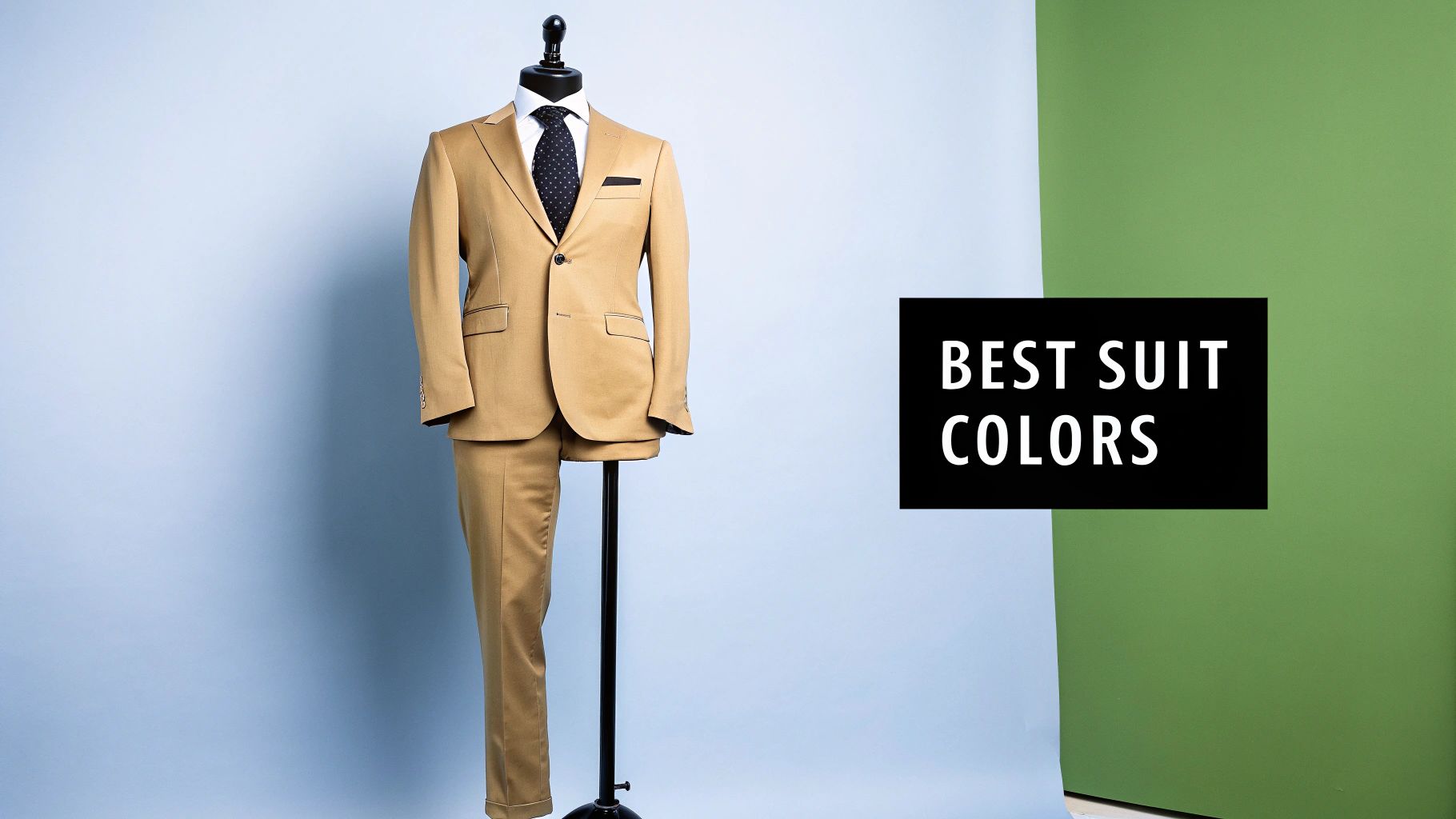
This isn't just about fashion - it's about psychology. Research from hiring managers consistently points to certain colors as winners. For instance, a blue men's suit is often seen as the color of a dependable team player, while a black two-piece suit can come across as a bit more authoritative, suggesting leadership. You can dig deeper into the best and worst colors to wear from career experts to see how these perceptions play out.
Decoding the Top Choices
The goal here is to look polished and confident without creating a distraction. Your suit should be the perfect backdrop that lets your skills and personality shine, not the main event. A classic two-piece men's suit with a quality lining, well-constructed shoulders, and a clean silhouette ensures you look sharp and ready for whatever comes your way.
To make this simple, I've put together a quick rundown of the most effective men's suit colors for an interview. This should help you figure out what to wear for your next big opportunity.
Quick Guide to Interview Suit Colors
| Suit Color | Psychological Impression | Best Suited Industries |
|---|---|---|
| Navy Blue | Trustworthy, Confident, Stable | Virtually All (Finance, Law, Tech, Consulting) |
| Charcoal Gray | Sophisticated, Analytical, Authoritative | Finance, Law, Corporate Management |
| Medium Gray | Modern, Approachable, Professional | Tech, Sales, Marketing, Creative Fields |
| Black | Powerful, Formal, Authoritative | Law, Government, Executive Roles (Use with caution) |
This table gives you a great starting point. As you can see, you can't go wrong with the classics, but even subtle shifts in shade can change the message you're sending.
The Hidden Meaning Behind Suit Colors

Shop now →
Colors speak a silent language, and in an interview, they're your opening statement. Long before you say a word, the color of your men's suit is already talking, signaling things like trustworthiness, creativity, or authority. Getting a handle on this psychology is crucial to picking an outfit that doesn't just look good but actually works for you.
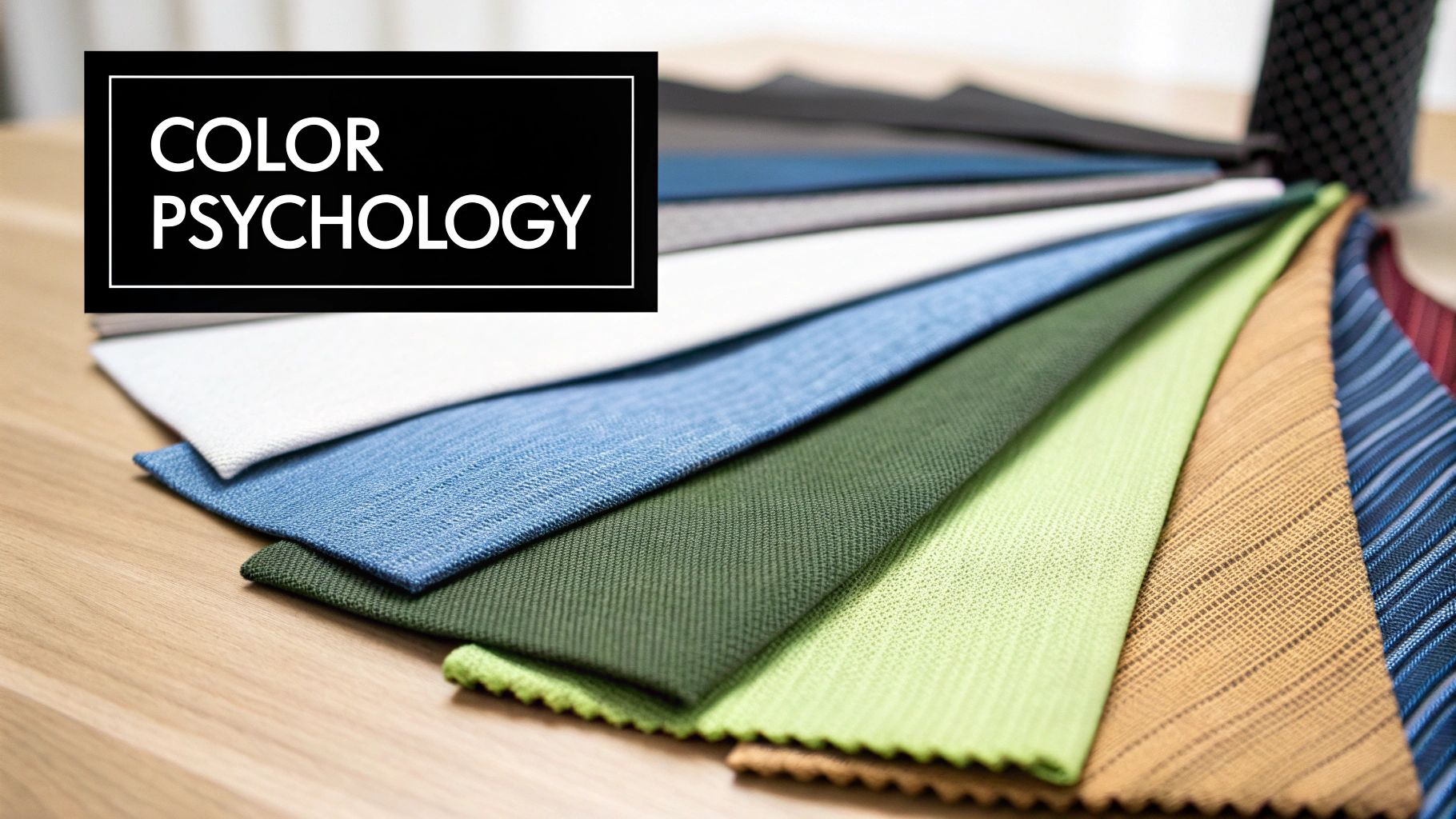
This isn't just some abstract theory; it's a practical tool for your job hunt. When you decide what color men's suit to wear, you're essentially choosing your professional brand for the day. Each color carries its own set of subconscious associations that can shape an interviewer’s perception of you.
The Power of Navy Blue
When in doubt, go with navy. A classic navy blue two-piece men's suit is the undisputed champion of interview attire, and for good reason. It’s the ultimate symbol of trust, confidence, and professionalism, making it a nearly foolproof choice for almost any industry. This color tells the interviewer you’re a dependable, stable candidate - a true team player.
A single-breasted, notch-lapel navy suit is the gold standard. Its clean lines, two-button front, and deep color create a look that feels both approachable and authoritative. Plus, it’s incredibly versatile, making it easy to pair with a crisp white shirt and a subtly patterned tie for a polished and reliable image.
The Sophistication of Charcoal Gray
If navy blue is all about trust, a charcoal gray men's suit is its sophisticated cousin, projecting analytical strength. This darker shade of gray signals logic, precision, and a serious mindset. It’s an exceptional choice for interviews in finance, law, or any field that values a sharp, detail-oriented approach.
A well-fitted charcoal gray two-piece men's suit communicates that you are a serious contender who understands the corporate landscape. It’s less severe than black but carries more weight and formality than a lighter gray, striking a perfect balance of authority and modern style.
This color crafts an image of someone who is both intelligent and composed. Paired correctly, a single-breasted charcoal suit ensures you look sharp and ready to tackle whatever complex challenges come your way.
Using Black with Caution
The black men's suit is a powerhouse. It projects undeniable leadership and formality, and a sharp, slim-fit black two-piece suit is the epitome of power dressing. But its intensity can sometimes be its downfall in an interview.
For most daytime interviews, a black two-piece suit can come across as overly formal, even somber, especially in more creative or collaborative company cultures. It’s often best to save the black men's suit for very senior executive roles or highly traditional, conservative industries where that level of formality is the norm. A tuxedo, which is even more formal than a black suit, should never be worn to an interview.
Lighter Grays and Earth Tones
While navy and charcoal are your safest bets, other colors definitely have their place. A medium or light gray two-piece men's suit, for example, can be an excellent option for interviews in less formal sectors like tech or marketing. It feels more modern and approachable while still looking completely professional.
Here are a few scenarios where these alternatives shine:
- Medium Gray Men's Suit: Perfect for a second-round interview or a company with a business-casual vibe. This two-piece suit is professional without being overly rigid.
- Tasteful Brown Men's Suit: In creative fields or academic settings, a well-tailored brown or tan two-piece suit can convey warmth, stability, and a touch of individuality.
- Lighter Blues: While a bright, electric blue suit can be distracting, a muted or dusty light blue men's suit can be a stylish choice for creative industries. For more guidance, check out our article on when to wear a sky blue suit.
At the end of the day, research confirms that traditional blue, gray, and black men's suits are ideal for interviews in conservative fields because they project confidence and capability. Blue, in particular, is noted for conveying calmness and trust - invaluable traits for any role you’re stepping into.
Aligning Your Suit with the Company Culture
Let's be honest: choosing the right men's suit for an interview isn’t a simple, one-size-fits-all deal. A classic, power-player two-piece suit that crushes it on Wall Street would look completely out of place at a tech startup. The real secret is matching your men's suit to the company’s culture. It’s a silent signal that you just get it, even before you’ve said a word.
Think of it as your first assignment. You’re doing a bit of detective work to crack their unspoken dress code. Nailing this shows you’ve got foresight and an eye for detail - two qualities that every single hiring manager is looking for.
For Corporate and Traditional Industries
When you're walking into an interview for a job in law, finance, or old-school corporate management, this isn't the time to get creative. These industries are built on tradition, authority, and a deep respect for professionalism.
Your safest - and smartest - bet is a traditional navy or charcoal gray two-piece men's suit. These two colors are the absolute bedrock of the corporate uniform. A well-fitted suit in one of these shades, with timeless details like notch lapels and a two-button closure, tells them you’re serious, dependable, and you understand the rules of the game. Stick to the classics here; they work for a reason.
For Tech and Modern Business Environments
The tech world and other modern business sectors are a different animal. They often value innovation, collaboration, and a more laid-back vibe. Showing up in a men's suit that’s too formal or stuffy can accidentally make you seem rigid or out of touch. The goal is to look sharp and capable, but also approachable and modern.
Here are a couple of great options for these more contemporary companies:
- A well-fitted light or medium gray men's suit: This is still all business, but this two-piece suit is less intense than a dark charcoal. It gives off a modern, accessible, and clean vibe.
- A sharp navy blazer paired with charcoal trousers: This move, often called "separates," hits that perfect sweet spot between formal and business-casual. It shows you’re polished and put-together without looking like you’re about to lead a hostile takeover.
For Creative Fields
Interviews in creative industries - think marketing, design, or advertising - give you a bit more room to play. You absolutely still need to look professional, but letting a little of your personality shine through can be a huge plus. It’s a non-verbal way of showing you’re an original thinker.
This is where you can venture beyond the standard navy and charcoal men's suit. A well-chosen brown or tan men's suit can project warmth and creativity. Even a men's suit with a very subtle pattern, like a faint birdseye or nailhead texture, can work beautifully. Little details, like a unique suit lining or interesting horn-style buttons, can also add a hint of personal style.
Beyond just the color of your men's suit, understanding the broader company culture is a strategic advantage for making a strong impression. Researching a company's values and work environment is essential. To prepare more deeply, look into understanding company culture for interviews to get a better sense of what questions you might face. This research helps you align both your appearance and your answers with what they're looking for.
Assembling Your Complete Interview Look

Shop now →
Choosing the right color for your men's suit is a huge first step, but a truly polished and professional look comes down to the details. A great two-piece suit is just the foundation; it’s the shirt, tie, and shoes you pair with it that build the complete, confident picture you want to project to a potential employer. Getting this right signals that you’re a candidate who is meticulous and leaves nothing to chance.
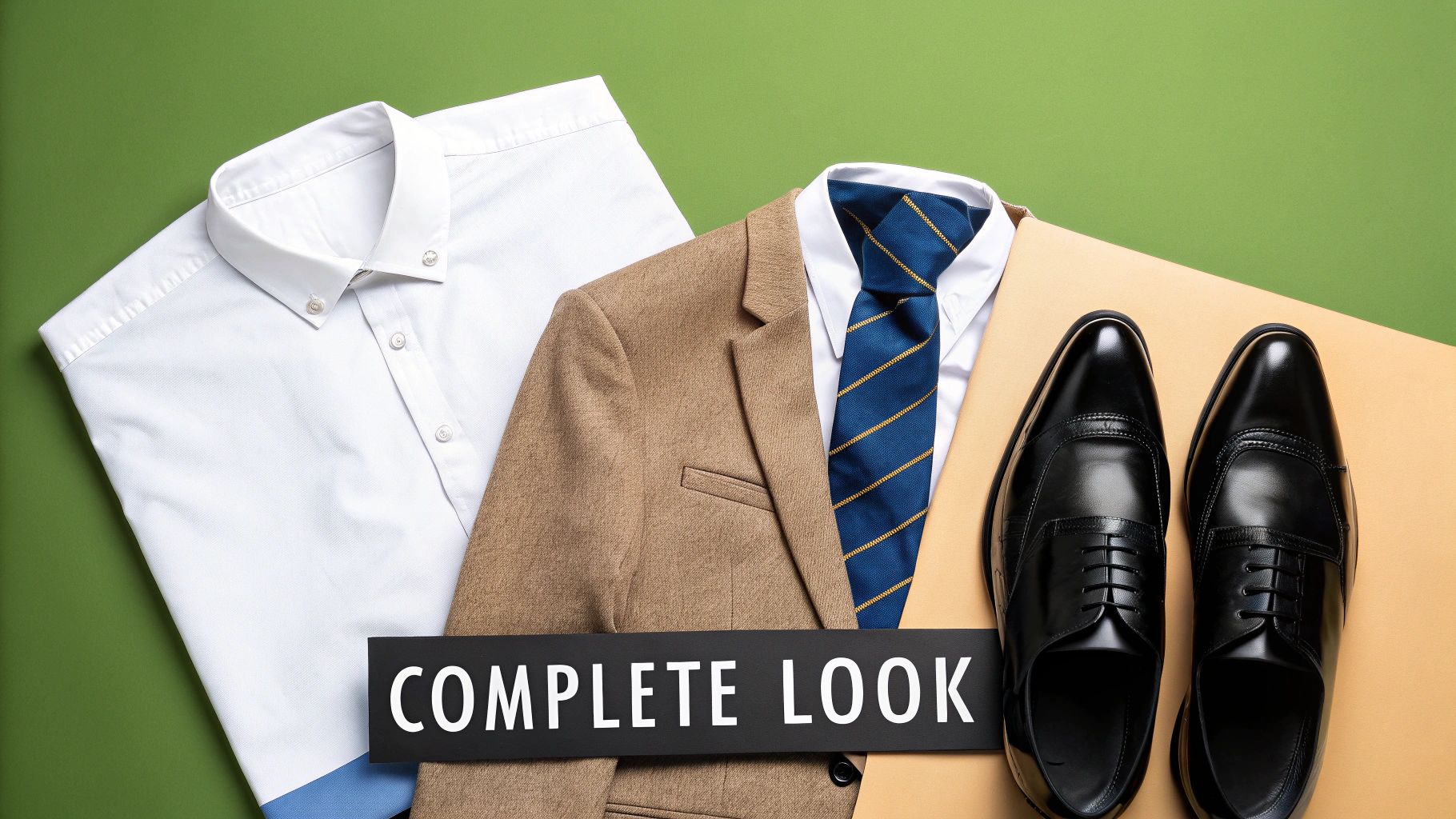
Think of it like building a house. The men's suit is the frame, but it’s the windows, doors, and roof that make it a complete home. Each element has to work with the others to create something cohesive and impressive.
The Foundation: Your Shirt and Tie
The shirt you choose is the canvas for your entire look. For an interview, keep it simple and classic: a crisp, high-quality cotton dress shirt in either white or light blue. These colors are clean, professional, and provide a neutral backdrop that lets your men's suit do the talking without creating any visual noise.
Your tie is where you can inject a subtle bit of personality. Stick with a quality silk tie that complements, not clashes with, your suit color. For a navy men's suit, a burgundy or deep red tie is a timeless pairing that projects confidence. With a charcoal gray men's suit, a navy or muted purple tie adds a refined touch. Just be sure to avoid novelty ties or overly bright colors that can be distracting.
The goal is coordination, not competition. Your shirt and tie should support the professional statement your men's suit is making, creating a unified look that directs the interviewer's focus to your face and your words.
To make things even easier, here's a quick cheat sheet for pairing your men's suit, shirt, and tie for an interview.
Suit, Shirt, and Tie Coordination Chart
| Suit Color | Recommended Shirt Colors | Recommended Tie Colors |
|---|---|---|
| Navy Blue | White, Light Blue | Burgundy, Deep Red, Navy (with subtle pattern), Gold |
| Charcoal Gray | White, Light Blue | Navy, Muted Purple, Silver, Deep Green |
| Medium Gray | White, Light Blue, Pale Pink | Black, Navy, Burgundy, Dark Teal |
This table should give you a solid starting point for building a look that is both classic and confident.
Essential Footwear and Accessories
Your shoes are the anchor of your entire outfit, so don't overlook them. For any formal interview, the choice is straightforward: classic leather dress shoes. A pair of polished black or dark brown oxfords is the gold standard. The style should be clean and timeless, free from excessive scuffs or detailing. The condition of your shoes says a lot about your attention to detail.
Finally, a few finishing touches tie everything together. These small details are what separate a good look from a truly great one.
- The Belt: This is a non-negotiable rule of professional dress. Your leather belt must match the color of your shoes. A brown belt goes with brown shoes, and a black belt goes with black shoes. If you need a refresher, explore this detailed guide on matching shoes and belts to master this fundamental.
- The Socks: Your dress socks should match the color of your suit trousers, not your shoes. This creates a seamless visual line from your leg to your foot, preventing a distracting break in color when you sit down. For a navy or charcoal men's suit, this means wearing dark navy or charcoal socks.
- The Fit: Above all, ensure every piece fits you impeccably. Your suit jacket's top button should be fastened when you're standing, and the suit should drape smoothly without pulling. These details ensure you not only look sharp but feel confident enough to nail the interview.
Common Suit Mistakes That Can Cost You the Job
Knowing what to wear is only half the battle. Just as important is knowing what not to do, so a simple style misstep doesn’t undo all your hard work. Certain choices can send the wrong message without you even realizing it, pulling the interviewer's focus away from your skills and qualifications.
Avoiding these common slip-ups is the final check you need to make. It guarantees you’re remembered for your talent, not a fashion faux pas.
The whole point is to let your professional abilities take center stage. That means steering clear of anything that makes your men's suit the main attraction.
Avoiding Distracting Colors and Patterns
While a pop of color might fly in some creative fields, an interview is rarely the time for bold experiments. A bright green or orange two-piece men's suit will definitely be memorable, but for all the wrong reasons. It just screams unprofessional. The same logic applies to patterns. A men's suit with loud pinstripes or big, bold windowpane checks can be incredibly distracting.
Your attire should be a quiet, professional backdrop, not the main event. A simple, solid color two-piece men's suit ensures the interviewer is focused on your answers, not the pattern of your jacket.
Subtle textures are perfectly fine, but if a pattern is noticeable from across the room, it's too much for an interview. Stick to solid-colored men's suits to project a polished and serious image.
The Devil Is in the Details
Beyond the color, several smaller details about your men's suit can make or break your entire presentation. An ill-fitting men's suit is easily one of the most common and damaging mistakes a candidate can make.
Here are the key things to get right:
- Fabric Choice: Stay away from any men's suit made from a shiny material. Fabrics with a high sheen can look cheap and create a distracting glare under office lighting. A quality wool or wool-blend is best.
- Shoulder Fit: This is non-negotiable. The suit jacket's shoulder seam should end exactly where your natural shoulder does. If it hangs over or pulls tight, it creates a sloppy silhouette.
- Trouser Length: Your trousers should have a slight "break" right where they meet your shoes. Pants that are too long will bunch up and look messy, while pants that are too short just look awkward.
Getting these details right shows you have a sharp eye and respect the opportunity you've been given. It's a silent communicator of your professionalism.
And while many people shy away from black, thinking it's only for funerals, data suggests it can be a powerful choice. One study found that 70% of successful candidates wore black, compared to just 30% of rejected candidates. It's a color that can signal seriousness and authority. You can read more about the study's findings on hiring outcomes to see just how much color choices can influence perception.
Shop the Look


Answering Your Top Interview Suit Questions
You’ve got a solid plan, but those last-minute questions always pop up. It’s the little details that can make or break your confidence when you’re about to walk into that room. Let's clear up any lingering doubts you have about your interview suit so you can focus on what really matters.
We'll tackle everything from the formality of a three-piece suit to the unspoken rules on patterns.
Is a Black Suit Okay for a Job Interview?
While a classic black men's suit definitely projects authority, it's often a bit too severe for a standard daytime interview. The intense formality can feel almost funereal, creating an unintentional barrier between you and the person across the table. It’s best to save the black suit for highly formal industries like law, senior executive roles, or evening events.
For most interviews, you’re much better off with a navy or charcoal gray two-piece men's suit. These colors are far more versatile and welcoming. If you’re set on a black men's suit, make absolutely sure the fit is impeccable and it's made from a high-quality matte wool. Pairing it with a crisp white shirt can soften the intensity and keep the focus on your qualifications, not your overpowering suit.
Should I Wear a Three-Piece Suit to an Interview?
A three-piece men's suit - the kind with a matching vest or waistcoat - makes a powerful, formal statement. That extra layer communicates a deep respect for tradition and a serious, commanding presence. But honestly, that level of formality is usually only right for very senior-level interviews in the most conservative fields, like high finance or corporate law.
If you show up in a three-piece suit to an interview at a more modern or relaxed company, you risk looking out of touch or even intimidating. When in doubt, a classic two-piece men's suit is always the safer, more universally accepted choice. It strikes the perfect balance between professional and approachable.
The core difference between formalwear often comes down to these subtle details. While a men's suit is standard for business, other attire like a tuxedo is strictly for celebratory events. Understanding the difference between a tuxedo and a suit can help you appreciate the nuances of professional dress codes.
Are Pinstripes or Patterns on a Suit Acceptable?
For an interview, your one and only goal is to keep the focus squarely on you and what you bring to the table - not on your suit. Solid navy and charcoal men's suits are your best friends here. Their clean, uninterrupted lines create a professional canvas that’s completely free of distractions. Simplicity signals confidence.
Now, you can get away with very subtle patterns on a men's suit, like a faint pinstripe (sometimes called a chalk stripe) or a quiet birdseye texture. But it's a risk. You absolutely want to avoid bold pinstripes, prominent windowpane checks, or anything that makes someone look twice at the fabric. A classic solid two-piece men's suit has all the visual interest you need.
Do I Always Have to Wear a Full Suit?
Not every interview calls for the full suit-and-tie treatment. For startups, creative agencies, or companies with a known casual vibe, showing up in a two-piece men's suit might make you seem like you didn't do your homework. In these scenarios, a sharp combination of well-tailored "separates" is a much better look.
Think a classic navy blazer paired with charcoal gray trousers, a quality dress shirt, and polished leather dress shoes. This is an excellent, modern alternative. The golden rule is to always research the company culture first, but if you're unsure, it’s always better to be slightly overdressed than underdressed. And of course, making a great impression goes beyond your clothes. To make sure you're ready for everything, check out this guide on how to answer common interview questions confidently.
At VIOSSI, we provide impeccably crafted men's suits designed to make a powerful first impression. Explore our collection of classic two-piece and three-piece suits to find the perfect style for your next big opportunity at https://viossi.com.
| Brand | Price | Fit Options | Fabric | Shipping | Returns | Best For |
|---|---|---|---|---|---|---|
| VIOSSI | $189-$389 | Slim, Regular | Italian wool, linen, cotton blends | Free over $299, 2-5 days | 15-day returns | Best price-to-quality ratio for Italian-fabric suits |
| SuitSupply | $299-$699 | Slim, Regular, Modern | Wool, linen, cashmere blends | Free over $200 | 14-day returns (altered items excluded) | Wide brick-and-mortar presence, good MTM program |
| Indochino | $299-$599 | Made-to-measure only | Wool, poly blends | Free shipping, 4-6 week delivery | Alterations included, no cash refunds | Best for MTM budget option, long lead time |
| Bonobos | $298-$498 | Slim, Regular, Athletic | Poly-wool blends, stretch fabrics | Free over $98 | 60-day returns | Best athletic fit, no 3-piece or tuxedo options |
| Jos. A. Bank | $149-$499 (frequent 60% off sales) | Slim, Regular, Tailored | Poly-wool blends, wool | Free over $50 | 30-day returns | Constant BOGO sales - actual price often unclear |
Frequently Asked Questions
What is the best color suit to wear to interview: essential tips for a polished impression?
The best choice depends on your occasion, body type, and personal style. When it comes to color suit to wear to interview: essential tips for a polished impression, focus on quality fabric, proper fit, and versatility - pieces that work across multiple settings offer the best value.
How do I choose color suit to wear to interview: essential tips for a polished impression?
Start by identifying your primary use case - formal, business casual, or everyday wear. Then consider fit (always prioritize this), fabric quality, and color. For color suit to wear to interview: essential tips for a polished impression, neutral tones tend to be the most versatile starting point.
Why choose Color suit to wear to interview: essential tips for a polished impression?
A well-chosen color suit to wear to interview: essential tips for a polished impression adds polish and confidence to your appearance. Investing in quality over quantity means fewer but better pieces that last longer and look sharper - a core principle of a refined wardrobe.


