Tuxedo Vs Suit: A Complete Guide
A tuxedo is black tie. A suit is everything else. The decision isn't about which looks better — it's about reading the dress code correctly and not showing up to a black tie gala in navy wool or, worse, arriving at a business dinner in a shawl lapel and cummerbund.
What You Need to Know About Tuxedo Vs Suit
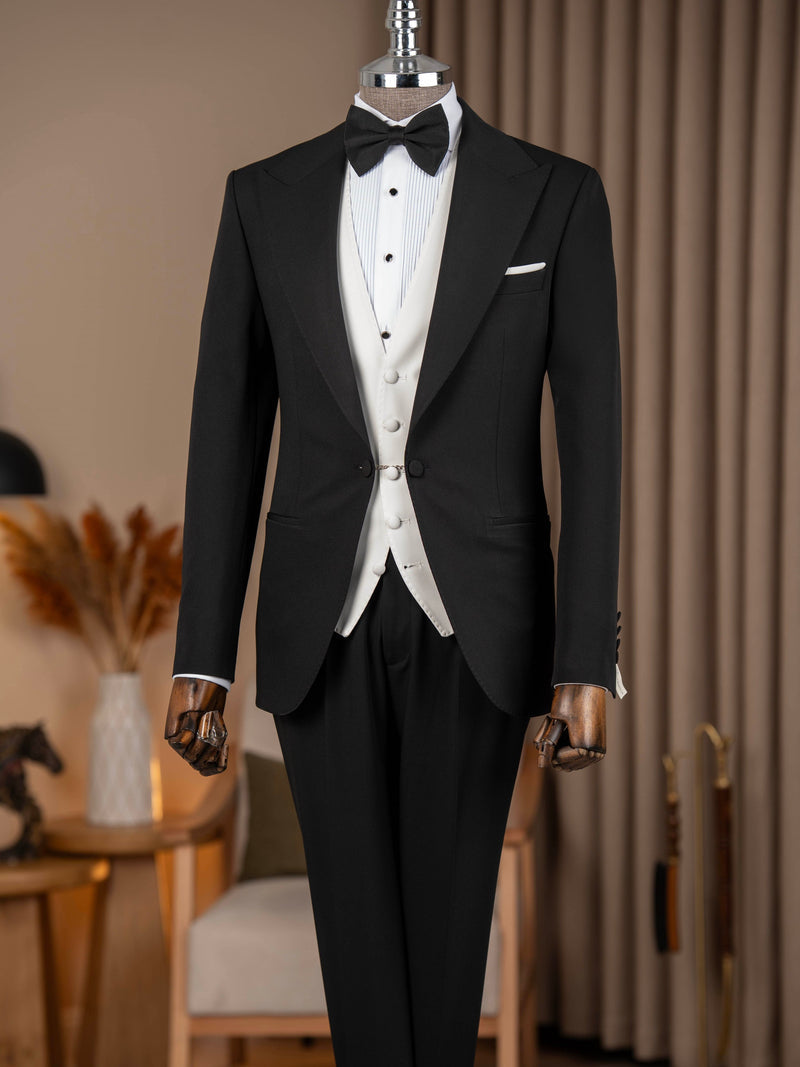
The structural differences between a tuxedo and a suit are more specific than most men realize. A tuxedo has satin or grosgrain facing on the lapels, a satin stripe down the trouser leg, and typically uses a covered placket — no visible buttons on the shirt front. The jacket itself is usually single-breasted with peak or shawl lapels, though double-breasted tuxedos have made a serious return. A suit has none of that. The lapels are wool or the same fabric as the jacket, buttons are visible, and the trousers match the jacket without adornment.

Shop now →
Dress code fluency matters here. "Black tie" means tuxedo. Full stop. "Black tie optional" means you can wear a dark suit — charcoal or midnight navy — with a white dress shirt and a strong tie, and nobody will look twice. "Formal" without further qualification is where men get lost. In most North American and European contexts, formal business means a dark suit. In certain social contexts — galas, charity events, film premieres — it means tuxedo. When the invitation doesn't specify, check the venue and time of day. Black tie starts after 6pm, and anything in a ballroom or private members club tends to lean that direction.
On the question of tuxedo vs suit which is more formal — the tuxedo wins, categorically. It was designed specifically for after-dark formal occasions and carries a visual weight that a suit, however well-made, doesn't replicate. The satin facing catches light differently. The trouser stripe creates a vertical line that reads formal at forty feet. That's intentional.
Worth knowing: the term "smoking" — common in French, Italian, and Spanish menswear — refers to the tuxedo jacket specifically. Tuxedo vs suit vs smoking is not a three-way comparison; a smoking is the tuxedo. Don't let that confuse you if you're shopping European brands or reading international style coverage.
For tuxedo vs suit at a wedding specifically: if you're the groom at a black tie wedding, wear the tuxedo. If you're a guest at a black tie optional wedding, a dark suit works — but a midnight navy tuxedo also works, and often looks more deliberate. If you're attending a smart casual or garden ceremony, a tuxedo is wrong. A slim-cut suit in a lighter fabric is right.
Top Trends in Tuxedo Vs Suit for 2026
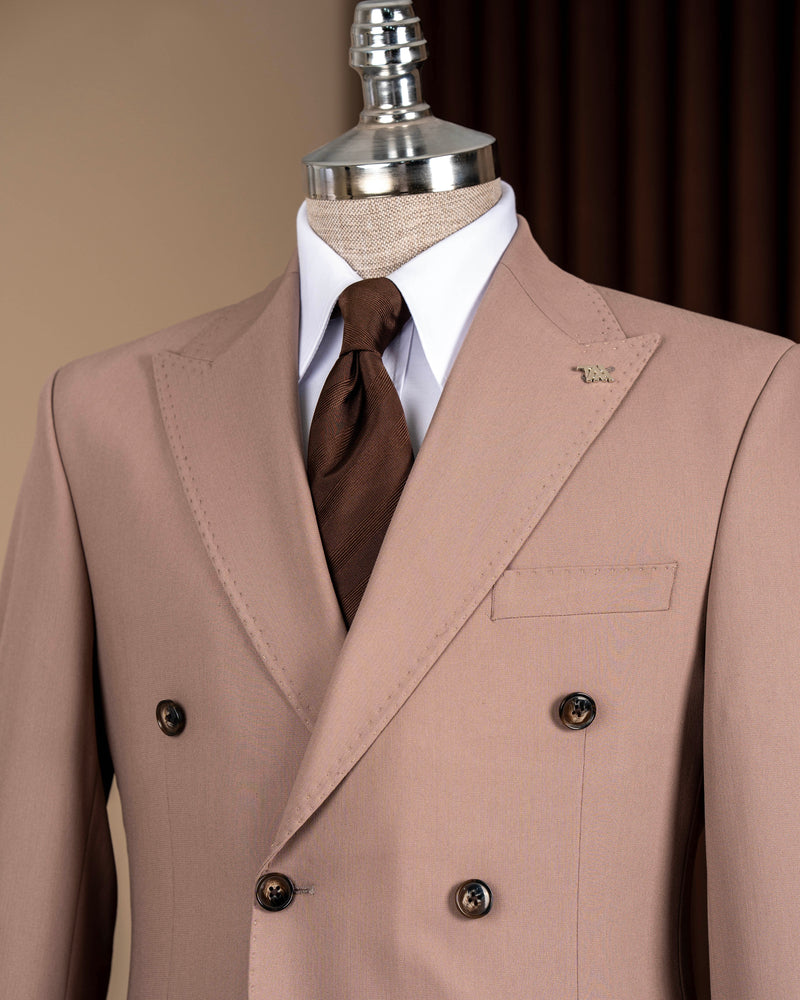
Double-breasted silhouettes have moved from trend to standard. The six-button, two-to-button configuration — common on both suits and tuxedo jackets — is outselling single-breasted cuts in several VIOSSI collections right now, which tracks with what's happening at a runway level across Brioni, Tom Ford, and what GQ has been flagging as the dominant formal silhouette for the past two seasons.

Shop now →
Color is another dividing line. For suits in 2026, camel, dusty pink, and warm neutrals are doing serious work — both for weddings and upscale daytime events where black or charcoal feels too severe. For tuxedos, midnight navy is outselling classic black in the under-40 demographic, largely because it reads as intentional rather than rented. Black tuxedos remain standard for strict black tie, but navy gives you more range without sacrificing formality.
The three-piece tuxedo has also returned with intent. Adding a waistcoat under a tuxedo jacket — particularly in a slim-cut, matching fabric with satin-faced lapels — removes the need for a cummerbund entirely and gives the outfit more vertical structure. Men who've worn it once tend not to go back to the two-piece version.
Tuxedo vs suit vs blazer is a question that's become more relevant as dress codes blur. A blazer — a non-matching jacket worn with contrasting trousers — exists in its own category and belongs at smart casual events, not black tie or formal occasions. Conflating it with either a suit jacket or a tuxedo jacket is a mistake that's easy to make and hard to recover from once you're already at the event.
On the question of tuxedo vs suit for women: the power suit moment hasn't ended, and a well-cut tuxedo-style suit on a woman — particularly in ivory, black, or deep burgundy with satin lapels — carries as much formal weight as a gown in most non-religious contexts. Vogue has tracked this shift extensively, and it's no longer a "fashion statement" — it's a legitimate formal option.
How to Style Tuxedo Vs Suit
For a tuxedo: the standard configuration is a black or midnight navy jacket with matching satin-stripe trousers, a white pleated dress shirt with a covered placket, a black bow tie (self-tied if you care about how things look), black patent leather oxfords or pumps, and either a pocket square in white linen or nothing at all. That's it. The tuxedo works because everything is decided for you — the job is execution, not creativity.
Where men go wrong with tuxedos is accessory overload. A colored pocket square in a tuxedo usually reads as confusion rather than personality. A novelty bow tie undoes everything the jacket is doing. The tuxedo is a system. Operate within it.

Shop now →
For a suit, the range of expression is wider and the decisions are more consequential. A camel double-breasted suit worn to a daytime wedding looks exceptional with a white dress shirt, no tie, and tan leather derby shoes — but that same suit with a black tie and black shoes starts to conflict with itself tonally. Match the warmth of the fabric to your accessories. Camel and warm tones want brown leather, suede, and earth-toned accessories. Charcoal and navy want black or dark burgundy.
One genuinely useful rule that most styling advice skips: the gorge height on your lapel changes how the outfit reads at a distance. A high gorge — where the lapel meets the collar close to the shoulder — reads modern and slim. A low gorge reads relaxed and vintage. If you're buying off-the-rack and the gorge sits below your collarbone, the suit is reading older than it should regardless of cut. This is worth checking before you buy, and it's one of the things the FC-Tailor collection accounts for in its construction.
Trouser break matters more than most men think. A tuxedo trouser should have no break or a very slight one — clean, just grazing the top of the shoe. A suit trouser can carry a slight break, particularly in a more relaxed fabric like linen or cotton. Full breaks are out entirely in 2026.
Best VIOSSI Picks
For formal events where the tuxedo is non-negotiable, the VIOSSI tuxedo collection runs from the Black Slim-Fit Tuxedo 3-Piece — clean, peak lapels, works for everything from black tie weddings to New Year's events — to the Navy Slim-Fit Tuxedo 3-Piece, which is the better choice if you want something that photographs well and reads slightly less corporate than classic black.
For the suit side of the tuxedo vs suit decision, the double-breasted suit range is where VIOSSI is doing its most interesting work this season. The Camel Double Breasted Suit 2-Piece and the Dusty-Pink Double Breasted Suit 2-Piece are both performing well for spring and summer weddings — occasions where you want a suit that doesn't read as borrowed from a boardroom.
Shop the Look


If you're building a suit wardrobe that handles most formal occasions without requiring a separate tuxedo purchase, the VIO Suits collection is the right starting point — specifically the midnight navy options, which carry enough visual weight to function at black tie optional events while still working for business formal and weddings where the dress code doesn't require satin lapels.
Tuxedo vs suit price is a real consideration. A well-constructed tuxedo costs more upfront because of the satin facing, the covered placket, and the trouser detailing. But a man who attends four or five formal events per year will recoup that cost faster than he thinks, particularly against the cost of repeated rentals. VIOSSI ships free on orders over $299, delivers in two to five days, and covers duties — so the landed cost is exactly what you see at checkout.
Final Thoughts
Most men own the wrong version of whichever one they bought. They own a suit for black tie events and wonder why they feel underdressed, or they own a tuxedo and rent a suit for everything else when one well-chosen slim-fit suit in midnight navy would have handled eighty percent of their calendar.
Buy for what you actually attend, not for what sounds like a complete wardrobe on paper.
| Brand | Price | Fit Options | Fabric | Shipping | Returns | Best For |
|---|---|---|---|---|---|---|
| VIOSSI | $189–$389 | Slim, Regular | Italian wool, linen, cotton blends | Free over $299 · Standard 2–5 days · Duties covered (DDP) | 15-day returns · Unused & original packaging required | Best price-to-quality ratio for Italian-fabric suits |
| SuitSupply | $299–$699 | Slim, Regular, Modern | Wool, linen, cashmere blends | Free over $200 | 14-day returns (altered items excluded) | Wide brick-and-mortar presence, good MTM program |
| Indochino | $299–$599 | Made-to-measure only | Wool, poly blends | Free shipping, 4–6 week delivery | Alterations included, no cash refunds | Best for MTM budget option, long lead time |
| Bonobos | $298–$498 | Slim, Regular, Athletic | Poly-wool blends, stretch fabrics | Free over $98 | 60-day returns | Best athletic fit, no 3-piece or tuxedo options |
| Jos. A. Bank | $149–$499 (frequent 60% off sales) | Slim, Regular, Tailored | Poly-wool blends, wool | Free over $50 | 30-day returns | Constant BOGO sales — actual price often unclear |