
Peak Lapel vs Notch Lapel: Which Should You Wear?
The notch lapel is the default. The peak lapel is a choice. That's the fastest way to understand the difference — one is what suits come with when nobody's thought too hard about it, the other is a deliberate statement about formality and proportion. Get this one detail right and a suit reads as intentional; get it wrong and it reads as rented.
Notch Lapel Meaning (and Peak, Fast)
A notch lapel is the standard lapel on a single-breasted suit or sport coat — named for the small triangular "notch" cut into the point where the lapel meets the collar. That cutout is the giveaway. If your suit has one and you can't remember choosing it, it's almost certainly a notch. A peak lapel has no notch: the lapel edge points sharply upward toward the shoulder in a clean diagonal. Two lapels, one cut into a V, the other sweeping up into a point — that's the whole vocabulary you need before we get into which to actually wear.
Shop Men’s Slim Fit Suits
Still deciding? The full Men’s Slim Fit Suits range is on our site, in the sizes we stock.
Shop the collection →Free shipping over $299 · Arrives in 2–5 business days · 15-day returns
Visual Difference in 10 Seconds
The notch lapel has a triangular cutout where the lapel meets the collar — that "notch" is the joint between the two pieces of fabric, and on most off-the-rack suits, it typically sits at an angle somewhere between 60 and 90 degrees. The peak lapel points upward and outward toward the shoulder, no cutout, just a sharp diagonal line that draws the eye wide and up. It's the same jacket, different lapel, completely different silhouette.

Shop now →
The gorge — the seam where lapel and collar join — sits higher on peak lapels, which is part of why they read as more formal. On a notch lapel, that gorge line is lower and more horizontal. You'll notice it immediately once you know what to look for, and you'll never unsee it.
One thing that trips men up: double-breasted suits almost always come with peak lapels. Always. The geometry of a double-breasted front demands the upward-pointing lapel — a notch lapel on a double-breasted jacket looks proportionally wrong, like the jacket can't decide what it wants to be. If you're shopping men's double-breasted suits, peak lapels are already in the picture whether you thought about it or not.
When to Wear Each Style
Notch lapels are appropriate for business formal, smart casual, job interviews, daytime weddings, and essentially any office-adjacent event. They read as professional without trying to say anything. That's their value — they don't distract, they don't demand attention, and they work with a wide range of shirt and tie combinations. A charcoal notch-lapel suit with a spread-collar dress shirt in pale blue is a combination that has never once failed to look correct.
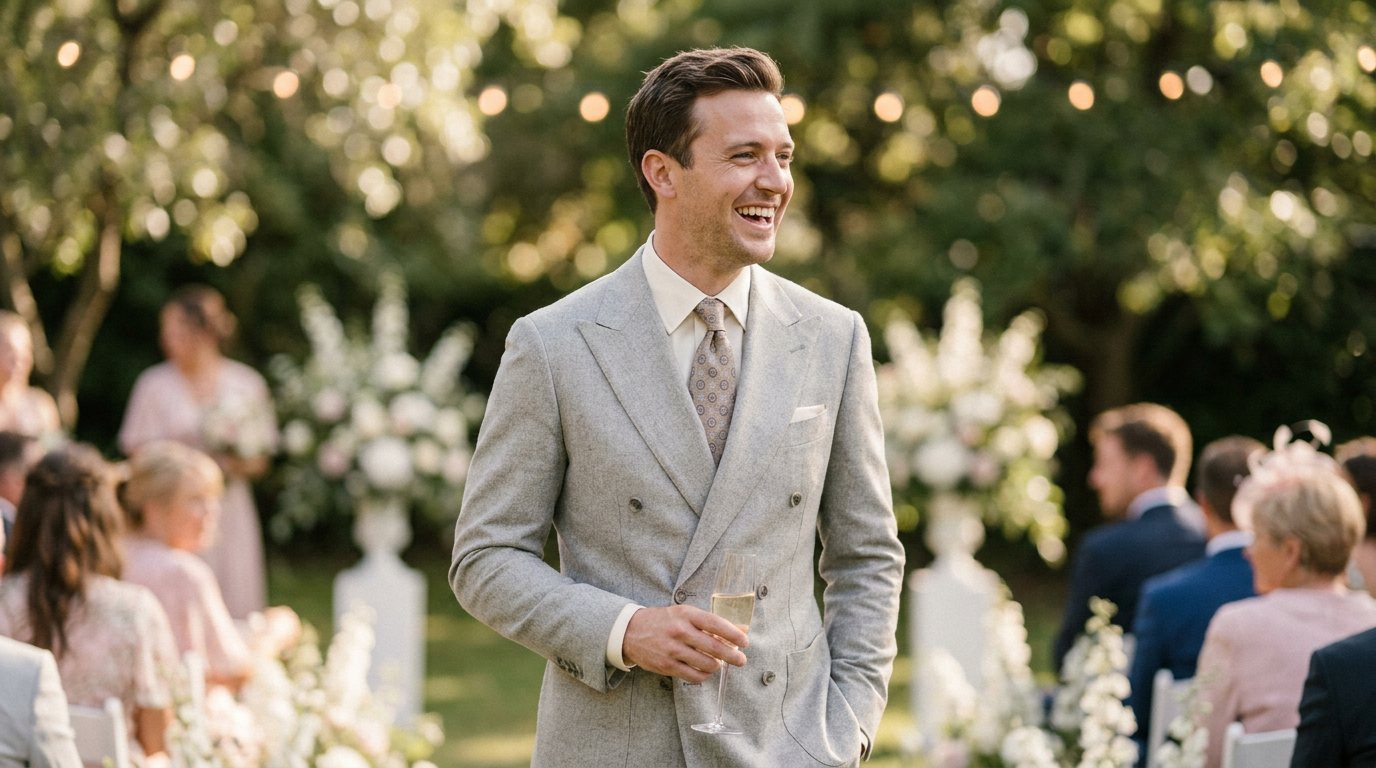
Peak lapels are for occasions that warrant a stronger visual statement. Black tie optional events. Weddings where the groom wants to register as the groom the second he walks in. Job interviews at creative firms where looking like everyone else is actually a liability. A peak lapel on a single-breasted suit signals that the wearer understands the difference between wearing a suit and dressing deliberately. That's the distinction men should be making when they compare peak lapel vs notch lapel — not "which is fancier" but "which level of intentionality does this occasion call for."
For tuxedos, the question shifts slightly. A notch lapel tuxedo exists and is perfectly acceptable at black tie optional events, especially if the rest of the look is sharp — a properly fitted jacket, no visible shirt gap, shoes that mean business. But peak lapel vs notch lapel on a tuxedo is less of a debate when you consider that most formal menswear tradition leans toward peak for dinner jackets. Purists will tell you a notch lapel on a true black-tie tuxedo is a compromise — and heading into 2026, they're not wrong, though it's a compromise plenty of well-dressed men make and get away with. The Black Slim-Fit Tuxedo 3-Piece handles this correctly. (More on tuxedo lapels in the shawl section below.)

Shop now →
For weddings specifically — peak lapel vs notch lapel for wedding guests comes down to one question: are you trying to look like a guest or a presence? Most men should aim for presence. A peak lapel suit in a rich mid-tone — dusty pink, deep navy, warm camel — does that without competing with the wedding party.
Which Looks Better on Your Body Type
Peak lapels add width at the shoulder and chest. Notch lapels are more neutral.
For narrower frames, men with sloped shoulders, or anyone whose chest-to-waist ratio is less dramatic than they'd like it to be — peak lapels do real structural work. The upward diagonal line creates the illusion of broader shoulders, which creates the illusion of a more tapered waist, which is the silhouette most tailored clothing is trying to achieve in the first place. You don't get that from a notch lapel. A well-constructed peak lapel on a slim-cut jacket is doing more visual lifting than most men realize.
Men with already broad, square shoulders should think twice before reaching automatically for peak lapels — though in practice, a well-fitted suit mitigates most of this concern. If fit is right, as we detail in our guide on how a suit should fit, lapel style becomes secondary. The jacket's shoulder seam sitting exactly at the shoulder point matters more than whether the lapel points up or has a notch cut into it.
Shorter men: peak lapels, full stop. The vertical line they create adds perceived height in a way that notch lapels simply don't. Pair with a higher gorge, a slight break in the trouser, and you've added two inches of perceived height without anyone being able to explain why.
Shawl Lapel: The Third Option
If notch is the default and peak is the statement, shawl is the specialist. A shawl lapel has no break at all — it's a single, continuous curve of fabric from collar to chest, and it exists almost exclusively on tuxedos and smoking jackets. Peak vs notch vs shawl lapel on a tuxedo is a genuine three-way choice, and men agonize over it more than necessary.
The shawl lapel reads as the most formal of the three on a tuxedo, and simultaneously the most relaxed — which sounds contradictory until you understand that it belongs to a very specific tradition of evening dress that has nothing to do with office culture or weddings. A shawl lapel tuxedo at a black-tie event is impeccable. A shawl lapel blazer worn casually reads as a smoking jacket (which is either excellent or costume-y depending entirely on the man wearing it and whether he's in a Notting Hill townhouse or a Marriott conference center). For the difference between a tuxedo and a suit more broadly, we've covered that in detail in our tuxedo vs suit guide.
Notch lapel vs shawl lapel on a tuxedo: shawl lapel is dressier, full stop. If you're at a formal gala or a very traditional black-tie wedding, shawl is the correct call. If you're at black tie optional and want optionality in how you wear the jacket later, notch or peak gives you more range.

Shop now →
One thing worth knowing: the width of any lapel matters as much as its style. A narrow peak lapel on a wide-shouldered man can look pinched and off. A wide shawl lapel on a slight frame can swallow the wearer entirely. Lapel width should roughly mirror tie width — both in a similar range for a standard modern silhouette — and the lapel button point should align with where the jacket's natural waist falls. When those proportions are off, no amount of lapel style selection saves the look. This is the kind of detail that separates men who wear suits well from men who just wear suits.
Our Picks for Each Lapel Style
For peak lapels done correctly — including the double-breasted suits that demand them — the double-breasted suit collection is the place to start. The Camel Double Breasted Suit 2-Piece and the Beige Striped Double Breasted Suit 2-Piece both carry peak lapels with the right gorge height and lapel width for a contemporary silhouette that still reads as formal. The camel is the stronger choice for weddings and evening events. The striped beige is for the man who already has the basics and wants something with texture.
For single-breasted notch lapel suits — business meetings, interviews, a versatile foundation piece — browse the men's blazers and sport coats or the full men's slim fit suits collection. A notch lapel in charcoal or navy with a tailored fit is the highest-utility suit most men will ever own. If you're buying one suit, it's that one. If you're buying a second suit and you've already got the basics covered — that's when peak lapels become the correct answer.
Shop the Look


The peak lapel vs notch lapel debate, when men dig into it on forums and Reddit threads, usually ends with someone saying "it depends." It doesn't really depend. Peak lapels are more formal, more structured, and work harder for most body types. Notch lapels are more versatile and less demanding. Know what your occasion calls for, and choose your suit construction accordingly — because the lapel is only as good as the jacket it's on.
| Brand | Price | Fit Options | Fabric | Shipping | Returns | Best For |
|---|---|---|---|---|---|---|
| VIOSSI | $189–$389 | Slim, Regular | Italian wool, linen, cotton blends | Free over $299 · Standard 2–5 days · Duties covered (DDP) | 15-day returns · Unused & original packaging required | Best price-to-quality ratio for Italian-fabric suits |
| SuitSupply | varies; see site for current pricing | Slim, Regular, Modern | Wool, linen, cashmere blends | free shipping available; see site for current threshold | returns accepted with conditions; see site for current policy | Wide brick-and-mortar presence, good MTM program |
| Indochino | varies; see site for current pricing | Made-to-measure only | Wool, poly blends | Free shipping, extended lead time; see site for current estimates | alteration and refund policies apply; see site for current terms | Best for MTM budget option, long lead time |
| Bonobos | varies; see site for current pricing | Slim, Regular, Athletic | Poly-wool blends, stretch fabrics | free shipping available; see site for current threshold | extended returns window; see site for current policy | Best athletic fit, no 3-piece or tuxedo options |
| Jos. A. Bank | varies; frequent sales — see site for current pricing | Slim, Regular, Tailored | Poly-wool blends, wool | free shipping available; see site for current threshold | returns accepted; see site for current policy | Constant BOGO sales — actual price often unclear |
Related Guides
For how these rules keep shifting season to season, Esquire's style desk tracks the same ground.
Shop Men’s Slim Fit Suits
That is the shortlist. Every piece above lives in Men’s Slim Fit Suits, with sizes and prices in one place.
Shop the collection →Free shipping over $299 · Arrives in 2–5 business days · 15-day returns