
Spring Suit Colors: 2026 Guide for Men
For how these rules keep shifting season to season, Esquire's style desk tracks the same ground.
Spring suits demand color strategy. Come March, the charcoal-and-black default stops working — warmer days and brighter light call for lighter tones. The spring suit colors trending in 2026 separate men who dress for the season from those still clutching their winter navy in a heatwave. Here's what to wear, when, and why.
What You Need to Know About Spring Suit Colors
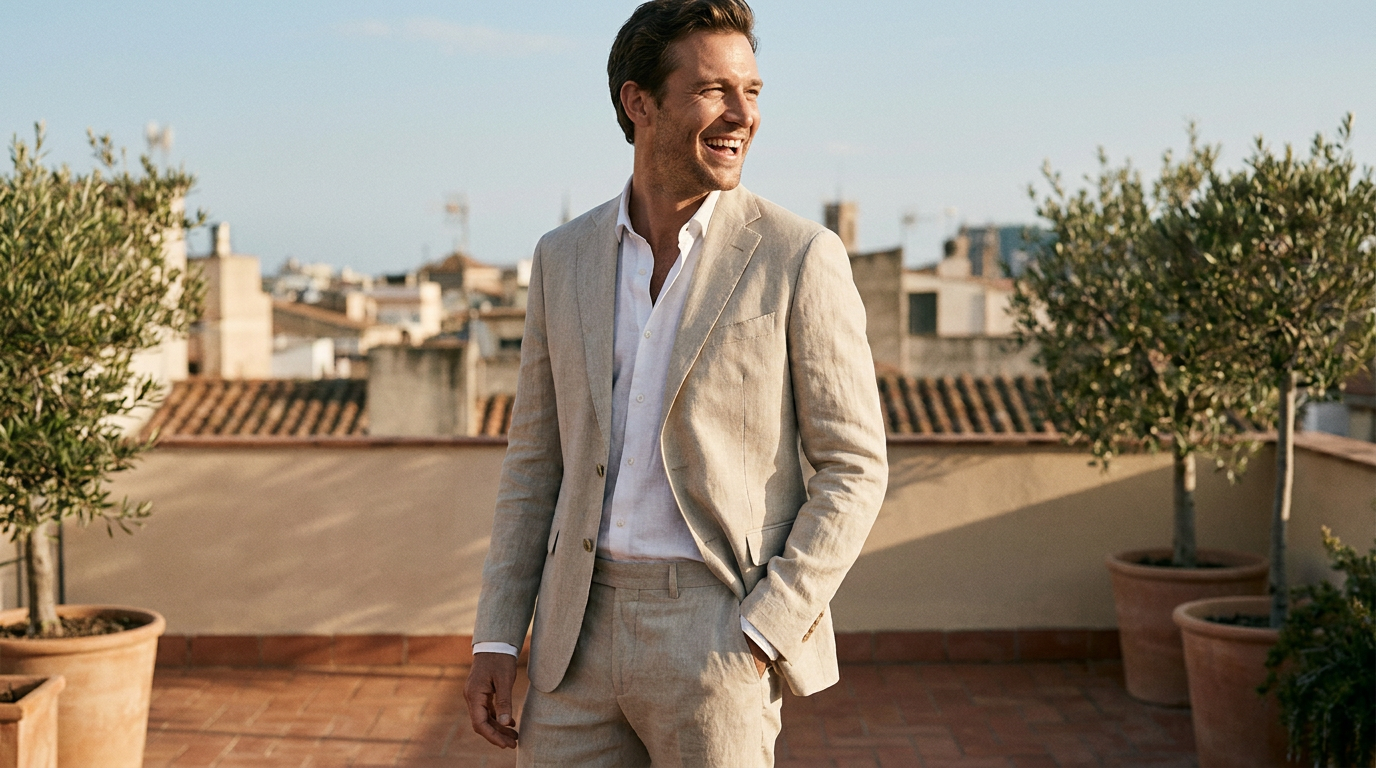
Traditional spring palettes center on tan, light gray, and soft blue.
These shades reflect light rather than absorbing it, keeping you cooler while photographing better in natural sunlight. But 2026's approach to spring suiting pushes beyond these basics. Brown has moved from fall-only territory into year-round sophistication, particularly in lighter tobacco and caramel tones. Subtle patterns - pinstripes, windowpanes, micro-checks - add depth without overwhelming the lighter base colors that define spring tailoring.

Shop now →
Weight matters more than you think. A light gray suit in heavyweight wool reads as winter despite the color. Spring fabrics - tropical wool, cotton blends, lightweight worsted - transform the same shade into appropriate warm-weather wear. The VIOSSI slim-fit collection specifically features lighter-weight constructions that breathe better once temperatures climb above 65 degrees.
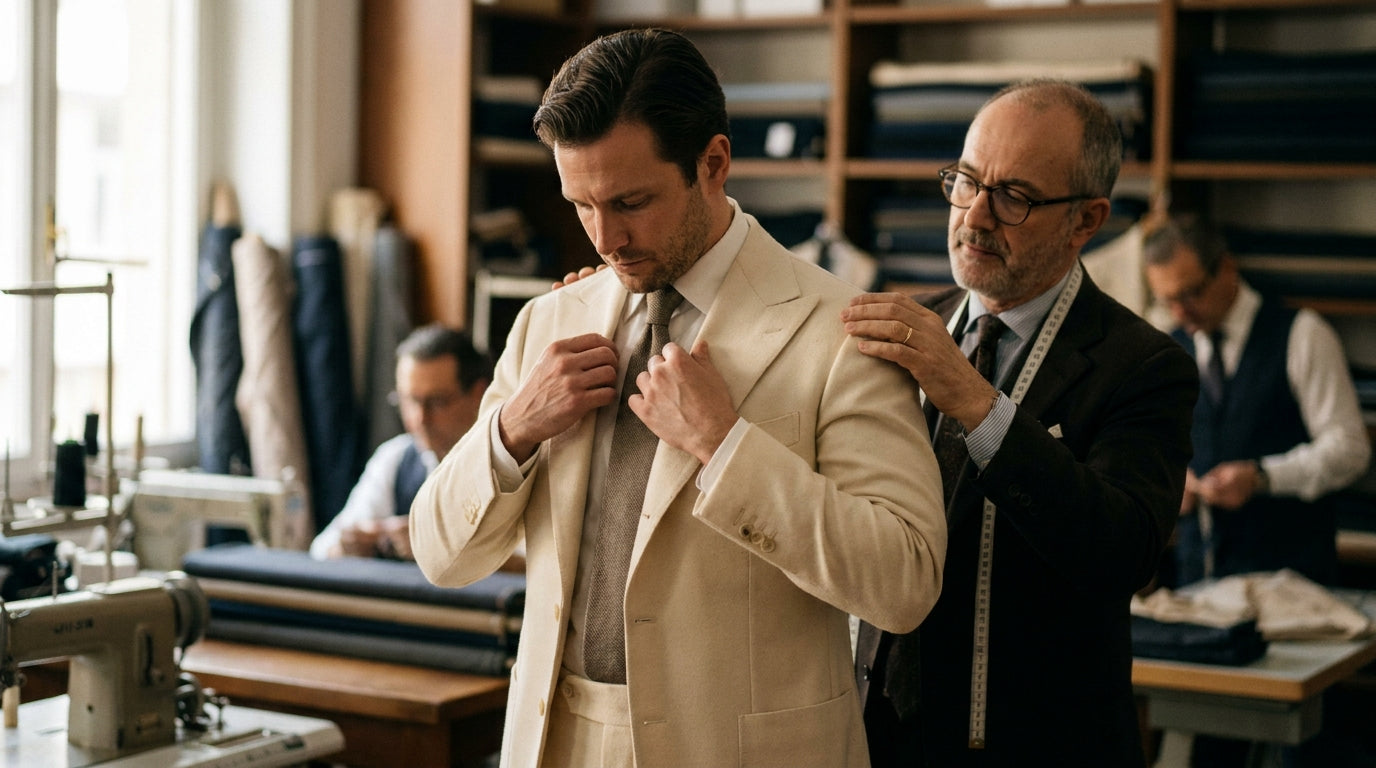
One rule: avoid pure white suits unless you're attending a Miami yacht party or getting married on a beach. Off-white, cream, and beige offer the same fresh appeal without the costume effect.
Shop Men’s Slim Fit Suits
Still deciding? The full Men’s Slim Fit Suits range is on our site, in the sizes we stock.
Shop the collection →Free shipping over $299 · Arrives in 2–5 business days · 15-day returns
Pay Attention to Pastels

Pastels bring a genuine sense of rebirth to a spring wardrobe. They sit apart from traditional suiting, but their soft palette mirrors the season better than almost anything else. Worn right, they catch attention without shouting for it.
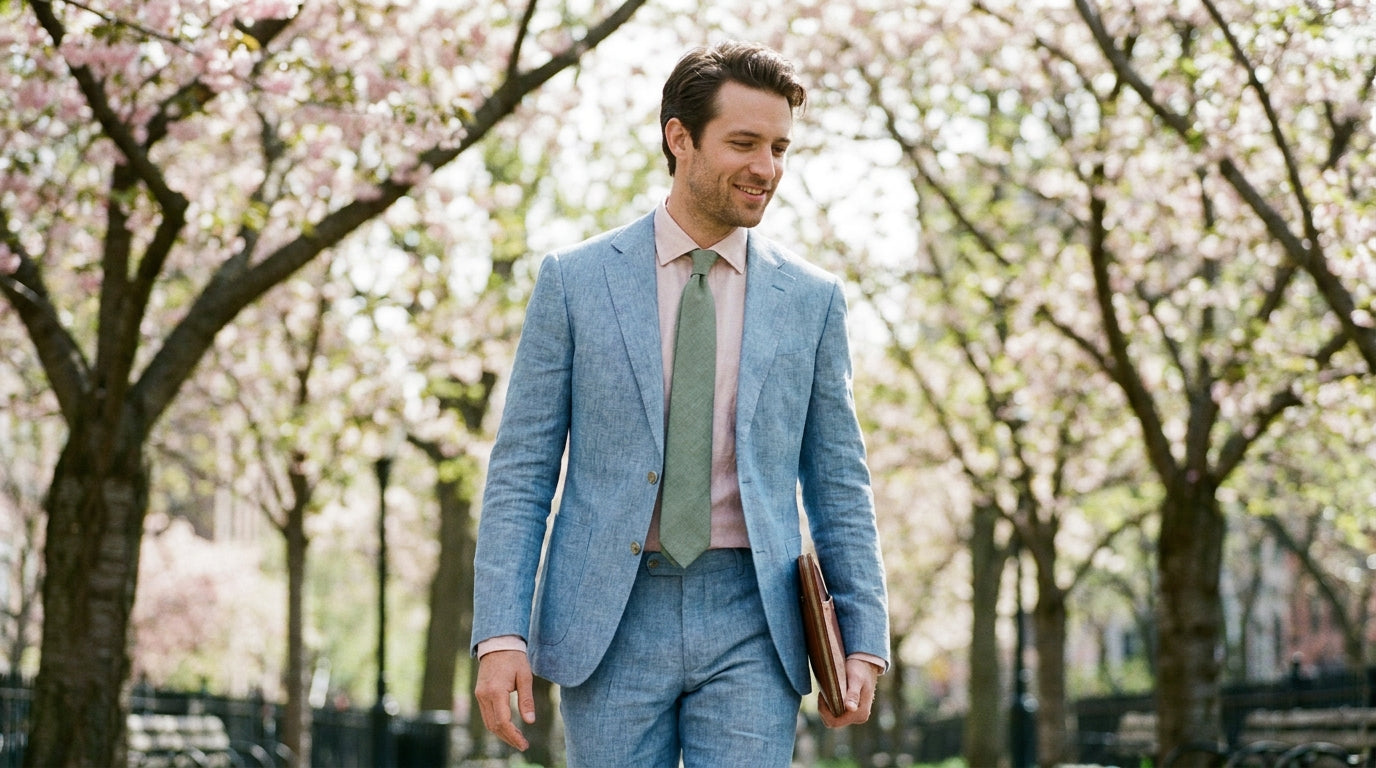
Focus on shades like sky blue, mint, pink, or lavender. These tones read romantic at spring weddings, sharp at social events, and still stylish enough for the office. If a full pastel suit feels like too much of a leap, work the color in through a pocket square or tie instead - a hint goes a long way.
Top Trends in Spring Suit Colors for 2026
Bordeaux leads the color conversation this season. Not burgundy, not wine - specifically that dusty rose-brown hybrid that reads sophisticated rather than flashy. The shade works particularly well in plaid patterns, breaking up the intensity while maintaining visual interest. Brown continues its renaissance, but spring 2026 favors warmer undertones: think cinnamon, rust, and golden tobacco rather than chocolate or espresso.
Double-breasted silhouettes in these lighter tones create unexpected contrast. The formality of the DB cut balanced against relaxed spring colors produces a tension that reads as intentional rather than confused.
Stripes dominate pattern choices. Not the aggressive Wall Street pinstripe - we're seeing softer, wider-spaced lines in tonal variations. Brown on tan. Gray on light gray. Blue on cream. These patterns add movement without screaming for attention, perfect for professionals who need personality without sacrificing credibility. The double-breasted options particularly benefit from vertical striping, which lengthens the torso and counters the jacket's natural width.

Shop now →
Texture plays bigger than expected. Linen blends (not pure linen - too wrinkled for most offices) introduce visual depth while maintaining structure. Seersucker makes occasional appearances but remains regional. Cotton-wool blends offer the best compromise between breathability and sharp tailoring.
Trending Spring Styles Worth a Look

A few silhouettes keep coming back each spring. The three-piece suit sits at the top - timeless, slim through the frame, and built to flatter. With jacket, trousers and waistcoat all cut from the same cloth, it follows your contours and holds a polished, prestigious line. Our Black Slim Three Piece Suit is the reliable starting point.
Bold color is the other big move. Greens, blues and burgundies signal confidence the moment you walk in - charisma before you've said a word. The Blue Slim Three Piece Suit is an easy way to test it. And if you'd rather draw quieter attention, vertical stripes do the work: they lengthen the frame and make a sharp first impression. Keep the shirt neutral underneath so the lines stand out.
What Color Suit to Wear to a Spring Wedding
Spring weddings run on different rules than the office. Daytime and outdoor ceremonies reward lighter, warmer tones - tan, sage green, soft blue, and bordeaux all photograph beautifully against garden and vineyard backdrops. As a guest, the only firm rule is to stay off white and cream if you're not the groom, and skip anything black-tie-formal for an afternoon celebration.
For the groom or groomsmen, a bordeaux plaid or a light gray three-piece hits the balance between dressed-up and seasonal. Evening receptions can handle a deeper navy or charcoal, but afternoon ceremonies call for the lighter end of the palette. When in doubt, match your suit's formality to the venue: the more relaxed the setting, the lighter you can go.
How to Style Spring Suit Colors
Light suits demand darker shirts for balance - this prevents the washed-out effect that kills so many spring looks. A tan suit with a white shirt photographs poorly. Switch to soft blue, lavender, or even pale pink shirts to create necessary contrast. The dress shirt selection should lean toward subtle patterns: micro-dots, thin stripes, or textured weaves that add interest without competing with the suit itself.
Brown suits pair naturally with blue shirts, but consider unexpected combinations: olive green shirts with light brown suits, or dusty rose with tan. These combinations feel current without trying too hard. Ties should either match the shirt intensity or go slightly darker - never lighter than your shirt unless you're aiming for that specific Italian sprezzatura look (and most aren't).
Footwear shifts lighter too. Dark brown replaces black for most spring suit colors. Tan suede loafers work with cream and beige suits. Medium brown leather stays versatile enough for office and events. Skip white shoes entirely unless you're in the wedding party.
The three-piece vest question comes up constantly. With lighter suits, vests add sophistication but risk overheating. Solution: choose vests in contrasting textures or subtly different shades. A linen-blend vest under a wool suit. A slightly darker tone of the same color family. This breaks up the monotony while maintaining cohesion.
Accessories follow the same lighter principle. Pocket squares in white linen remain standard, but consider pale yellow, soft blue, or patterns incorporating your shirt color. Belts match shoes - always. Watches should favor leather straps over metal bracelets with spring suits, though a vintage gold dress watch works with warmer tones.
How to Accessorize Your Suit for Spring Events
Weddings, garden socials, race days - spring loads up the calendar fast. The right details separate a good suit from a memorable one, so here's where to focus.
Lapel Pins
A lapel pin is a small extension of your personality. Go floral for something light and seasonal, or pick a pin that contrasts your suit's color to pull the eye. Either way, keep it deliberate.
Hats
The right headwear finishes a look; the wrong one wrecks it. Two options carry the season. Panama hats sit perfectly with a linen suit - light, cool, and cut in natural tones that flatter anything from cream to charcoal. Fedoras lean more classic and work best with a three-piece or tailored cut, keeping things sharp and modern.
Tie Bar
Clip a tie bar between the third and fourth buttons of your shirt for a clean, put-together finish. It shows attention to detail and, on the windier spring days, stops your tie flying about.
Scarves
Round off the look with a printed scarf. A silk or cotton scarf around the neck adds flair without much effort - experiment with bold colors or playful prints and let it do the talking.
Best VIOSSI Picks
The Bordeaux Plaid Slim-Fit 3-Piece consistently sells through spring wedding season. The color photographs beautifully in outdoor settings while the plaid pattern prevents it from reading too formal. Grooms particularly favor this for afternoon ceremonies where traditional gray feels too corporate.
For office wear, the Brown Striped Slim-Fit 3-Piece hits the sweet spot between interesting and appropriate. The striping adds visual weight to the lighter brown base, preventing that washed-out effect under fluorescent lighting. Clients report wearing this suit year-round by swapping shirt weights seasonally.
Double-breasted options like the Brown Striped DB 2-Piece work best for events rather than everyday office wear. The formality of the cut combined with the relaxed color creates perfect cocktail attire. Men under 5'10" should ensure proper tailoring - DB jackets can overwhelm shorter frames when not fitted correctly.
The VIO Suits collection features several limited spring colorways that sell out by April. These pieces use Italian fabrics specifically chosen for warm-weather wear - the hand-feel alone distinguishes them from heavier year-round options.
Final Thoughts
Spring suit colors require confidence. The man who switches from safe navy to considered tan makes a statement about understanding context, season, and personal presentation. Master the basics first - fit, fabric weight, appropriate styling - before experimenting with bolder choices like rose-tinted plaids or cream three-pieces.
Most men need two spring suits maximum: one for the office, one for events. Choose versatility over trend-chasing.
| Brand | Price | Fit Options | Fabric | Shipping | Returns | Best For |
|---|---|---|---|---|---|---|
| VIOSSI | $189-$389 | Slim, Regular | Italian wool, linen, cotton blends | Free over $299, 2-5 days | 15-day returns | Best price-to-quality ratio for Italian-fabric suits |
| SuitSupply | Varies by style | Slim, Regular, Modern | Wool, linen, cashmere blends | See retailer site for shipping details | See retailer site for return policy details | Wide brick-and-mortar presence, good MTM program |
| Indochino | Varies by style | Made-to-measure only | Wool, poly blends | Free shipping, lead time varies | See retailer site for return policy details | Best for MTM budget option, long lead time |
| Bonobos | Varies by style | Slim, Regular, Athletic | Poly-wool blends, stretch fabrics | See retailer site for shipping details | See retailer site for return policy details | Best athletic fit, no 3-piece or tuxedo options |
| Jos. A. Bank | Varies by style (frequent promotional sales) | Slim, Regular, Tailored | Poly-wool blends, wool | See retailer site for shipping details | See retailer site for return policy details | Constant BOGO sales - actual price often unclear |
Shop the Look


Shop Men’s Slim Fit Suits
That is the shortlist. Every piece above lives in Men’s Slim Fit Suits, with sizes and prices in one place.
Shop the collection →Free shipping over $299 · Arrives in 2–5 business days · 15-day returns
Frequently Asked Questions
What is the best spring suit colors: a complete guide?
The best choice depends on your occasion, body type, and personal style. When it comes to spring suit colors: a complete guide, focus on quality fabric, proper fit, and versatility - pieces that work across multiple settings offer the best value.
How do I choose spring suit colors: a complete guide?
Start by identifying your primary use case - formal, business casual, or everyday wear. Then consider fit (always prioritize this), fabric quality, and color. For spring suit colors: a complete guide, neutral tones tend to be the most versatile starting point.
Why choose Spring suit colors: a complete guide?
A well-chosen spring suit colors: a complete guide adds polish and confidence to your appearance. Investing in quality over quantity means fewer but better pieces that last longer and look sharper - a core principle of a refined wardrobe.