
How to Match Belt and Shoes: Colour Rules, Chart & Outfit Guide
Yes, your belt should match your shoes. Heading into 2026, this classic menswear rule still holds up. In a formal setting, like a two-piece suit with a single-breasted jacket and notch lapels, the leathers of your shoes and belt should be an exact match in both color and finish, creating a clean, unbroken line. Match the belt to your shoes first — your suit only decides which leathers are in play.
For how these rules keep shifting season to season, GQ's style desk tracks the same ground.
Short answer: yes, your belt should match your shoes. It's one of the oldest rules in menswear and it still holds up in 2026 for a simple reason — it works. In a formal setting, like a classic two-piece suit with a single-breasted jacket and notch lapels, the leathers of your shoes and belt should be an exact match in both color and finish. That one move creates a clean, unbroken line that sharpens your entire look. Below, the exact rules for every color, dress code, and season.
The Foundation of a Polished Look
Let’s be honest, the small details often make the biggest difference in men's style. Getting your shoes and belt right is one of those non-negotiable details that separates the novices from the guys who truly get it. This isn't just about ticking a box; it's about creating a cohesive, intentional frame for your entire outfit, whether it's a three-piece tweed suit or a modern tuxedo.
A well-matched pair ties your upper and lower body together, projecting an air of confidence and polish that’s hard to miss. This simple act elevates everything from a sharp navy business suit with its structured shoulders and flap pockets to more relaxed, smart-casual outfits.
Does Your Belt Have to Match Your Shoes?
This is the question we hear most, so let's settle it clearly. For formal and business dress, yes — your belt should match your shoes in color, tone, and finish. Black shoes call for a black belt. Brown shoes call for a brown belt in the same shade. It's not a suggestion; it's the baseline that keeps a suit looking intentional.
Where does it loosen up? Casual wear. Once you're in denim, chinos, or a soft unstructured jacket, "match" becomes "coordinate." Same color family, similar tone, and you're fine — a chestnut belt with darker brown boots reads as deliberate, not sloppy. Here's the quick decision:
- Suit or tuxedo? Match exactly — color and finish.
- Business casual? Match the shade and tone closely; textures can differ slightly.
- Weekend and casual? Stay in the same color family and make it look like a choice.
And one thing that trips people up: match your belt to your shoes, not to your suit. Your suit color guides which leathers you reach for, but the belt and shoes are the pair that has to agree.
How to Match a Belt: The One Rule That Covers Almost Everything
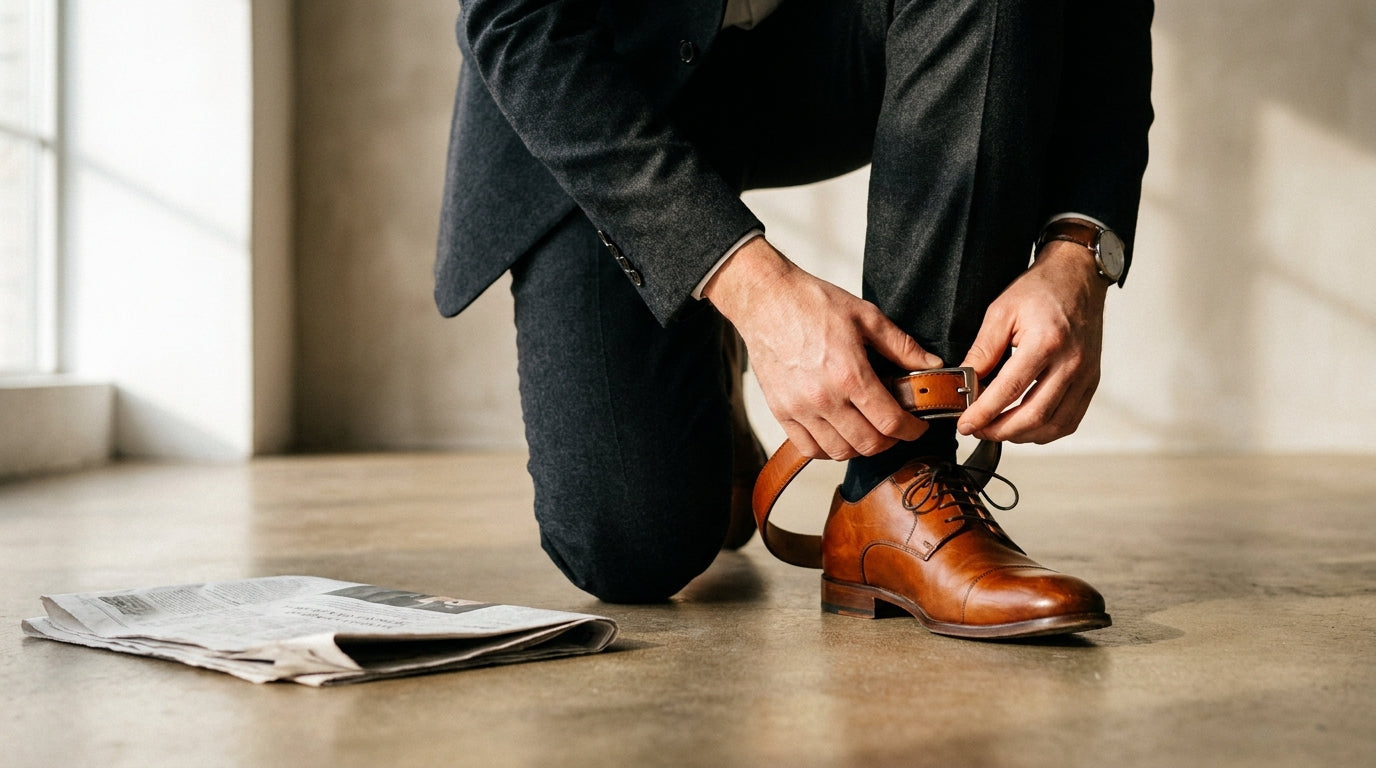
If you remember nothing else, remember this: a belt is matched to your shoes, in that order, every time. Pick the shoe, then find a belt in the same colour and the same finish. The suit or trousers come third — they only tell you which leathers are sensible, not which belt to buckle on. That single habit removes most of the guesswork.
Work it as a three-part check. First, colour: black with black, dark brown with dark brown, cognac with cognac. Second, finish: polished belt with polished shoes, matte or suede belt with matte or suede shoes. Third, hardware: keep the buckle metal in step with your watch. Nail those three and you've matched a belt correctly whether you're in a suit, chinos, or jeans. Everything else in this guide is just that rule applied to specific situations.
Why This Detail Matters So Much
The tradition of matching leather accessories isn't new; it has deep roots in early 20th-century formalwear when a man's attention to detail was a sign of sophistication. That same principle holds true today because it just plain works.
Think of it as the visual scaffolding for your outfit:
- It creates seamless continuity. A matching set prevents a jarring, distracting break at your waistline, especially important for a tailored two-piece or three-piece men's suit.
- It shows you're intentional. It's a clear signal that you've put thought into your appearance, right down to the accessories complementing your suit's buttons and lining.
- It builds your confidence. When you know the fundamentals are locked in, you carry yourself differently.
This principle becomes even more important as you navigate different dress codes and seasons. It's a key element in styling lighter fabrics and colors, which you can see in action in our guide to https://viossi.com/blogs/news/summer-suits-guide.
A mismatched belt and shoe combo - like wearing a black belt with brown shoes - instantly throws off your outfit's balance. It draws the eye to your waist for all the wrong reasons and can make even the most expensive three-piece wool suit look unkempt.
Getting this right is a major step toward defining your personal style. To build on this foundation and coordinate all the elements of your look, you can learn how to master the art of matching clothes.
Shop Men's Dress Shoes
Still deciding? The full Men's Dress Shoes range is on our site, in the sizes we stock.
Shop the collection →Free shipping over $299 · Arrives in 2–5 business days · 15-day returns
Should Your Belt Match Your Shoes? The Honest Answer
Yes — and here's the nuance behind the yes. For anything formal or business, matching isn't optional. Your belt and shoes sit at opposite ends of your silhouette, and the eye instinctively connects them; when they clash, even people who know nothing about clothes register that something is off. A black belt with brown shoes is the fastest way to make a good suit look careless.
Casual is where "should" softens to "coordinate." A woven belt with suede loafers, or a chestnut belt with darker brown boots, reads as deliberate as long as the tones live in the same family. So the honest answer is this: your belt should always agree with your shoes, but "agree" means an exact match in tailoring and thoughtful coordination in casualwear. Matching is never wrong — it's simply the strictest version of a rule you can relax as the outfit relaxes.
Quick Reference for Shoe and Belt Pairings
To take the guesswork out of it, I've put together a simple table. Think of this as your cheat sheet for getting it right every time, whether you're dressing for the boardroom in a two-piece suit or for a wedding in a smart tuxedo.
| Shoe Color | Recommended Belt Color | Best For (Suit/Occasion) |
|---|---|---|
| Black | Black (Exact match) | Formal (Tuxedos, Black Suits), Business (Charcoal/Navy Suits) |
| Brown | Brown (Match the shade as closely as possible) | Business-Casual (Grey/Blue Suits), Smart-Casual, Weddings |
| Tan/Cognac | Tan/Cognac (An exact match is ideal) | Casual Suits (Linen, Cotton), Summer Events, Smart-Casual |
| Oxblood/Burgundy | Oxblood/Burgundy (Match the tone) | Business (Navy Suits), Smart-Casual, Evening |
| Navy | Brown or Tan | Smart-Casual, Creative Suits (e.g., patterned) |
| Grey | Black (for dark grey suit) or Brown (for light grey suit) | Business-Casual, Modern Two-Piece Suits |
| White | White or a contrasting color like Tan for a casual look | Casual, Summer Suits, Bold Statements |
This table is a great starting point, but don't be afraid to trust your eye. The goal is harmony, not rigid uniformity in every single case. For formalwear like a tuxedo or a dark business suit, stick to the rules. For everything else, use them as your guide to looking effortlessly sharp.
Perfecting Your Formal and Black-Tie Attire

When an invitation calls for formalwear, the usual style "guidelines" become hard-and-fast rules. This is where precision matters most. A single mismatched detail can throw off an otherwise flawless look, so there’s absolutely no room for guesswork with your tuxedo or formal men's suit.
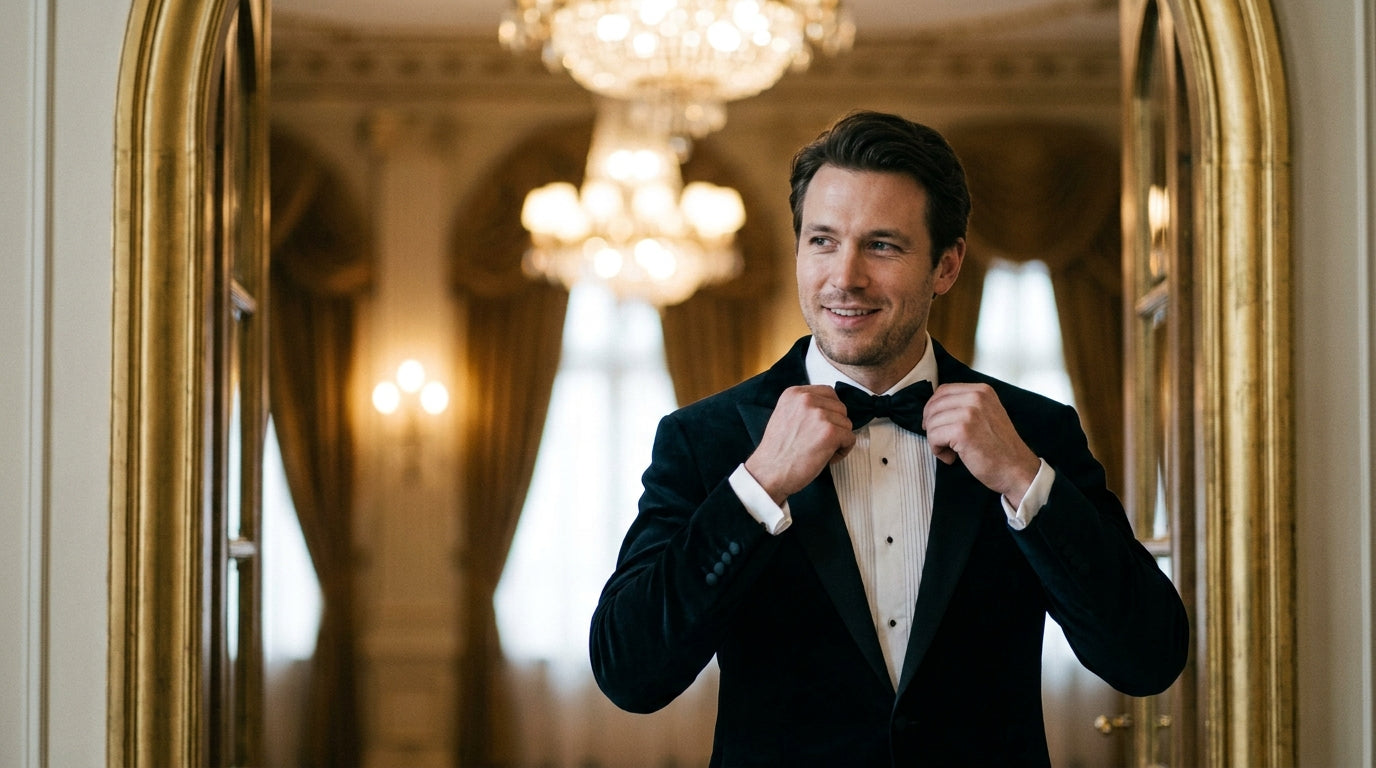
For the most elevated occasions - think a black-tie gala - the uniform is well-defined. If you’re in a classic black tuxedo, complete with satin peak lapels and a single-button closure, you need a slim, black patent leather belt and matching black patent leather shoes. The high-shine finish is essential. Choosing a matte leather, for example, would completely disrupt the polished, unified aesthetic that a well-constructed tuxedo demands. It's a non-negotiable detail.
Business Formal and Corporate Settings
In the world of corporate and business formal, your suit sets the standard. Whether you're in a sharp charcoal two-piece suit or a commanding navy three-piece suit, the most reliable choice will always be polished black calfskin Oxfords with a matching black leather belt. It's classic for a reason.
You have to pay attention to the little things:
- The Buckle: Your belt buckle should be simple and refined. A classic silver frame-style buckle is a great choice, as it won't clash with the hardware on a quality watch or the suit's buttons.
- The Finish: The sheen on your belt and shoes must be a perfect match. If your shoes are highly polished for your worsted wool business suit, your belt needs to have that same gloss.
This demand for perfectly coordinated, high-quality accessories is something we see reflected across the market. Men are increasingly seeking out classic designs to complete their formal looks.
Crucial Takeaway: For any formal outfit, from a tuxedo to a pinstripe three-piece suit, the texture and finish of your leathers are just as important as the color. Glossy patent leather shoes require a glossy patent leather belt. Polished calfskin shoes need a polished calfskin belt.
While black is the undisputed champion for business formal, there are some moments where you can bend the rules slightly. A rich, dark brown derby shoe can look fantastic with a navy or dark grey two-piece suit, but only in a less conservative corporate environment. Just make sure you have an equally rich, dark brown leather belt to maintain that visual harmony.
And if you’re deciding on the right tuxedo for an upcoming event, our guide on choosing between a white or black tuxedo can help you nail the perfect look.
Navigating Business Casual and Smart Casual

Shop now →

Once you step away from the rigid world of corporate dress codes, you enter the much more interesting territory of business casual and smart casual. This is your chance to show some personality, but the core principles of great coordination are still what hold your look together. The rules get a lot more flexible here, opening the door for creative pairings that still look sharp and deliberate, even with an unlined, soft-shouldered men's suit.
This is really where brown leather comes into its own. While black is the undisputed king of formalwear, brown offers a whole spectrum of tones and shades that are absolutely perfect for less buttoned-up settings. From a deep chocolate or rich cognac all the way to a light tan, the versatility you get with brown is incredible. I've recommended a mid-brown cap-toe to dozens of clients making the jump from sneakers to proper shoes, and it never disappoints — the color plays with any brown belt from tan to chocolate.
Think about a modern light grey two-piece suit - the kind with softer shoulders, a slim fit, and a more relaxed feel. Instead of automatically reaching for black, try pairing it with dark brown wingtip brogues and a perfectly matched dark brown belt. The whole look feels warmer and more contemporary, less severe than what you’d get with black.
Adding Texture and Character
Smart casual is also your invitation to start playing with different materials and textures. It’s a simple but incredibly effective way to add some real depth and interest to an outfit. This is what shows a more advanced understanding of style - it’s about moving beyond just color and thinking about the feel of your accessories when paired with a sport coat or a casual suit.
Let’s say you’re wearing navy chinos with a single-breasted sport coat. You can elevate this classic combination with a few key details:
- Suede Loafers: A pair of tan suede loafers introduces a soft, almost velvety texture.
- Woven Belt: Instead of flat leather, a woven tan leather belt complements the loafers perfectly. The texture in the belt creates a cohesive, relaxed vibe that just works.
This is the kind of pairing that makes a smart casual outfit really stand out. You’re matching the color, but you're also echoing the material's feel. Suede shoes almost always call for a suede belt; it’s one of those small details that makes a massive impact.
The real art of business casual is looking put-together without looking like you're trying too hard. When it comes to brown leathers with a casual two-piece suit or blazer, matching the shade and tone is far more important than a perfect, factory-matched set. A medium brown belt with a slightly lighter brown shoe can absolutely work, as long as the undertones feel right.
Ultimately, mastering this style is all about finding the right balance. You want to look thoughtful, not over-styled. By focusing on coordinating your brown leathers and introducing complementary textures, you can confidently pull together outfits that are perfect for the modern office or a stylish weekend out.
How to Match a Belt to Shoes When the Shades Are Close but Not Identical
Match the shoe first, then get the belt as close to that exact shade as you can — this is the part most guys underestimate. "Brown" is a dozen different colours, and the mismatch between cognac and chocolate is subtle but instantly visible. Start by naming your shoe precisely: tan, cognac, chestnut, walnut, oxblood or dark brown. Then hunt for a belt in that same lane, not a generic brown.
For formalwear, aim for a true match in both colour and finish. For business casual and smart casual, you have a little slack — a belt within a shade or two of the shoe reads fine, provided the undertones agree. Where it goes wrong is mixing warm and cool: a reddish cognac belt against a cool ashy brown shoe fights, even when both are "medium brown." When in doubt, hold them side by side in daylight before you commit.
Creative Pairings for Casual and Weekend Wear

When the weekend hits, those strict rules of formalwear can finally take a backseat. This is your chance to get creative and inject some real personality into your outfits, especially when it comes to pairing your belt and shoes. We're talking denim, casual chinos, or even a breezy linen shirt - occasions where perfect uniformity gives way to thoughtful coordination. This isn't about matching accessories for a men's suit; it's about complementing your relaxed style.
Forget trying to find an exact match for your shoes. Instead of a polished leather belt that might feel too stiff, think about materials that vibe with the relaxed feel of your footwear.
- Fabric and Canvas Belts: These are a natural fit for canvas sneakers or classic boat shoes. A navy fabric belt paired with navy sneakers, for example, creates a cohesive look that feels intentional without the formality of leather.
- Braided Belts: A braided leather or cotton belt is all about adding texture. This casual detail works incredibly well with loafers or driving mocs, giving your outfit a more laid-back, considered feel.
The Art of the 'Close Enough' Match
For those more rugged looks, you can fully embrace what I call the "close enough" approach. A heavily distressed brown leather belt doesn't need to be a carbon copy of your well-worn leather boots. Not at all.
As long as they're in the same color family - think a chestnut brown belt with a pair of darker brown boots - the look feels authentic and intentional, not sloppy. It's about capturing a shared attitude, not matching a color swatch.
The most important rule for casual wear is to make your choices look deliberate. You can absolutely wear a navy belt to pick up a color from your shirt, or a burgundy belt to create a pop of color against neutral chinos. The key is making it look like a conscious style choice.
You can also think bigger and use your belt to complement the entire outfit, not just your shoes. A tan woven belt, for instance, might be the perfect piece to tie in with a khaki field jacket. In casual settings, your belt and shoes become part of a broader style conversation, giving you so much more room for creative expression. This is your opportunity to break the rules with confidence.
Belt and Shoes Match: The Five Combinations Worth Memorising
You don't need to memorise every possible pairing — just the handful you'll actually reach for. Lock these five in and you're covered for almost any occasion in 2026:
- Black shoes + black belt. The default for tuxedos, black suits, and any conservative business setting. Polished with polished.
- Dark brown shoes + dark brown belt. The workhorse pairing for navy and grey suits. Warm, versatile, hard to get wrong.
- Cognac shoes + cognac belt. The go-to for lighter suits, linen, and smart casual — especially through spring and summer.
- Oxblood shoes + oxblood belt. Adds depth to navy tailoring and evening looks without the severity of black.
- Suede or woven belt + suede or canvas shoes. The casual answer, where texture matters as much as colour.
Notice the pattern: the belt is always named after the shoe, never the suit. Learn to read your footwear first and the match becomes automatic.
Go Beyond Color: Nail the Details with Texture and Hardware

Shop now →
Getting the color right is just the starting line. If you really want to elevate your style, you have to look at the finer details - specifically, the texture of your leathers and the finish of your metals. This is what separates a good outfit from a truly great one, whether you're styling a tuxedo or a casual suit.

Think of it this way: your belt's finish should always complement your shoe's finish. A shiny patent leather belt, for example, is made for one thing and one thing only - equally glossy patent leather shoes. That's the go-to combo for formalwear, especially a classic black tuxedo with satin-faced lapels. On the flip side, a belt with a more natural, matte grain is the perfect partner for matte dress shoes or loafers, making it a solid choice for a business casual two-piece suit in flannel or tweed.
Navy shoes are worth a special mention here, because most men default to a black belt with them. Wrong move. Navy leather wants navy leather - or at least a midnight blue that reads as navy in most lighting. A navy monk strap sings with a charcoal suit or a mid-blue blazer, and that unconventional choice quietly marks you as someone who understands nuance.
Aligning Textures and Metals
This same thinking applies to other materials and your metal hardware. When everything is in sync, you create a polished look that feels intentional and complete.
- Suede Loves Suede: Got a pair of suede chukka boots or loafers for your smart-casual three-piece suit? Don't even think about a flat leather belt. Grab a suede one instead. The consistent soft texture creates a sophisticated, thought-out look that's perfect for smart casual outfits.
- Hardware Harmony: The metal on your belt buckle needs to play nice with your other accessories. If you're wearing a steel watch and silver cufflinks with your French-cuffed shirt, a polished silver buckle is the obvious move. Rocking a watch with a gold case? You guessed it - a belt with a gold-tone buckle pulls the whole look together, especially if it complements the buttons on your suit jacket.
This kind of meticulous coordination signals that you've considered every last detail of your outfit. It’s that extra step that projects confidence and a real mastery of your personal style.
This growing focus on the finer points of style isn't just a niche trend. Attention to the finer points of style continues to grow, which means more guys are paying attention to the accessories that complete their look. As style evolves, so does the demand for belts and other items that perfectly match their shoes for every type of men's suit.
These details become even more critical when you're piecing together seasonal looks. For more inspiration on accessorizing, check out our guide on creating the perfect spring suit ensemble.
Common Mistakes to Avoid
Reversible belts ruin more outfits than badly fitted jackets. That black-to-brown flip seems practical right up until you're standing in front of a client and realize the wrong edge is showing. The hardware never quite sits right for either side, either. Buy two proper belts instead.
Fabric belts don't belong with leather dress shoes in a professional setting. Canvas, ribbon, needlepoint - save those for boat shoes and summer khakis. The clash between woven fabric and polished leather reads as an instant drop in formality. The only exception is a silk belt or cummerbund with patent leather shoes for black-tie.
Width matters more than people think. A two-inch Western belt has no business near dress shoes, and neither does a skinny three-quarter-inch strip. The standard 1.25-inch width is a safe choice that covers the vast majority of occasions.
And worn leather isn't "characterful" when the color has faded unevenly. A belt that's gone from black to grey at the stress points no longer matches your black shoes - at that point it matches nothing.
Finishing Touches and Styling Ideas
Two-tone shoes follow a simple rule: match your belt to the dominant color. Spectators in white and brown? Reach for the brown belt. Black-and-burgundy saddle shoes? Black takes precedence.
Think about seasonal swaps too. Summer's lighter oxfords in tan or cognac pair beautifully with a matching braided leather belt. Winter's darker footwear - oxblood brogues, black chelsea boots - wants a richer, fuller-grain belt. The weight of the leather should track the season and the shoe. A delicate loafer with a thick Western belt creates the same discord as work boots with a dress belt.
Your watch strap plays a part as well. It doesn't need to match perfectly, but it shouldn't actively fight your belt and shoes. A brown leather watch with a black belt and black shoes breaks the visual line every time.
A useful guiding principle for all of this: harmony is what matters. Sometimes that means an exact match. Sometimes it means thoughtful coordination within the same color family. The distinction comes with experience. Buy quality pieces, look after them, and your accessories will tell your story before you say a word.
Shop the Look


How to Match Belt Color: Step by Step
The rule is simple to state and easy to get wrong: match your belt to your shoes first, then let both coordinate with your suit. The shoe decides the leather colour; the suit only narrows your options. Here is the concrete order to work in.
Step 1: Identify your shoe colour precisely. "Brown" isn't specific enough. Tan, cognac, chestnut, walnut, oxblood, chocolate and dark brown all pair differently. A cognac belt against dark chocolate shoes reads wrong in a way that's hard to name but impossible to miss.
Step 2: Match the belt colour to that shoe as closely as you can. Black stays with black. Dark brown stays with dark brown. Burgundy and oxblood shoes take a belt in the same family rather than a generic brown.
Step 3: Let the suit confirm the pairing. Charcoal, navy and grey suits sit comfortably with black or dark brown. Tan, camel and light grey trousers call for cognac or tobacco, since black reads harsh against soft neutrals.
Step 4: Keep hardware consistent. Silver buckle with a silver watch, gold with gold. It costs nothing and removes visual noise.
Use this as your quick map. Read shoe first, belt second.
| Suit colour | Shoe colour | Belt colour |
|---|---|---|
| Black / charcoal | Black | Black |
| Navy | Dark brown | Dark brown |
| Navy | Oxblood / burgundy | Oxblood / burgundy |
| Grey | Cognac / tan | Cognac |
| Tan / camel | Tobacco / mid-brown | Tobacco |
How to Match a Belt With Any Outfit
Once the shoe-first rule is second nature, the outfit itself tells you how much precision it demands. Here's how it plays out across the looks men actually wear.
Suit. This is where the rules are strictest. With a tailored suit, keep the belt narrow — around 1 to 1.25 inches — because dress trouser loops are cut slim, and a thick casual belt stretches them and looks rough. Match the leather finish to your dress shoe: a polished Oxford wants a polished belt, not a matte one. Explore cuts that are built for this kind of coordination in the suits collection.
Blazer and trousers. A separates look gives you slightly more freedom than a full suit, but the shoe-to-belt anchor still holds. Cognac shoes with a cognac belt against grey trousers is the most forgiving combination there is, and it stops a mixed outfit from looking pieced together.
Smart casual. Dark chinos, a crisp shirt and a single-breasted blazer open the door to cognac, tan and even woven leather. Suede derbies deserve a suede or matte belt to keep the tonal logic intact — a high-shine belt fights them.
Jeans, sneakers and loafers. Casual denim runs on different logic. Raw or dark-wash jeans take dark brown or black. Mid-wash denim with white sneakers looks best with a tan or natural leather belt. With heavily distressed or lighter denim, a woven or fabric belt actually reads more coherent than leather, because polished leather looks too formal against something that relaxed. Casual belts can run wider — 1.5 inches and up — since jeans loops are built for it. The principle never changes; you're just applying coordination to a looser context.
Belt-to-Shoes Quick Rule (10-Second Version)
Match your belt to your shoes: same colour, same finish. Black shoes take a black belt, brown shoes take a brown belt in the same shade, and the leather finish should agree too — polished with polished, matte with matte. Keep your buckle metal consistent with your watch. Your suit only helps you pick which leathers are in play; the actual match happens between belt and shoes. Get those two right and the rest of the outfit falls into line. That's the whole rule.
Shop Men's Dress Shoes
That is the shortlist. Every piece above lives in Men's Dress Shoes, with sizes and prices in one place.
Shop the collection →Free shipping over $299 · Arrives in 2–5 business days · 15-day returns
Your Questions on Matching Shoes and Belts Answered
Does Your Belt Have to Match Your Shoes?
In formal and business settings, yes — they should match in colour and finish, because they sit at opposite ends of your silhouette and the eye connects them. In relaxed casual looks you have more latitude, but coordinating them still makes the outfit read as intentional rather than thrown together. Matching is the safe default everywhere.
Can You Wear a Black Belt With Brown Shoes?
No — this is the classic mismatch to avoid. A black belt with brown shoes breaks the visual through-line between the top and bottom of your outfit, and the disconnect registers even with people who couldn't name a single style rule. If your shoes are brown, wear a brown belt in the same shade. Keep black with black.
What Belt Goes With a Navy Suit?
A navy suit is flexible, so let your shoes decide. Dark brown shoes call for a dark brown belt; oxblood or burgundy shoes take a belt in the same family; black shoes pair with a black belt. All three work beautifully with navy — the key is that your belt agrees with your footwear, not the suit.
Should Belt Match Shoes or Pants?
Shoes, always. Your belt and shoes sit at eye level together, so when they agree the whole outfit reads as deliberate. A belt that tries to bridge your shoe colour and your trouser colour ends up looking indecisive instead of intentional. Match the leather to your feet and let the trousers take care of themselves.
We get a lot of questions about the finer points of pairing shoes and belts. Getting this combination right can feel tricky, but it's one of those details that really pulls an outfit together, from a formal tuxedo to a casual men's suit. Let's tackle some of the most common dilemmas you might face.
https://www.youtube.com/embed/EMXkFum1ApQ
Below are quick, real-world answers to help you nail your look with confidence every single time.
Should I Match My Belt to My Shoes or My Suit Color?
Match it to your shoes. Your suit color helps you decide which leathers to reach for — a navy suit opens the door to brown, oxblood, or black — but the actual match happens between your belt and your shoes. They're the pair that sits at eye level together, so if they agree, the whole outfit reads as intentional. Get those two right and the suit takes care of itself.
Do I Need an Exact Match for a Casual Suit?
Not necessarily. When you're dealing with a more laid-back men's suit - think an unstructured, unlined suit in cotton, linen, or a casual wool blend - you have more breathing room. Absolute precision isn't the goal here; looking intentional is.
The key is to keep the colors in the same family and general tone. For instance, a medium brown leather belt works perfectly with a pair of light brown suede loafers when wearing a light-colored summer suit. The textures are different, the shades aren't identical, but they clearly belong together.
What Belt Do I Wear with Canvas Sneakers?
This is a great question because it highlights how footwear dictates the formality of your accessories. A polished leather dress belt paired with casual sneakers like a classic pair of Chucks or Vans will look completely out of place. It creates a visual clash that undermines even a well-chosen casual outfit.
Instead, your belt should match the casual vibe of the shoes.
- A canvas or woven fabric belt is your best bet.
- You can either match the color directly (a navy canvas belt with navy sneakers) or use the belt as a subtle pop of color. It's all about maintaining a relaxed, cohesive look.
Can I Wear a Large Branded Buckle with a Suit?
I'm going to be direct here: please don't. A business suit, and especially a tuxedo, is built on a foundation of elegance and subtlety. The whole point is to create a sleek, uninterrupted silhouette that flatters your frame, from the jacket's tailored lining down to the hem of the trousers.
A large, flashy, or heavily branded buckle completely shatters that effect. It draws the eye right to your waist for all the wrong reasons and frankly, looks unprofessional when you're wearing a finely constructed two-piece or three-piece suit.
Stick to a classic, understated frame-style buckle. The metal should coordinate with your other accessories, like your watch, cufflinks, or even the suit's buttons. Save those big statement buckles for your most casual outfits with jeans and a t-shirt.
Ready to perfect every detail of your formal look? Explore the complete collection of premium suits, tuxedos, and accessories at VIOSSI to find the ideal pieces for your next event. Shop the collection now at viossi.com.
| Brand | Price | Fit Options | Fabric | Shipping | Returns | Best For |
|---|---|---|---|---|---|---|
| VIOSSI | $189-$389 | Slim, Regular | Italian wool, linen, cotton blends | Free over $299, 2-5 days | 15-day returns | Best price-to-quality ratio for Italian-fabric suits |
| SuitSupply | Varies by style | Slim, Regular, Modern | Wool, linen, cashmere blends | See retailer site for current policy | See retailer site for current policy | Wide brick-and-mortar presence, good MTM program |
| Indochino | Varies by style | Made-to-measure only | Wool, poly blends | See retailer site for current policy | See retailer site for current policy | Best for MTM budget option, long lead time |
| Bonobos | Varies by style | Slim, Regular, Athletic | Poly-wool blends, stretch fabrics | See retailer site for current policy | See retailer site for current policy | Best athletic fit, no 3-piece or tuxedo options |
| Jos. A. Bank | Varies by style (frequent promotional sales) | Slim, Regular, Tailored | Poly-wool blends, wool | See retailer site for current policy | See retailer site for current policy | Constant BOGO sales - actual price often unclear |
Frequently Asked Questions
What is the best matching shoes and belt: the definitive guide for men's suits and formalwear?
The best choice depends on your occasion, body type, and personal style. When it comes to matching shoes and belt: the definitive guide for men's suits and formalwear, focus on quality fabric, proper fit, and versatility - pieces that work across multiple settings offer the best value.
How do I choose matching shoes and belt: the definitive guide for men's suits and formalwear?
Start by identifying your primary use case - formal, business casual, or everyday wear. Then consider fit (always prioritize this), fabric quality, and color. For matching shoes and belt: the definitive guide for men's suits and formalwear, neutral tones tend to be the most versatile starting point.
Why choose Matching shoes and belt: the definitive guide for men's suits and formalwear?
A well-chosen matching shoes and belt: the definitive guide for men's suits and formalwear adds polish and confidence to your appearance. Investing in quality over quantity means fewer but better pieces that last longer and look sharper - a core principle of a refined wardrobe.
How do I match a belt?
Match your belt to your shoes first, then let both coordinate with your suit or trousers. Work through three checks: colour (black with black, dark brown with dark brown, cognac with cognac), finish (polished with polished, matte or suede with matte or suede), and hardware (buckle metal in step with your watch). Nail those three and your belt is matched correctly for any occasion.
How do I match a belt to shoes when the brown shades are close but not identical?
Name your shoe colour precisely first — tan, cognac, chestnut, walnut or dark brown — then find a belt in that same lane rather than a generic brown. For formalwear aim for a true match; for smart casual a belt within a shade or two is fine, provided the undertones agree. The one trap is mixing warm and cool browns. Hold them side by side in daylight before you commit.
Should your belt match your shoes?
Yes. In formal and business dress they should match exactly in colour and finish, because they sit at opposite ends of your silhouette and the eye connects them. In casualwear "match" softens to "coordinate" — same colour family, thoughtful tones — but matching is never wrong. It's simply the strictest version of a rule you can relax as the outfit relaxes.
Which belt and shoes combinations should I memorise?
Five cover almost everything: black shoes with a black belt, dark brown shoes with a dark brown belt, cognac shoes with a cognac belt, oxblood shoes with an oxblood belt, and a suede or woven belt with suede or canvas shoes. Notice the belt is always named after the shoe, never the suit — read your footwear first and the match becomes automatic.