

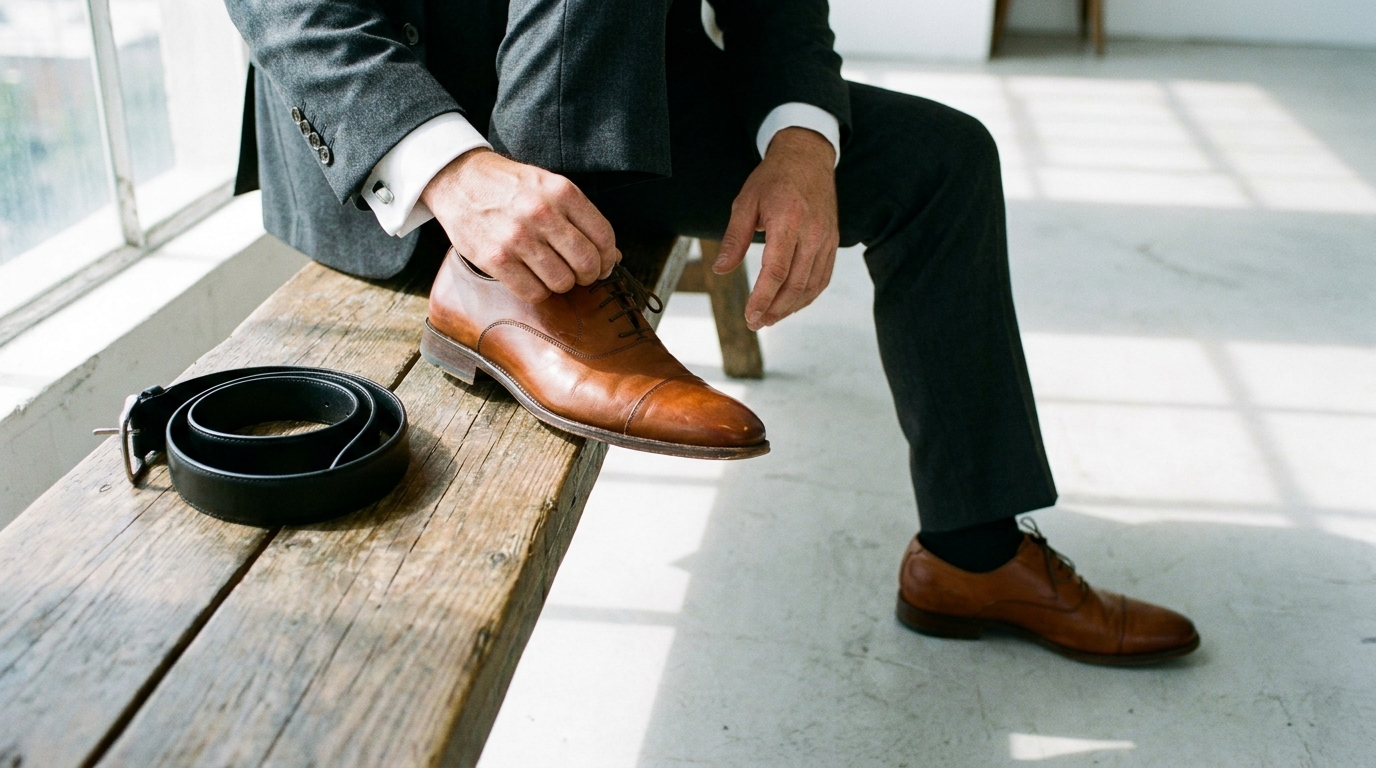
The Best Men'S Dress Shoes: Our Top Picks
The best men's dress shoes come down to three variables: construction, silhouette, and how much you're actually going to wear them. A cap-toe Oxford in black calfskin will handle 90% of formal situations. Everything else is context.
What Makes the Best Men's Dress Shoes
Construction is where most men get tripped up. There's a meaningful difference between a Blake-stitched shoe and a Goodyear-welted one — and it's not just price. Goodyear welting lets the sole be replaced, which means a well-made welted shoe will outlast multiple pairs of Blake-stitched shoes at a lower price point. The upper peels away from the sole at the welt, gets resoled, and comes back looking nearly new. Blake construction is sleeker (thinner profile, better for slim-cut trousers with minimal break), but once the sole goes, so does the shoe.
Upper material matters almost as much. Full-grain calfskin is the benchmark — it creases cleanly, develops a patina with wear, and takes a polish without drama. Corrected-grain leather looks flat because the surface has been sanded and coated to hide imperfections. You can usually tell by pressing your thumbnail in: full-grain resists slightly, corrected-grain feels almost plasticky. Suede sits in a different category entirely — casual, nap-dependent, and genuinely ruined by a wet commute if you haven't pre-treated it.

Shop now →
Silhouette is underrated in the dress shoe conversation. A square toe reads dated in 2026 — not irredeemably so, but noticeably. A chisel toe (subtly squared but tapered) has more staying power. An almond or rounded-point toe is where most of the best men's dress shoes land because it suits slim and classic cuts equally without dating the shoe to a particular decade.
Comfort is the factor that breaks the most buying decisions — or should. Men's dress shoes comfortable enough for a full wedding day (ceremony to reception, eight hours minimum) require either a leather insole that's had time to break in, or a shoe built on a last with appropriate depth in the toe box. Shoes built too shallow through the vamp crowd the forefoot, and by hour four you're shifting your weight constantly. That's a fit problem, not a stamina problem.
The last — the foot-shaped mold around which the shoe is constructed — determines fit more than stated sizing does. Two shoes labeled 10D can fit completely differently depending on whether they were lasted narrow through the heel, wide through the ball, or with aggressive instep. When people ask on forums like r/malefashionadvice about the best men's dress shoes for Reddit budgets, the consistent answer from experienced posters is always the same: buy from somewhere with a real return policy and order two widths.
Our Top Picks for Men's Dress Shoes

Shop now →
The Black Leather Cap-Toe Monk Straps are the most versatile shoe in the VIOSSI footwear lineup. The double monk strap is doing real work here — it reads formal without being indistinguishable from an Oxford, which means it pairs with a suit but doesn't get lost wearing with trousers and a knit. The cap-toe seam adds structure to the front silhouette, which helps when you're wearing slim-cut dress trousers with a shorter break. Black calfskin, properly polished, handles business formal and black-tie optional equally. These are the shoes you stop second-guessing.
For men who wear navy or charcoal suits almost exclusively, the Brown Leather Monk Straps are the better long-term investment. Brown leather against navy cloth is one of the few combinations in menswear that actually improves the more specific you get — medium tan against bright navy is sharper than dark brown against charcoal. The cap-toe detailing keeps the formality appropriate for client-facing environments. (The rule about brown shoes not being formal enough for business is a longstanding English convention. It no longer applies in most North American or European offices.)
The Navy Leather Monk Straps are worth singling out because they solve a specific problem. Most men own black and brown and stop there. Navy shoes worn with a charcoal suit, a white dress shirt, and a burgundy pocket square create enough tonal interest to read as considered without being theatrical. They also pair with cream or off-white trousers better than black does. The mono-strap version has a cleaner face than the double monk, making it sit slightly more casual — appropriate for business casual environments or event dressing that doesn't require full formality.
Men specifically looking for the best men's dress shoes for standing all day should pay close attention to insole depth and heel cup. Monk straps generally allow slightly more natural foot movement than Oxfords because the strap closure doesn't compress the instep the way laces do under tension. That's not a marketing claim — it's how closure mechanics work. The heel cup on these VIOSSI styles is firm enough to prevent slippage without creating the pressure-point friction that causes blistering on long days.

Shop now →
One genuinely useful point that most shoe guides skip entirely: new leather dress shoes should be conditioned before the first wear, not after. Apply a neutral leather conditioner to the upper, let it absorb overnight, then polish. The leather starts more supple, breaks in faster, and the upper is less likely to develop sharp creases from first-day stiffness. Most men condition shoes reactively, when the leather looks dry. Doing it proactively before the inaugural wear is the actual correct sequence.
How to Choose the Right One
Start with the dress code, not the shoe. Business formal requires a closed lacing system (Oxford or Blucher) or a double monk strap in black or dark brown. Smart casual opens up considerably — single monk in tan, loafer in suede, Derby in mid-brown are all appropriate. Black-tie optional means a black cap-toe Oxford or black patent leather; anything else is a conversation you don't want to have at the venue.
Your existing wardrobe is a bigger constraint than most men account for. Black dress shoes in men's dress shoes collections work with black, charcoal, medium grey, and navy suits without friction. Brown opens up to tan, camel, olive, and warm navy but looks awkward with cool-toned charcoal. If you own primarily charcoal and navy suits — which is most men — black is the higher-utility first purchase. Brown is the second shoe, not the first, unless your wardrobe is already heavily warm-toned.
The fit question: dress shoes should feel snug at purchase in the heel and slightly loose at the toe. There should be roughly a thumb-width of space from your longest toe to the cap. The ball of your foot — the widest part — should align with the widest part of the shoe. If you're pressing your foot against the side of the upper when standing flat, you need a wider width, not a longer size. These are different problems with different solutions. Getting them confused is why so many men are walking around in shoes half an inch too long.
Budget framing matters here. At the lower end of the market, construction typically involves cemented soles and corrected-grain or bonded leather — functional for a year or two but not long-term investments. In the mid-range, you start finding Blake-stitched construction with full-grain uppers. At the higher end is where Goodyear welting and better lasting become more standard. Most men looking for the best men's dress shoes in a practical price range should aim for the $200-$350 window and treat the shoes as a three-to-five-year commitment, not a seasonal purchase.
The factory second market — mentioned frequently in communities focused on dress shoes — refers to shoes from quality manufacturers that have minor cosmetic defects (uneven dye lot, small blemish in the upper) sold at meaningful discount. The construction is identical to firsts. For men willing to inspect carefully and accept minor surface imperfections, factory seconds from reputable makers are a legitimate option. The VIOSSI monk straps are not seconds — they're primary production quality — but the principle of prioritizing construction over surface finish applies broadly.
Styling Tips & Outfit Ideas
The black monk straps pair most sharply with a single-breasted charcoal suit, a white dress shirt, and a dark burgundy tie. The black shoe against charcoal wool is high-contrast in a way that reads polished without being costume-y. Add a white pocket square folded flat — not puffed — and you have the correct outfit for a job interview, a client presentation, or a city wedding with a church ceremony. Nothing about this combination is experimental, which is exactly the point.
Brown monk straps against a navy VIO suit deserve a specific shirt call-out: light blue poplin reads better than white here because it softens the contrast between the navy suiting and the warm brown leather. A mid-tone blue also pulls the eye through the outfit rather than creating hard blocks of contrast at collar and shoe simultaneously. This is a combination that works in boardrooms and at garden receptions equally, which is a narrower list than people think.
Navy monk straps are the option when you want the shoe to register. Pair them with light grey dress trousers, a white Oxford-cloth shirt, and a navy knit tie — the shoe and tie create a mono-colour echo without being matchy in the literal sense. This is a smart casual configuration that photographs well, which matters for events where you know there will be documentation.
A note on sock visibility: with slim trousers and a shorter trouser break — which is appropriate for most men under six feet — the sock is going to show when you sit or walk. Matching the sock to the trouser (grey trousers, charcoal or mid-grey socks) extends the visual line of the leg. Matching the sock to the shoe (brown shoes, tan socks) is the more adventurous option and only works when the trouser has enough weight to hold its own. Sheer dress socks in any colour are appropriate in formal settings; thick wool socks are not, regardless of the season.
For wedding guests particularly: the black cap-toe monk worn with a peak-lapel blazer in midnight blue, white dress shirt, and no tie is currently the most common formula for smart-casual wedding dress codes among men who have thought about it. The shoe does the work of anchoring the formality of the look so the absence of a tie reads intentional rather than forgotten. This outfit scales up with the addition of a tie and down with the subtraction of the blazer. Three outfit configurations from one shoe purchase.
Men who wear dress shoes all day — eight to ten hours on their feet for events, long travel days, or professions that require standing — benefit from rotating between two pairs. Leather needs 24 hours to decompress between wearings. The moisture from a full day of wear breaks down the insole lining faster than the upper wears out. Buying two pairs and alternating doubles the lifespan of both. This is not a sales pitch; it's basic shoe care that extends a $300 investment to a $150 effective cost per pair over a five-year span.
Where to Buy Men's Dress Shoes
For men's dress shoes, buying direct from the brand is the most reliable path when construction details are disclosed and a return policy is in place. Retailer aggregators often stock the same shoe under multiple brand names at varying prices, with no consistency in sizing or quality control. Knowing what you're getting before it arrives matters more for footwear than almost any other category because fit issues aren't always fixable with tailoring.
VIOSSI's footwear collection ships free on orders over $299, with 2-5 day delivery and a 15-day return window on unused items in original packaging. Duties are covered (DDP), so no surprise charges at the door. For men buying dress shoes to pair with suiting purchases, combining both in a single order makes practical sense on the shipping threshold.
For broader reference on men's dress shoe trends and styling context, GQ's style section publishes seasonal breakdowns that are useful for calibrating what's currently being worn in formal and business environments — without being prescriptive to the point of uselessness.
A final practical point: if you're buying dress shoes primarily for suit wear, look at the VIOSSI Best Sellers collection to understand which suiting and footwear combinations are being purchased together most often. That data reflects what actually works in practice, not editorial opinion about what should work in theory.
Shop the Look


Three colourways, one construction standard, and more outfit configurations than most men will bother to count. Start with black, add brown when the navy suits outnumber everything else in the closet.