
Courthouse Wedding Groom Attire: What to Wear & How to Style
For courthouse wedding groom attire as of September 2026, a tailored two-piece suit in navy, charcoal, or beige is the standard — formal enough to photograph well, relaxed enough for a civil ceremony. VIOSSI's slim-fit and double-breasted cuts work particularly well here. Skip the tuxedo unless your ceremony runs into evening.
What You Need to Know First
A courthouse wedding is not a casual event dressed up with flowers. It's a legal ceremony — one that will be photographed, remembered, and framed on a wall. The groom who shows up in chinos and a blazer because "it's just the courthouse" almost always regrets it by the time the photos come back.
That said, the other extreme is equally wrong. A white bow tie and full morning coat in a government building reads as costume, not ceremony.
The target dress code for a civil ceremony groom outfit sits at business formal to cocktail — which, practically speaking, means a well-fitted two-piece or three-piece suit, a dress shirt, and considered shoes. Not a tuxedo with grosgrain lapels. Not a linen camp-collar shirt and dress trousers. A suit. A real one, properly fitted.

Shop now →
What makes courthouse weddings specifically tricky is the venue itself. Fluorescent lighting, beige walls, a clerk's counter — none of this is working in your favor. The suit carries the entire visual weight of the moment. It has to be interesting enough to read well in photos without relying on the environment for context. That means fit matters more here than at an outdoor garden ceremony where the roses do some of the work.
One more thing before the details: coordinate with your partner. Not match — coordinate. If she's wearing champagne silk, you probably don't want to show up in charcoal grey. If he's wearing an ivory suit, your bordeaux velvet needs to complement it, not fight it. This is a two-person photograph.
Shop Groom Set
Still deciding? The full Groom Set range is on our site, in the sizes we stock.
Shop the collection →Free shipping over $299 · Arrives in 2–5 business days · 15-day returns
The Details, Explained
Color is the first decision, and it has a real hierarchy for courthouse wedding groom attire.
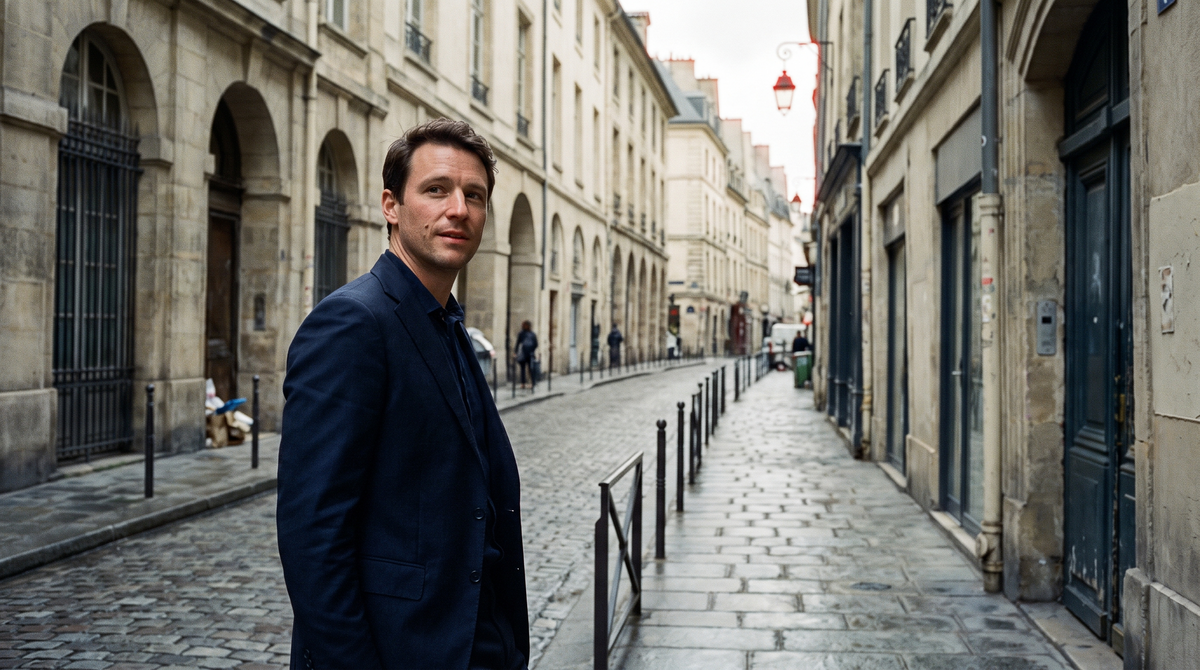
Navy is the most reliable choice. It reads as formal without being funereal, photographs cleanly under both artificial and natural light, and works with almost every skin tone. A navy two-piece with a white poplin shirt and black Oxford shoes is hard to fault. The mistake most men make with navy is choosing a suit that reads as black in low light — check it under fluorescent light before you commit.
Grey — specifically medium to charcoal grey in a double-breasted cut — gives the outfit a more deliberate, dressed-up quality without tipping into black tie. The VIOSSI grey double-breasted suit range is particularly well-suited to this occasion because the peaked lapels and structured front do what ceremony requires: they signal intention. A single-breasted grey suit risks looking like a job interview. Double-breasted does not have that problem.
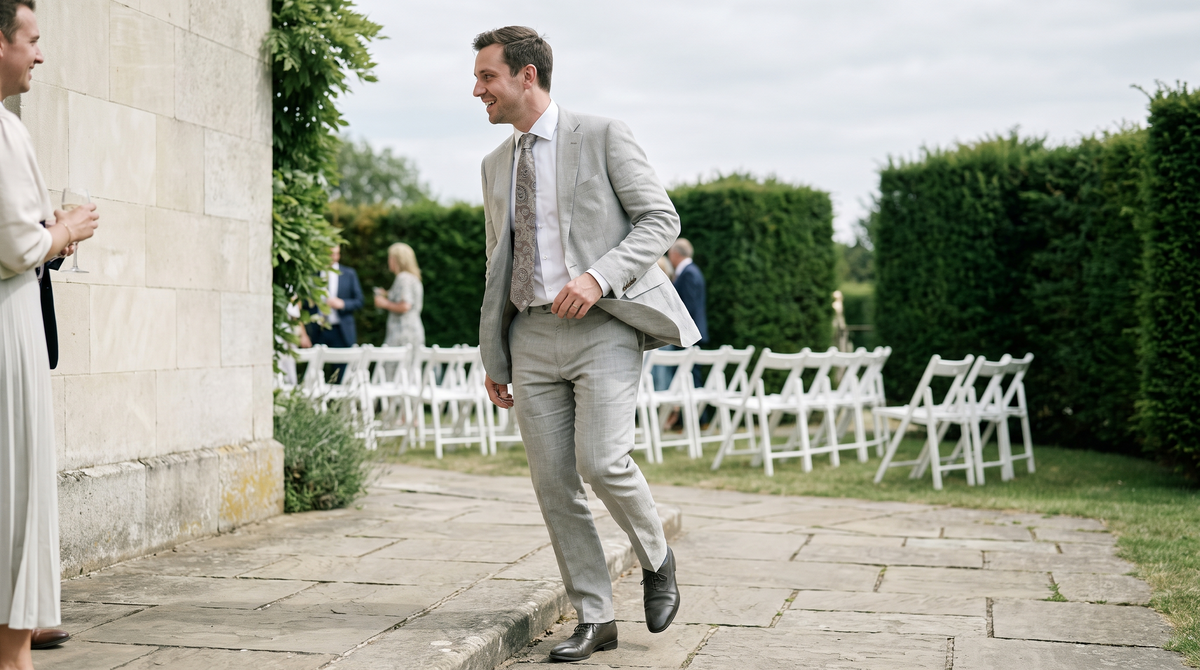
Beige and camel have become significantly more popular for civil ceremony groom outfits in the last three years, and for good reason. Against white or ivory bridal looks, they create contrast without the formality gap that black or navy can create. They also photograph beautifully in the warm artificial light most courthouses use.

Shop now →
On fabric: for a courthouse wedding suit, a mid-weight wool or wool-blend is the correct call. It holds its shape through a ceremony, doesn't crease as badly in a car, and has enough structure to drape properly when you're standing at a clerk's window or in a rotunda. Linen is too casual and too prone to wrinkling at the wrong moment. Velvet — specifically a slim-fit velvet three-piece — works for an evening ceremony or an elopement suit scenario where you're continuing into dinner. The Bordeaux Velvet Slim-Fit Tuxedo 3-Piece is a legitimate courthouse option if your ceremony is late afternoon or evening, and you want the photographs to look like something other than a Tuesday appointment.
Fit. This is where men consistently miscalculate. A slim cut (not slim as in tight — slim as in no excess fabric pooling at the elbows or bunching at the back vent) is the correct silhouette for a ceremony this intimate. The camera is close. There are no crowd shots to hide in. The trouser break should be minimal — a quarter break at most, ideally a slight crop that shows the full shoe. The jacket should button without pulling across the chest. The shoulders should sit exactly at the edge of your shoulder — not hanging over, not cutting in.
The shirt: white or pale blue dress shirt in cotton poplin or end-on-end. Not a flannel, not an Oxford cloth buttondown, not anything textured. Clean, pressed, formal. A spread collar photographs better than a point collar in almost every condition.
Tie or no tie: if you're wearing a suit jacket, wear a tie. An untucked shirt collar with a suit jacket at your own wedding reads as half-dressed. A four-in-hand knot in silk — something solid or a very restrained pattern — is correct. A bow tie is also appropriate, particularly with a double-breasted jacket.
Shoes: black Derby or Oxford for dark suits. Brown or tan leather for beige or camel suits. Suede works well for a civil ceremony where you're not walking on outdoor terrain. Whatever you choose, they should be polished. That's not a suggestion.
Practical Tips That Actually Help
Buy or borrow a suit that fits you now, not the version of yourself you're planning to be by the wedding date.
This sounds obvious, but the number of men who order a suit two months out and lose (or gain) a few pounds before the ceremony is not small. Alterations are straightforward on a jacket and trouser that are slightly large. They are significantly more complicated on something too small. Order at your current measurements and budget for a tailor.
Here is the one piece of advice that actually requires fashion knowledge: for a courthouse wedding, the pocket square should match the shirt, not the tie. Not identically — in fabric and tone, not color. A white cotton pocket square with a white poplin shirt creates a clean through-line that reads as intentional rather than coordinated-by-a-checklist. The tie can introduce the one accent color in the outfit. That's the structure. Most men invert this — they match the square to the tie and the whole thing becomes a color-block exercise from 2009.
On the VIOSSI groom set options: if you're shopping specifically for a courthouse ceremony, the complete set removes the coordination guesswork. The jacket, trouser, and waistcoat are cut from the same cloth run, which matters more than most people realize. Even within the same color, suits sourced from different production runs will show slight variation in the light. A three-piece set eliminates this entirely.
Book your alteration appointment at least three weeks before the ceremony. Not the week before. Tailors are not emergency services.
If the ceremony is in the morning and you're continuing into a lunch or dinner celebration, choose a suit versatile enough to carry through both settings. A navy or charcoal two-piece with a dress shirt and tie is appropriate from 10 AM through a restaurant dinner. A velvet suit is not a morning suit. Respect the sequence.
The double-breasted blazer deserves specific mention for the groom who wants to avoid a full suit but still present as formally dressed. A double-breasted blazer in navy or charcoal, paired with a well-pressed dress trouser in grey or cream, and a dress shirt, reads as intentionally formal rather than business-casual. This is the rare case where a blazer — not a suit jacket — actually works for a ceremony.
Shop Groom Set
That is the shortlist. Every piece above lives in Groom Set, with sizes and prices in one place.
Shop the collection →Free shipping over $299 · Arrives in 2–5 business days · 15-day returns
Common Questions Answered
Frequently Asked Questions
What should the groom wear to a courthouse wedding?
A tailored two-piece or three-piece suit in navy, charcoal, grey, or beige — with a dress shirt, tie, and leather Oxford or Derby shoes. The formality level should sit at business formal to cocktail; a tuxedo is generally too formal unless the ceremony extends into an evening event.
Is a tuxedo too much for a courthouse wedding?
For a morning or afternoon civil ceremony, yes — a standard tuxedo with black lapels reads as overscaled for the setting. A velvet slim-fit three-piece in bordeaux or black can work for evening ceremonies where you're continuing into a formal dinner, but it requires the right environment to land correctly.
What is the difference between casual courthouse wedding attire and formal?
Casual courthouse wedding attire typically means dress trousers, a blazer, and a dress shirt without a tie — appropriate when both partners have agreed to a relaxed dress code. Formal courthouse attire means a full suit, dress shirt, tie, and polished leather shoes; this is the more photographically durable choice and holds up better across different ceremony times and settings.
What color suit works best for a courthouse elopement?
Navy and charcoal are the most versatile, working under both artificial courthouse lighting and outdoor natural light if you continue the day elsewhere. Beige and camel are a strong alternative if your partner is wearing white or ivory, as the tonal contrast reads clearly in photographs without creating the formality gap that a dark suit can produce.
Should the groom match or coordinate with the partner at a courthouse wedding?
Coordinate, not match. If your partner is wearing ivory or champagne, a charcoal or beige suit creates intentional contrast rather than competition. If your partner is wearing a colored outfit, pull one element of that color into your accessories — pocket square or tie — rather than attempting to replicate the shade in your suit fabric.
Do I need a three-piece suit for a civil ceremony?
No, but a waistcoat adds significant visual weight to a courthouse ceremony where the environment offers little else. A two-piece reads clean and correct; a three-piece reads considered and complete — particularly in photographs taken close-up at a clerk's counter or in a courthouse rotunda.
Shop the Look


What We'd Pick
Beige Slim-Fit Tuxedo 2-Piece — the go-to for a daytime courthouse ceremony, particularly when the partner is wearing white or ivory. The color reads warm under artificial light and clean in outdoor shots after the ceremony.
Beige Double Breasted Tuxedo 2-Piece — for the groom who wants to signal that this was not an afterthought. The double-breasted front and peaked lapels do the work that the venue cannot, and it photographs significantly better than a single-breasted suit in a plain interior.
Bordeaux Velvet Slim-Fit Tuxedo 3-Piece — only for afternoon-into-evening ceremonies where you're continuing into a formal dinner. It is not a morning look. For the groom who wants the photographs to be unmistakably intentional, this is the one.
For further reference on men's formal dressing codes and ceremony attire, GQ Style and the Mr Porter Journal are worth consulting for seasonal context and fit guidance.
VIOSSI ships free on orders over $299, with 2–5 day delivery and duties covered — so ordering with time for alterations is straightforward if you plan three weeks out.
| Courthouse Wedding Suit Option | Best For | Ceremony Time | Photo Performance |
|---|---|---|---|
| Navy two-piece, slim cut | Most skin tones, most settings | Morning to afternoon | Excellent under all lighting |
| Charcoal grey double-breasted | Formal feel without black tie | Morning to evening | Strong in artificial light |
| Beige slim-fit or double-breasted | Partner in white or ivory | Morning to late afternoon | Outstanding contrast in photos |
| Bordeaux velvet three-piece | Evening ceremony into dinner | Late afternoon to evening | Exceptional — richest texture on camera |
| Emerald velvet slim-fit three-piece | Bold, unconventional ceremony | Afternoon to evening | High impact, requires confidence |
The suit you choose for a courthouse wedding will be in photographs for the rest of your life. That's not an argument for spending more than you can afford — it's an argument for spending what you need to spend on fit.