


Best Dress Shoe Brands for Men Ranked
Choosing the right dress shoe is a big deal. A great pair does more than just complete an outfit—it anchors your entire look, whether you’re pairing it with a sharp single-breasted suit with peak lapels or a classic shawl-collar tuxedo. The best brands in the game aren’t just about a fancy name; they’re defined by how they’re built, the quality of their materials, and styles that never fade. Real quality is in the details that promise comfort, durability, and pure elegance.
What Really Makes a Dress Shoe Brand Great?
To spot the best dress shoe brands for men, you have to look past the price tag. Focus on the core elements of true craftsmanship. Think of a great pair of dress shoes as an investment, something that will serve you well for years, looking just as good with a modern two-piece suit featuring a subtle pinstripe as it does with a traditional three-piece suit in solid navy. Getting a handle on these key markers of quality is your first step to building a truly reliable and stylish shoe collection.
A few key things separate an exceptional shoe from an ordinary one. We're talking about the construction method, the grade of the leather, whether the style fits the occasion, and of course, the overall fit and comfort. Each of these plays a huge role in how long the shoe lasts and how good it looks.
Core Pillars of Quality
Before you pull the trigger on a new pair, keep these fundamentals in mind:
- Construction Method: This is the architectural foundation of the shoe. Techniques like a Goodyear welt or a Blake stitch directly impact a shoe’s durability, how flexible it feels, and whether you can get it repaired down the line.
- Leather Grade: Think of the leather as the soul of the shoe. Full-grain leather is the absolute gold standard. It’s tough, breathes well, and develops a beautiful, unique patina the more you wear it.
- Timeless Style: A truly well-designed shoe looks good today, tomorrow, and ten years from now. Classic designs like Oxfords and Derbys are wardrobe staples for a reason—they simply work.
This growing appreciation for quality is clear when you look at the numbers. The global men's formal shoe market was valued at around USD 9.88 billion in 2023 and is expected to hit USD 15.3 billion by 2031. It’s a sign that more men are recognizing the value of investing in premium footwear. If you’re interested, you can read the full research about the men's formal shoe market to get the whole story.
A Simple Framework for Judging Quality
A smart way to compare the best dress shoe brands for men is to check them against a few key benchmarks. This simple framework makes it easy to see what you’re paying for and what separates one shoemaker from another.
| Feature | What to Look For | Why It Matters |
|---|---|---|
| Sole Construction | Stitched soles (Goodyear welt, Blake stitch) | Offers far better durability and can be resoled, which dramatically extends the life of the shoe. |
| Upper Material | Full-grain or top-grain calfskin leather | Delivers the best look, breathability, and longevity. Avoid corrected-grain or synthetic materials. |
| Lining | Full leather lining | A must for comfort. A full leather lining absorbs moisture and helps the shoe keep its internal structure over time. |
| Heel | Stacked leather heel with a rubber top-lift | This is a sign of quality construction. It provides a solid, stable foundation and good grip. |
Using these criteria, you can walk into any store and confidently evaluate what’s on the shelf. The goal is to find a shoe that not only looks incredible with your best mens suit—right down to its specific silk lining and horn buttons—but also delivers lasting value and performance.
Comparing Goodyear Welt and Blake Stitch Construction
The way a dress shoe is built—its architecture, really—says a lot about its durability, flexibility, and how long it'll last. For any man looking to invest in quality footwear, getting to know the two most respected construction methods, the Goodyear welt and the Blake stitch, is non-negotiable. Each one has its own strengths, making it a better fit for certain outfits and occasions, whether you're pairing them with a heavy wool three-piece suit or a sleek, modern two-piece suit.
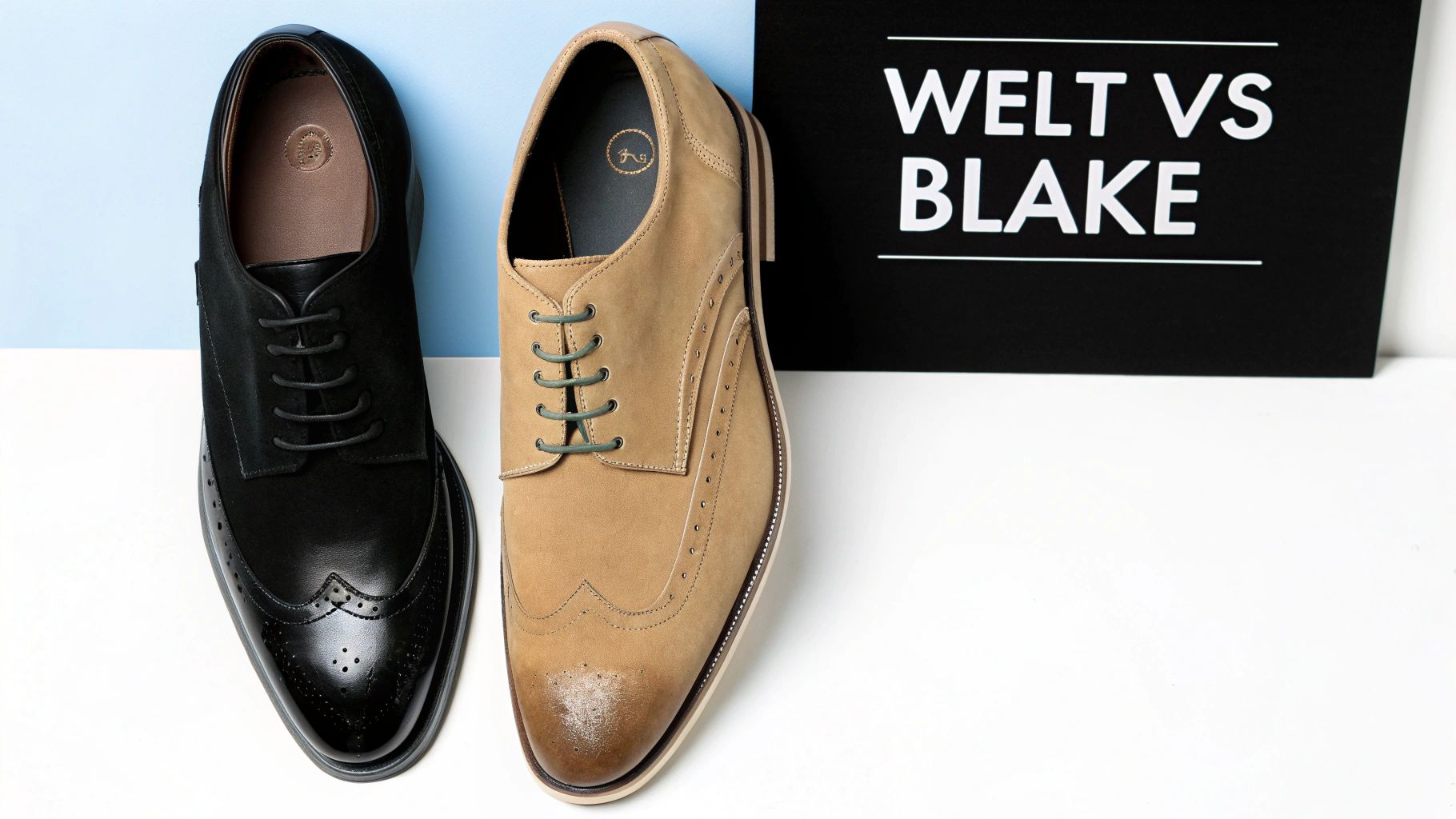
This isn't just a simple pro-and-con list. Think of it as a guide to help you pick the right construction for your wardrobe, whether that’s for a formal tuxedo with satin-faced lapels or a sharp business casual look.
The Goodyear Welt Explained
The Goodyear welt is, without a doubt, the gold standard in high-end shoemaking. It’s an intricate process where a strip of leather—the "welt"—is stitched to both the upper and the insole. The outsole is then stitched separately to this welt, creating a seriously durable and water-resistant bond that’s great at keeping your feet dry.
This robust construction gives the shoe a slightly thicker, more substantial sole profile. It's the perfect foundation for shoes meant to be worn with more structured clothing. For instance, a pair of Goodyear-welted Oxfords has the visual weight to perfectly balance a heavy tweed or flannel three-piece suit, complete with its structured shoulders, ticket pocket, and classic two-button closure.
A key advantage of the Goodyear welt is how easy it is to repair. Since the outsole is stitched to the welt and not directly to the upper, a good cobbler can replace the sole over and over without messing with the shoe's structure. This dramatically extends its life.
This method also uses a layer of cork filling between the insole and outsole. With wear, that cork molds to the shape of your foot, creating a custom, supportive fit that’s all yours. The break-in period might feel a bit stiff at first, but the long-term comfort and durability are absolutely worth it.
Understanding the Blake Stitch
By contrast, the Blake stitch method creates a much more streamlined and flexible shoe. With this technique, the upper is stitched directly to the outsole from the inside. It’s a simpler process that results in a sleeker, more elegant silhouette where the sole sits closer to the foot.
This slim profile makes Blake-stitched shoes a natural partner for modern, tailored looks. Picture a contemporary two-piece suit in a lightweight wool or linen blend, with a slim-fit jacket featuring a single-button closure and flat-front trousers. A pair of Blake-stitched loafers or monk straps would perfectly complete that sharp, minimalist aesthetic.
The direct stitching also means the shoe is flexible right out of the box. You get to skip the lengthy break-in period that often comes with Goodyear-welted footwear, making them a comfortable choice for long days at the office or events where you’ll be on your feet for hours.
Making the Right Choice for Your Wardrobe
So, which one is for you? Choosing between these two excellent construction methods really comes down to your personal style, the kinds of clothes you wear, and what you value most in a shoe. Neither is definitively "better"—they just serve different purposes.
To help you decide, think about the details of your outfits. If your wardrobe is built around classic, structured menswear like double-breasted suits with wide lapels or traditional navy blazers, the substantial presence of a Goodyear-welted shoe is the clear winner. But if you lean towards slim-fit suits with a softer shoulder and a more fashion-forward look, the sleek elegance of a Blake-stitched shoe will feel like a more natural fit.
To make things even clearer, here’s a quick breakdown to guide your decision.
Goodyear Welt vs Blake Stitch a Comparative Analysis
This table cuts straight to the chase, highlighting the core differences between the two premier construction methods. Use it to decide which style best aligns with your needs for durability, comfort, and the kind of suits you wear.
| Feature | Goodyear Welt | Blake Stitch |
|---|---|---|
| Durability | Extremely durable and can be resoled multiple times with ease. | Durable, but can only be resoled a few times, and it requires a specialist. |
| Flexibility | Initially stiff, requiring a break-in period before it molds to your foot. | Very flexible and comfortable from the very first wear. |
| Water Resistance | Superior water resistance thanks to the extra layer of the welt. | Less water-resistant, as moisture can potentially seep through the stitch holes. |
| Profile & Style | Bolder, more substantial profile. Perfect for traditional, structured suits. | Sleek, close-trimmed silhouette. Ideal for modern, slim-fit attire. |
| Ideal For | A heavy wool three-piece suit with a full canvas lining. | A lightweight linen two-piece suit or a contemporary single-button tuxedo. |
Ultimately, a well-rounded shoe collection has room for both. The best dress shoe brands for men often offer styles with each type of construction, allowing you to build a versatile wardrobe that’s ready for anything.
Understanding Leather Quality and Types
The soul of a dress shoe is its leather. This single material dictates just about everything—its durability, its comfort, and how it looks paired with a sharp two piece suit with a notched lapel. To really get a feel for what separates the good from the great in men's dress shoes, you have to go beyond the brand name and get familiar with the different grades and types of leather they use.
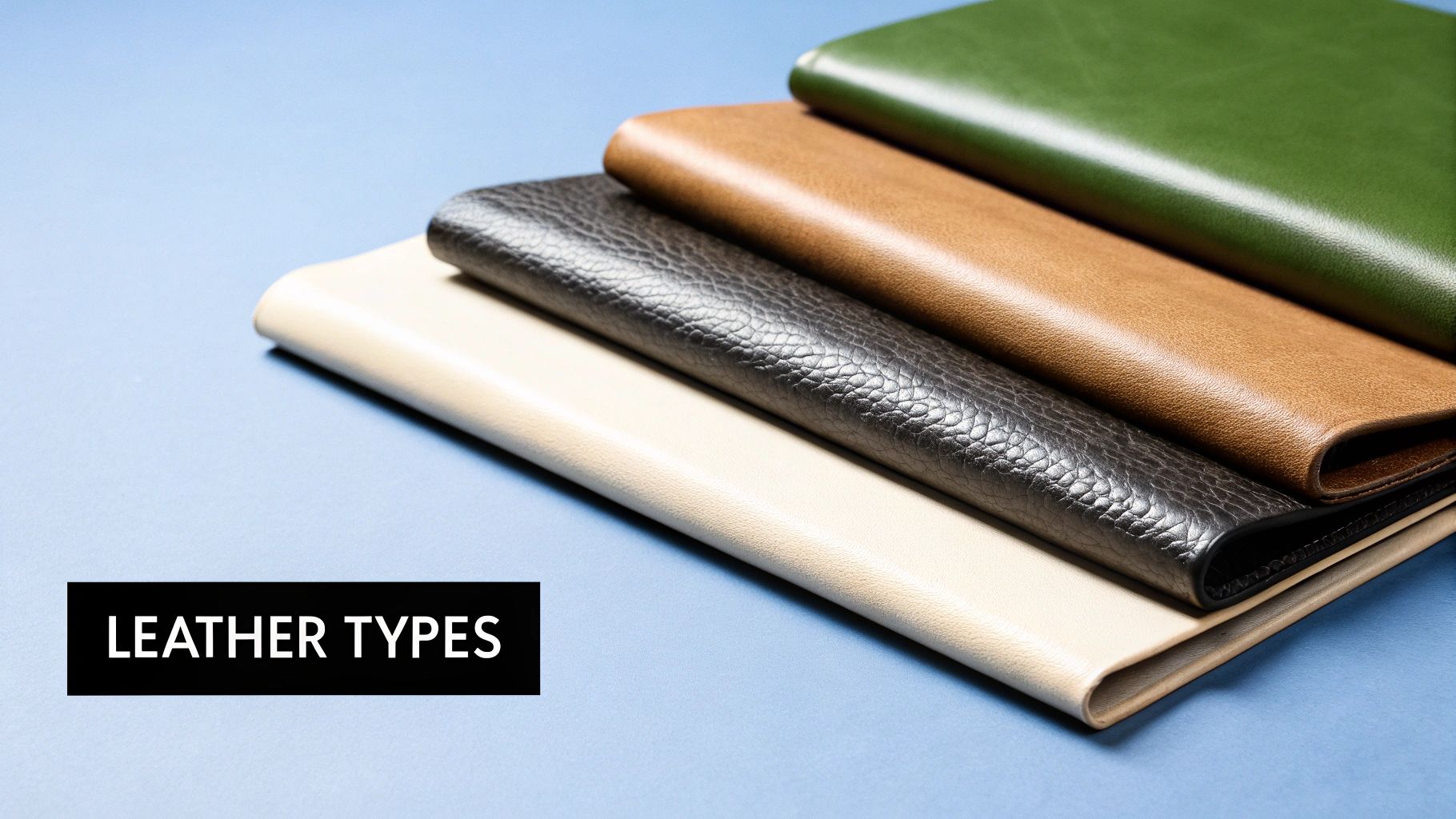
Once you know what you're looking at, you can judge the true value and craftsmanship of any shoe on the shelf.
The Hierarchy of Leather Grades
Not all leather is the same. Far from it. Where the leather comes from on the hide and how it’s treated creates a clear hierarchy of quality. Knowing the difference is the first step to making a smart purchase.
- Full-Grain Leather: This is the best you can get, period. It’s the outermost layer of the hide, complete with all its natural grain and minor imperfections. Nothing has been sanded away, which makes it the most durable and breathable leather out there.
- Top-Grain Leather: Coming in second, top-grain leather has had its surface lightly sanded and refinished to get rid of any blemishes. The result is a smoother, more uniform look, but it sacrifices a bit of the rugged durability you get with full-grain.
- Corrected-Grain Leather: This is a lower-tier leather where the surface has been heavily buffed to remove imperfections, and an artificial grain pattern is then stamped on. It's cheaper, sure, but it won't breathe well or last nearly as long as the good stuff. It also won't develop that beautiful patina over time.
If you’re looking for a shoe that's a true long-term investment, always aim for full-grain leather. Its ability to absorb oils and develop a rich, one-of-a-kind patina is the true mark of quality that lesser grades just can't imitate.
Essential Leather Types for Formalwear
Beyond the grade, the animal it comes from and the way it’s finished gives a shoe its specific character. Some leathers are born for the crisp lines of a mens suit in a boardroom, while others are better suited for more relaxed, stylish occasions.
Calfskin This is the gold standard for high-end dress shoes. Sourced from young cattle, calfskin has a fine, tight grain that’s both supple and remarkably durable. It’s the perfect material for a pair of classic Oxfords to anchor a navy business two-piece suit with a two-button front and a half-canvas construction. Calfskin takes a polish beautifully and molds to your foot over time, delivering an unbeatable mix of comfort and sheer elegance.
Shell Cordovan For the true shoe aficionado, Shell Cordovan is legendary. This isn't just leather; it's a specific membrane from a horse's hindquarters known for being practically indestructible and for its unique ability to ripple rather than crease. It boasts a deep, glossy finish and shrugs off scuffs and water like nothing else. A pair of Shell Cordovan Derbies is a serious investment—one that can easily last a lifetime and elevate something like a heavy wool three piece suit with a roped shoulder to another level.
Textured and Casual Leathers
While smooth, polished leathers rule the formal world, textured options bring a different kind of character to the table, perfect for when the dress code loosens up a bit.
- Pebble Grain: This leather is embossed with a bumpy, pebbled texture that makes it incredibly tough and forgiving when it comes to scuffs. It’s a fantastic choice for a more robust dress shoe, like a brogue, that you might pair with a tweed sport coat or flannel trousers.
- Suede: Created by sanding the softer, inner side of the hide, suede has a velvety napped finish. It’s definitely less formal and you'll want to keep it away from rain, but suede loafers or chukka boots bring a touch of relaxed sophistication to a smart-casual look like a blazer and chinos.
Ultimately, the right leather all comes down to context. For a black-tie event that calls for a tuxedo with satin trim and a single-button closure, nothing but highly polished, full-grain calfskin will do. For the daily grind at the office, its versatility is second to none. By understanding these key differences, you can pick footwear that not only looks incredible but is perfectly suited for whatever the day throws at you.
Choosing the Right Dress Shoe Style
Picking the right dress shoe is about more than just construction and leather. It's about matching the shoe's personality to the occasion and the rest of your outfit. Think of each style as having its own language, speaking to a specific level of formality. Getting this right is what separates a good outfit from a great one, ensuring everything from your mens suit's lapels down to your shoes works in perfect harmony.
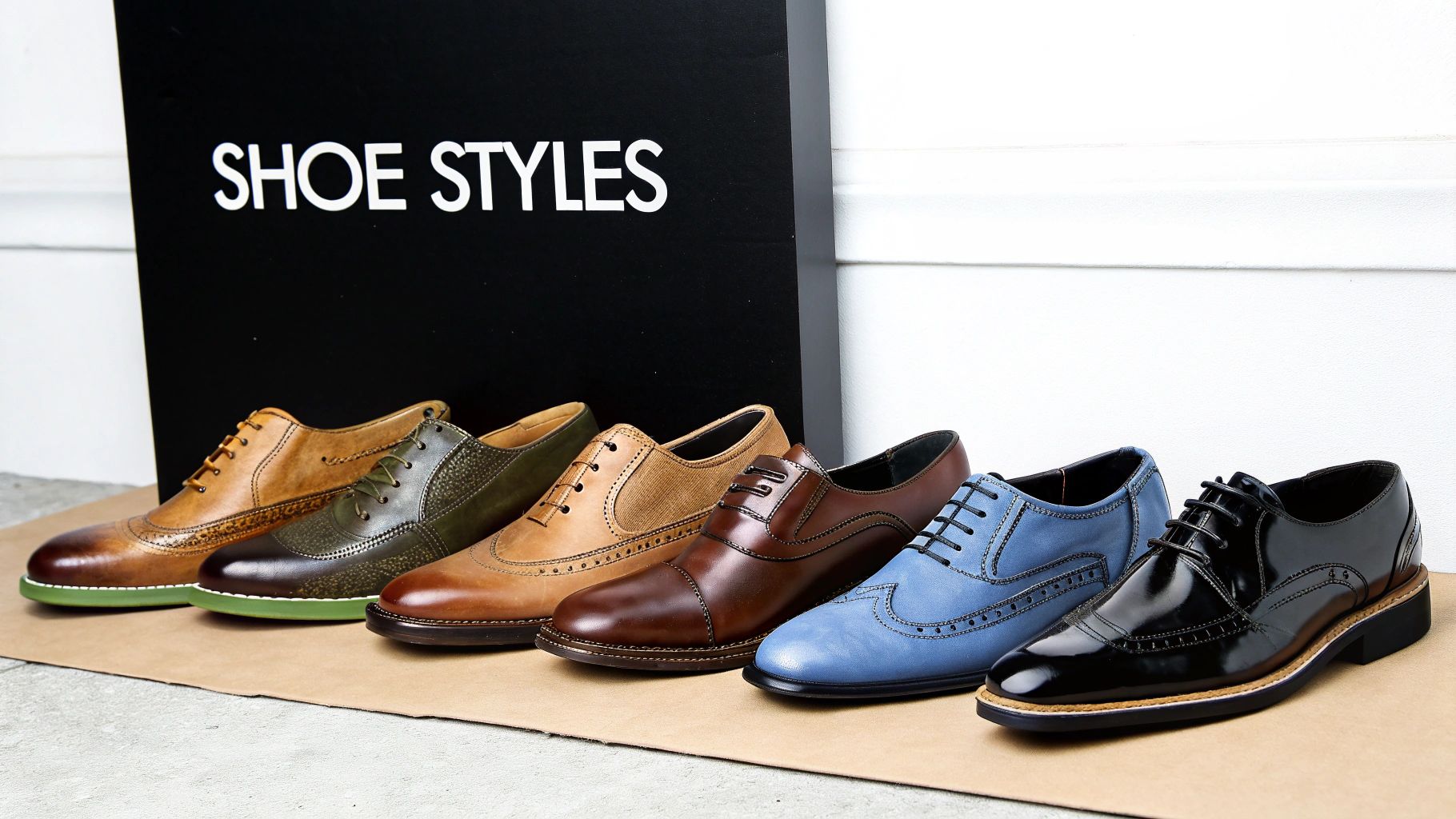
This guide will walk you through the essential designs, giving you clear advice on what to wear, when to wear it, and why it just plain works.
The Oxford: The Apex of Formality
When it comes to formal footwear, the Oxford is the undisputed champion. Its defining detail is the closed lacing system, where the eyelet facings are stitched underneath the vamp. This design creates an incredibly sleek, clean silhouette that makes it the most formal dress shoe you can own.
For any black-tie event, a polished black patent leather Oxford is non-negotiable; it's the only acceptable choice to pair with a tuxedo featuring a peak lapel and jetted pockets. Its understated elegance perfectly complements the sharp lines of a formal suit without stealing the show. Likewise, if you're heading into a high-stakes business meeting in a dark, worsted wool three-piece suit with a full Bemberg lining, a classic black cap-toe Oxford sends a clear message of authority and seriousness.
The market backs up its essential status. In 2023, data showed that Oxfords made up about 54.58% of the men's formal shoe market share. It's a massive segment, with projections estimating it could hit a value of USD 4.7 billion by 2030.
The Derby: Versatile and Approachable
If the Oxford is all about strict formality, the Derby is celebrated for its flexibility. It's built with an open lacing system, meaning the quarters are stitched on top of the vamp, creating flaps for the eyelets. This makes the shoe slightly less streamlined but far more comfortable and gives it a more relaxed vibe.
This construction makes the Derby the perfect shoe to bridge the gap between formal and casual. A dark brown leather Derby looks fantastic with a navy or grey two-piece suit in a business-casual office, perhaps one with a subtle check pattern and patch pockets. The open lacing also works beautifully with heavier fabrics, making a brogued Derby a perfect match for a tweed sport coat and chinos on the weekend.
The core difference is simple: Oxfords are for your most formal suits and events, while Derbys handle everything from a less formal suit to smart-casual attire. Owning both gives you complete wardrobe coverage.
Brogues and Monk Straps: Expressive Choices
Of course, not every shoe is defined by its laces. Brogues and Monk Straps are where you can start injecting more personality into your footwear collection, but they each come with their own set of rules.
Brogues are all about their decorative perforations, or "broguing." How much of it there is dictates how formal the shoe is:
- Full Brogues (Wing-tips): These have a W-shaped toe cap and perforations all over. They're the most casual style of brogue, perfect for adding character to a heritage-inspired outfit, like a Harris Tweed three-piece suit with elbow patches.
- Semi-Brogues: With a perforated cap-toe, these are a step up in formality from full brogues but still more casual than a plain Oxford. They pair well with business suits in less conservative workplaces.
Monk Straps ditch laces altogether for a distinctive buckle-and-strap closure. They sit in a cool, stylish space right between the Oxford and the Derby. A double monk strap in a rich oxblood leather makes a confident statement, especially when worn with a bold, contemporary mens suit with wide peak lapels and side adjusters instead of belt loops.
Loafers: Relaxed Sophistication
Loafers are the ultimate slip-on dress shoe, nailing that sweet spot between comfort and effortless style. While they lean casual, the right loafer can absolutely be dressed up.
- Penny Loafers: The most classic and versatile of the bunch. You can wear these with anything from chinos and a blazer to a lightweight linen summer suit.
- Tassel Loafers: A bit dressier than the penny loafer. A pair in black or dark brown calfskin can definitely work with a more relaxed two-piece suit, especially one made from a seersucker or cotton fabric for warm weather.
- Horsebit Loafers: The metal hardware adds a touch of flash, making them a more fashion-forward choice for smart-casual events where you want to stand out.
Ultimately, building a great shoe collection is about understanding these subtle differences. Making sure your footwear is in sync with your outfit is key, and a great place to get started is with our guide on matching shoes and belts to pull your whole look together.
Comparing the Best Dress Shoe Brands by Tier
Trying to navigate the world of men's dress shoes can feel like a minefield, with what seems like a million brands all fighting for your attention. The real key to making a smart buy is figuring out how these brands stack up at different price points. Once you break them down into tiers, you can match your budget with your expectations for quality, construction, and style.
This isn't about crowning one single "best" brand—it's about finding the right brand for what you need, right now. Whether you're after an affordable, stylish pair for a one-off event or a lifetime investment to go with a bespoke three piece suit with hand-sewn buttonholes, this guide will clear things up.
Entry-Level Tier: Under $250
This price range is the perfect place to build the foundation of your wardrobe or grab a pair of shoes for those less frequent, specific occasions. Brands here focus on delivering classic styles and accessible quality, often using cemented construction or a solid Blake stitch to keep prices reasonable. You might not find hand-burnished, full-grain leathers, but you can definitely find fantastic value.
Take the American heritage brand Florsheim, for example. They offer timeless designs with modern comfort features baked right in. Their shoes are a great fit for a young professional pairing them with his first two piece suit for an internship, giving him a polished look without breaking the bank. Another heavy hitter is Meermin, which punches way above its weight by offering Goodyear-welted shoes at a price point where you almost never see them.
In this tier, your focus should be on versatility and a great fit. A classic black cap-toe Oxford or a dark brown Derby will have you covered for almost everything, from job interviews in a simple mens suit to weekend weddings.
It's also in this accessible space that a brand like VIOSSI really shines. While the purists might look elsewhere, VIOSSI brings fashion-forward designs that are absolutely perfect for specific, high-impact events.
The Role of VIOSSI in Your Wardrobe
VIOSSI's strength is providing contemporary, on-trend footwear that pulls a modern formal look together. Their shoes are cut and designed to pair perfectly with slim-fit suits and tuxedos, making them the go-to choice for proms, weddings, or any event where making a sharp, stylish first impression is the entire point.
Picture a modern wedding. The groom and groomsmen are in sleek, navy blue slim-fit mens suits with narrow lapels, a high two-button stance, and no break at the trousers. A pair of traditional, heavy Goodyear-welted brogues would look completely out of place. This is where VIOSSI's streamlined loafers or polished Oxfords would perfectly sync with the modern vibe of that mens suit. They deliver the sharp silhouette needed to complement the suit's clean lines, prioritizing style and value for a picture-perfect day.
Mid-Range Tier: $250 to $600
Stepping up to the mid-range unlocks a serious upgrade in both materials and construction. This is where you'll find brands offering exceptional value that often rivals luxury names in sheer quality. For many shoe enthusiasts, this is the sweet spot—durable, repairable footwear that's truly built to last.
Allen Edmonds is an American icon in this category, known for its absolutely classic designs and tough-as-nails Goodyear welt construction. A pair of their Park Avenue Oxfords is a boardroom staple, built to be worn for decades with a classic charcoal three piece suit featuring a traditional silhouette and pleated trousers. Buying their shoes is an investment in timeless American style.
On the other side of the Atlantic, you have Spanish and Portuguese makers like Carlos Santos and Magnanni. These brands tend to use sleeker lasts and Blake-stitched construction, giving their shoes an elegant, European profile. A hand-burnished monk strap from Magnanni, for instance, adds a dash of personality to a modern two piece suit with sharp peak lapels and a slim, tapered leg, showing off a more fashion-forward sensibility.
American Classic vs. European Sleekness
| Feature | Allen Edmonds (American) | Magnanni (European) |
|---|---|---|
| Construction | Primarily Goodyear welt | Primarily Blake stitch & Bologna |
| Aesthetic | Substantial, classic, robust | Sleek, streamlined, fashion-forward |
| Best Paired With | Traditional three piece suits with flap pockets, blazers | Modern slim-fit two piece suits, tuxedos with jetted pockets |
| Key Advantage | Extreme durability and recraftability | Immediate flexibility and elegant profile |
Luxury Tier: $600 and Above
When you enter the luxury tier, shoes stop being just apparel and become works of art. These are the best dress shoe brands for men who refuse to compromise on quality and craftsmanship. Names like Crockett & Jones, John Lobb, and Gaziano & Girling represent the very pinnacle of English shoemaking.
At this level, you’re paying for the finest full-grain calfskin and shell cordovan, painstaking hand-finishing, and centuries of heritage. A pair of John Lobb wholecut Oxfords, made from a single, flawless piece of leather, is the ultimate statement in minimalist elegance. They're designed to be worn with a bespoke tuxedo with a custom silk lining or a top-tier business suit.
These shoes are defined by their perfect details—from the closed-channel stitching that hides the sole thread to the hand-painted patina that gives the leather an incredible depth of color. A pair of Crockett & Jones wingtips, famously worn by James Bond, has the weight and gravitas to anchor a powerful pinstripe double-breasted suit with six buttons, broadcasting impeccable taste and a genuine appreciation for true craftsmanship. Choosing a shoe in this tier isn’t just buying footwear; it’s acquiring an heirloom.
How to Care for Your Dress Shoes
Dropping serious cash on a quality pair of dress shoes is just the starting line. Real value comes from proper maintenance—that’s what turns a nice purchase into a long-term staple in your wardrobe. A solid care routine is what keeps your shoes looking just as sharp with a two piece suit for the office as they do with a formal tuxedo for a gala, protecting the leather and preserving their shape for years.
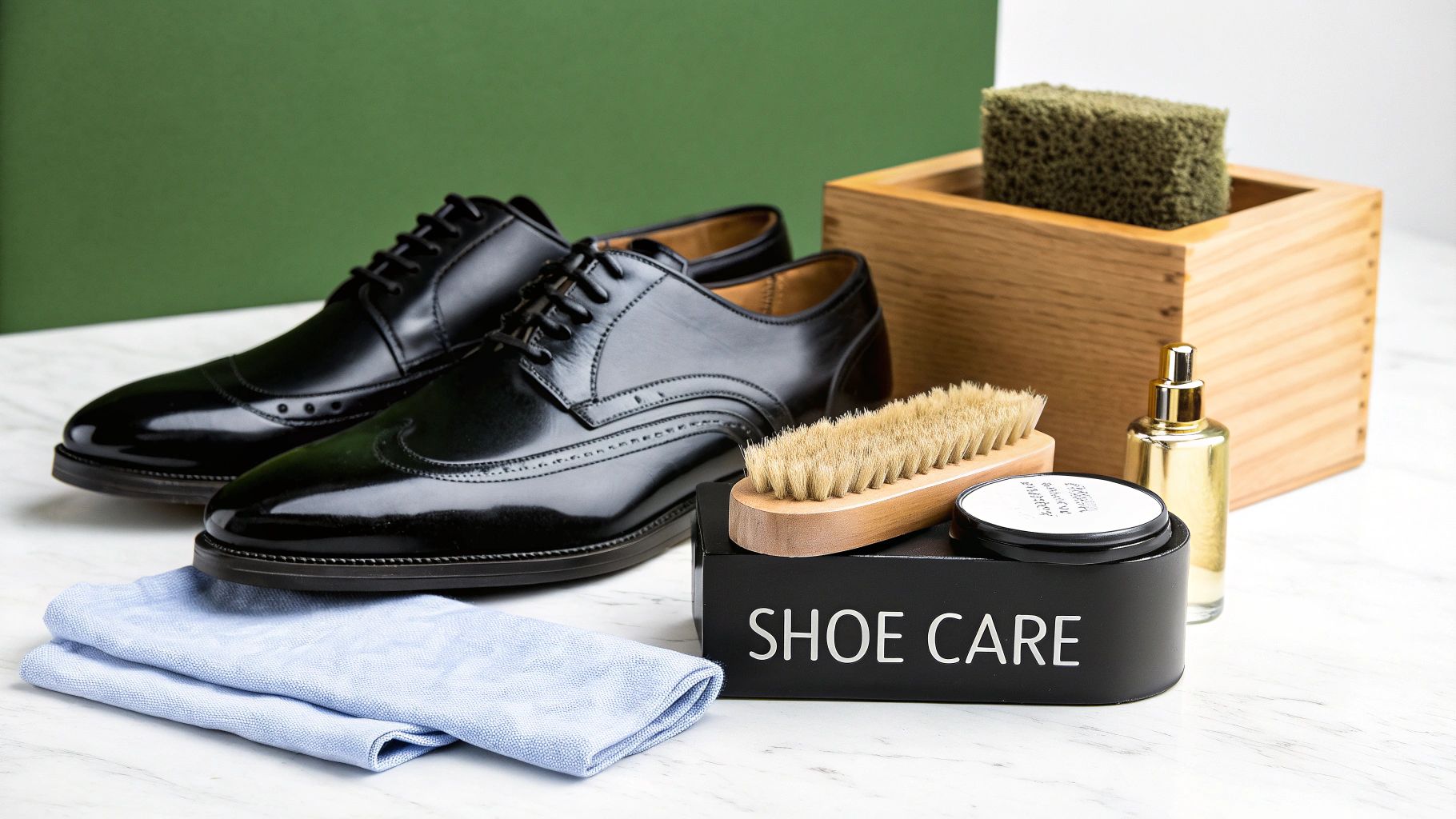
Think of this as your practical guide to protecting that investment.
The Foundational Step: Cedar Shoe Trees
If you buy only one shoe care tool, make it a pair of unfinished cedar shoe trees. Seriously. After you’ve been on your feet all day, the leather is warm and damp, making it prime territory for creasing and losing its form.
Cedar shoe trees are non-negotiable for two big reasons:
- Moisture Absorption: The raw cedarwood is incredibly porous and acts like a natural dehumidifier, pulling moisture out of the leather lining. This prevents rot and kills odor-causing bacteria before it starts.
- Shape Retention: They provide just enough tension to smooth out the creases that form across the top of the shoe while you walk. This keeps the shoe from curling up at the toe over time, maintaining that sleek profile.
Get into the habit of putting shoe trees in the second you take your shoes off. It’s the single most effective thing you can do to extend their life and ensure they always complement your tailored mens suit, no matter its style or fabric.
A Simple Cleaning and Conditioning Routine
You have to keep the leather healthy if you want it to last. Regular cleaning and conditioning prevent the leather from drying out, cracking, and losing its rich color. Think of it this way: dust and grime act like fine-grit sandpaper on the finish.
Just follow this simple routine every few wears to keep them in fighting shape:
- Wipe Down: First things first, grab a horsehair brush and give the shoes a quick pass to knock off any loose dirt or dust. If you’ve got some stubborn spots, a slightly damp cloth will do the trick.
- Condition: Dab a small amount of a quality leather conditioner onto a soft cloth and work it into the leather. This feeds the hide, restoring the natural oils that keep it supple. Let it soak in for about 15-20 minutes.
- Polish: Grab a cream or wax polish that matches your shoe color and apply a thin, even layer using small circular motions. Cream polishes are great for nourishing the leather and restoring color, while wax polishes create a protective seal and deliver that high-gloss shine.
- Buff: Once the polish is dry, take a clean horsehair brush and buff the shoes vigorously to bring out a brilliant shine. For that final mirror-like finish, a quick once-over with a soft flannel cloth works wonders.
This routine ensures your shoes are always ready to go, whether for a big meeting in a three piece suit with a classic vest or a black-tie event. Your shoes deserve the same attention as the rest of your tailored wardrobe. For more tips on keeping your whole look sharp, check out our complete suit care guide.
The Importance of Rotation
Finally, one of the easiest and most overlooked habits in shoe care is simply giving them a day off. Wearing the same pair every single day is a death sentence for leather. It never gets a chance to fully dry out, breathe, and recover from the stress of wear.
By rotating between at least two or three pairs, you give each one a full day (or two) to rest. This doesn't just preserve the leather; it also allows the cork footbed inside a Goodyear-welted shoe to decompress and reset. It’s a simple change that will make every pair in your collection last significantly longer while providing better comfort and support.
Common Questions About Men's Dress Shoes
Even after you've got a handle on construction, leather, and styles, a few common questions always seem to pop up. Think of this as the final checklist—the practical advice you need to clear up any lingering doubts and choose your shoes with total confidence.
How Do I Correctly Match My Dress Shoes to My Suit
The golden rule here is simple: let the suit's formality guide your shoe choice.
Black shoes are the peak of formal footwear. They’re non-negotiable for black, charcoal, and most navy suits. If you're wearing a classic tuxedo or a dark business mens suit where every detail from the jacquard lining to the hand-sewn buttons needs to be flawless, black shoes are the only answer.
Brown shoes, on the other hand, bring versatility to the table. A rich dark brown looks incredibly sharp with navy and grey suits. Lighter tans are perfect for light grey, blue, and earth-toned suits in more relaxed settings. And if you want to add a bit of personality, burgundy or oxblood shoes pair beautifully with navy, grey, and even brown suits.
A detail that ties everything together? Always match your belt to your shoes. A black belt with black shoes is a must. For brown shoes, find a belt in a closely matching shade. It’s a small touch that makes a huge difference.
What Are the First Three Pairs Every Man Should Own
If you're building a shoe collection from scratch, these are the three pillars that will have you covered for almost any situation.
- A Black Leather Oxford: This is your heavy hitter for the most formal events. It's the essential partner for a dark three piece suit at a wedding, a serious business meeting, or any occasion that demands your sharpest look.
- A Dark Brown Derby or Brogue: Consider this your everyday workhorse. It’s polished enough for a navy or charcoal two piece suit at the office but can just as easily be dressed down with chinos for a smart-casual weekend.
- A Stylish Loafer: Whether it's a Penny or Tassel loafer, a quality pair in brown leather or suede is perfect for business-casual days, travel, and any relaxed social event where you still want to look put-together.
How Do I Choose Between an Oxford and a Derby
This choice really comes down to one thing: formality.
Oxfords are defined by their "closed lacing" system, where the eyelet tabs are stitched underneath the vamp. This creates a clean, sleek, and uninterrupted profile, making them the undisputed champion of formal dress shoes. They belong with business suits and are mandatory for black-tie dress codes. If you're navigating the upper echelons of formalwear, understanding the difference between a tuxedo and a suit helps put these shoe rules into perspective.
Derbys feature an "open lacing" system, with the eyelet tabs stitched on top of the vamp. This construction is a bit more robust and is considered less formal. It gives the Derby its incredible versatility, making it a great match for everything from sport coats and chinos to more casual suits. If your day-to-day is more smart-casual, a Derby is a fantastic starting point. If you live in a suit and tie, the Oxford should be your priority.
At VIOSSI, we believe the right shoes don't just complete an outfit—they define it. Our collection is curated to perfectly complement modern suits and tuxedos, ensuring you always look sharp and feel confident for life's biggest moments. Find the pair that will elevate your formalwear at https://viossi.com.


